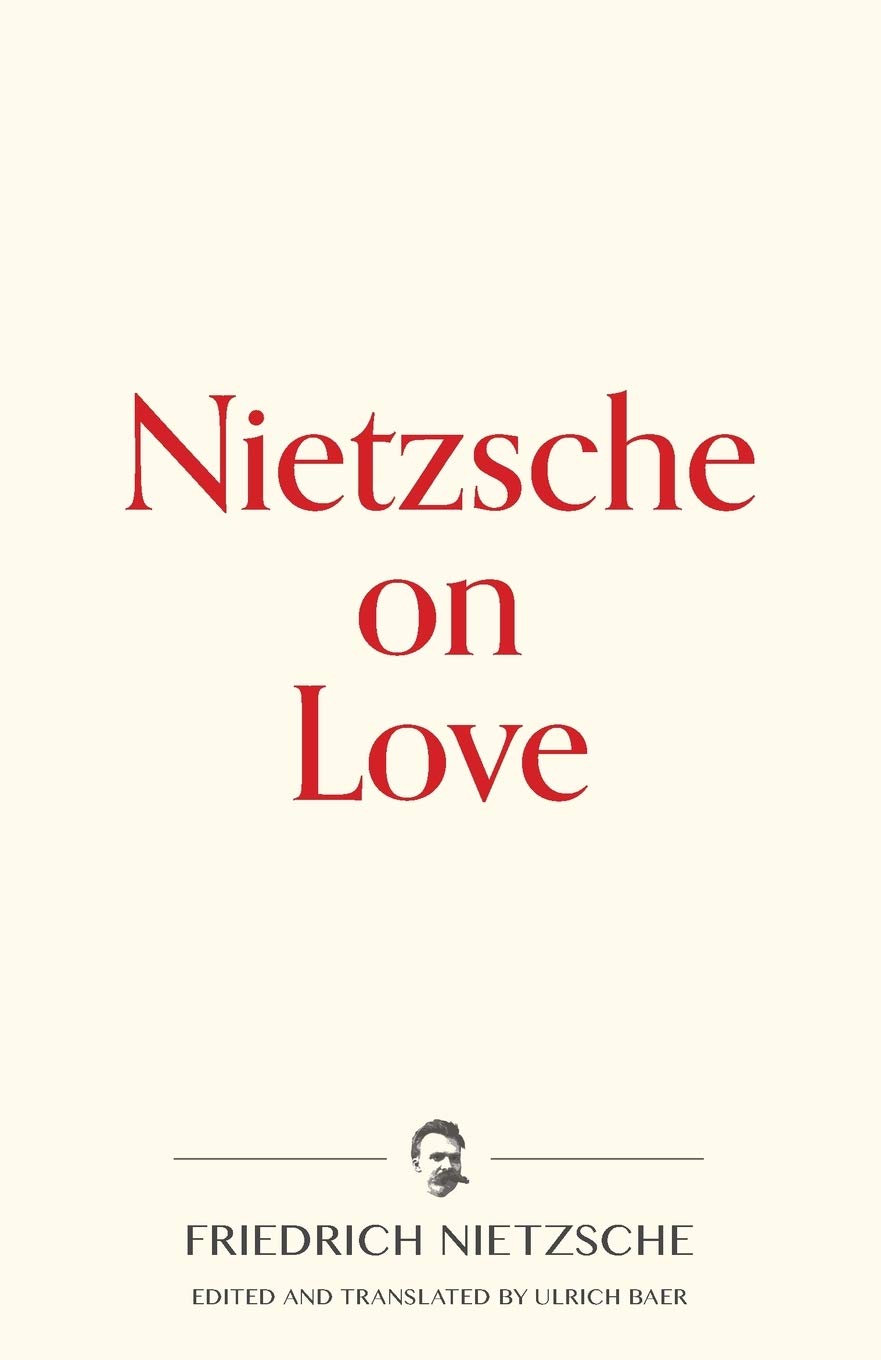
Friedrich Nietzsche presented many of his greatest insights in pithy, well-turned short phrases that do not follow any philosophical dogma. Instead, his chastening but ultimately life-affirming philosophy puts forth true love and friendship as our best hope in dark times. Here are Nietzsche’s key sayings about love from the vast body of his philosophical writings, which have influenced politics, philosophy, art and culture like few other works of world literature. As the first edition of its kind, this collection presents Nietzsche’s thoughts on love not as academic philosophy but as a guide to life. At turns delightful and astute—and always wise—Nietzsche on Love offers an original and startling glimpse into what one of the world’s foremost thinkers says about the fundamental experience of our lives. Friedrich Nietzsche (1844-1900) was a German philosopher, cultural critic, composer, poet, philologist, and Latin and Greek scholar. One of the greatest thinkers of all time, his ideas have exerted an immeasurable influence on philosophy, politics, art, literature, psychology, and popular culture around the world. Ulrich Baer holds a BA from Harvard and a PhD from Yale. He is University Professor at New York University, where he teaches literature and photography. He has been awarded Guggenheim, Getty, and Alexander von Humboldt fellowships. A widely recognized expert on poetry and translator, among his books are Rainer Maria Rilke’s The Dark Interval, Letters on Life, and Letters to a Young Poet. Other books include Spectral The Photography of Trauma, What Snowflakes Get Free Speech, Truth, and Equality on Campus, and in the Contemplations Dickinson on Love and Rilke on Love. He lives in New York City.