


Margins
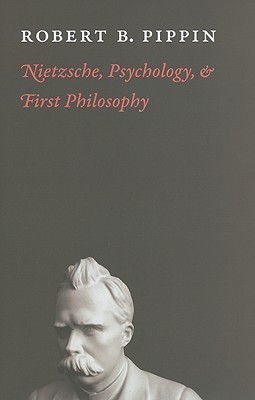
Nietzsche, Psychology, and First Philosophy book cover
Nietzsche, Psychology, and First Philosophy
2010
First Published
3.64
Average Rating
156
Number of Pages

Friedrich Nietzsche is one of the most elusive thinkers in the philosophical tradition. His highly unusual style and insistence on what remains hidden or unsaid in his writing make pinning him to a particular position tricky. Nonetheless, certain readings of his work have become standard and influential. In this major new interpretation of Nietzsche’s work, Robert B. Pippin challenges various traditional views of Nietzsche, taking him at his word when he says that his writing can best be understood as a kind of psychology. Pippin traces this idea of Nietzsche as a psychologist to his admiration for the French moralists: La Rochefoucauld, Pascal, Stendhal, and especially Montaigne. In distinction from philosophers, Pippin shows, these writers avoided grand metaphysical theories in favor of reflections on life as lived and experienced. Aligning himself with this project, Nietzsche sought to make psychology “the queen of the sciences” and the “path to the fundamental problems.” Pippin contends that Nietzsche’s singular prose was an essential part of this goal, and so he organizes the book around four of Nietzsche’s most important images and metaphors: that truth could be a woman, that a science could be gay, that God could have died, and that an agent is as much one with his act as lightning is with its flash. Expanded from a series of lectures Pippin delivered at the Collège de France, Nietzsche, Psychology, and First Philosophy offers a brilliant, novel, and accessible reading of this seminal thinker.

Avg Rating
3.64
Number of Ratings
44
5 STARS
16%
4 STARS
45%
3 STARS
25%
2 STARS
14%
1 STARS
0%
goodreads

Author

Robert B. Pippin
Robert B. Pippin
Author · 13 books
Robert B. Pippin is the Evelyn Stefansson Nef Distinguished Service Professor in the Committee on Social Thought, the Department of Philosophy, and the College at the University of Chicago. He is the author of several books and articles on German idealism and later German philosophy, including Kant's Theory of Form; Hegel's Idealism: The Satisfactions of Self-Consciousness; Modernism as a Philosophical Problem; and Idealism as Modernism: Hegelian Variations. In addition he has published on issues in political philosophy, theories of self-consciousness, the nature of conceptual change, and the problem of freedom. He also wrote a book about literature and philosophy: Henry James and Modern Moral Life. A collection of his essays in German, Die Verwirklichung der Freiheit, appeared in 2005, as did The Persistence of Subjectivity: On the Kantian Aftermath, and his book on Nietzsche, Nietzsche, moraliste français: La conception nietzschéenne d'une psychologie philosophique, appeared in 2006. Fatalism in American Film Noir: Some Cinematic Philosophy appeared in 2012. He was twice an Alexander von Humboldt fellow, is a winner of the Mellon Distinguished Achievement Award in the Humanities, and was recently a fellow at the Wissenschaftskolleg zu Berlin. He is a fellow of the American Academy of Arts and Sciences and is a member of the American Philosophical Society. He is also a member of the German National Academy of Arts and Sciences.
548 Market St PMB 65688, San Francisco California 94104-5401 USA
© 2026 Paratext Inc. All rights reserved