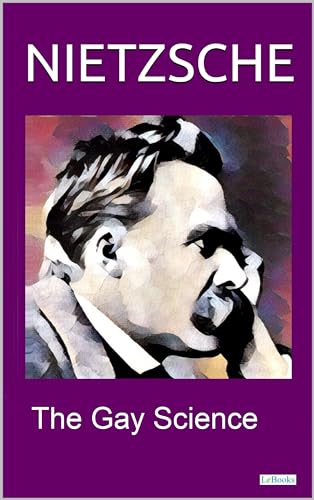
NIETZSCHE - THE GAY SCIENCE
2024
First Published
3.40
Average Rating
370
Number of Pages
Friedrich Nietzsche was a philosopher, writer, poet, philologist, and musician, and is considered one of the most influential and important modern thinkers of the 19th century. The Gay Science (in Die fröhliche Wissenschaft) is the last work of Nietzsche's positive phase, resembling "Dawn" and "Human, All Too Human" in its light, pleasant, and flowery style of composition. This is one of the author's most widely read works. It is also in this book that Nietzsche refers, for the first time, to Zarathustra, the ancient Persian prophet, creator of the doctrine called Zoroastrianism, whom Nietzsche made the herald of his philosophy in his book "Thus Spoke Zarathustra".

Avg Rating
3.40
Number of Ratings
5
5 STARS
0%
4 STARS
40%
3 STARS
60%
2 STARS
0%
1 STARS
0%
goodreads
Author

Friedrich Nietzsche
Author · 137 books
Friedrich Wilhelm Nietzsche (Ph.D., Philology, Leipzig University, 1869) was a German philosopher of the late 19th century who challenged the foundations of Christianity and traditional morality. He was interested in the enhancement of individual and cultural health, and believed in life, creativity, power, and the realities of the world we live in, rather than those situated in a world beyond. Central to his philosophy is the idea of “life-affirmation,” which involves a questioning of all doctrines that drain life's expansive energies, however socially prevalent those views might be. Often referred to as one of the first existentialist philosophers along with Søren Kierkegaard (1813–1855). From the Stanford Encyclopedia of Philosophy