Margins
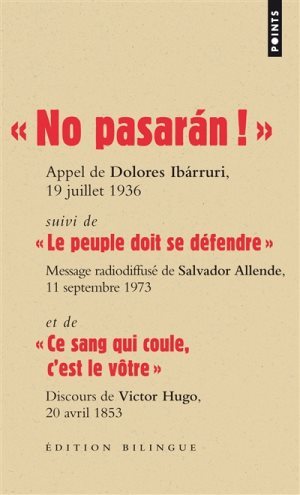
«No pasarán» «Le peuple doit se défendre» «Ce sang qui coule c'est le vôtre» book cover
«No pasarán» «Le peuple doit se défendre» «Ce sang qui coule c'est le vôtre»
2010
First Published
4.27
Average Rating
57
Number of Pages
Compilation de trois discours contre la tyrannie: «No pasarán» de Dolores Ibárruri, «Le peuple doit se défendre» de Salvador Allende et «Ce sang qui coule c'est le vôtre» de Victor Hugo. Édition bilingue
Avg Rating
4.27
Number of Ratings
15
5 STARS
53%
4 STARS
20%
3 STARS
27%
2 STARS
0%
1 STARS
0%
goodreads

Authors

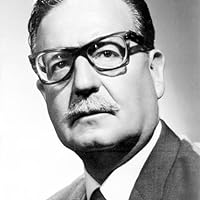
Salvador Allende
Salvador Allende
Author · 8 books

Salvador Guillermo Allende Gossens (Spanish: [salβaˈðoɾ aˈʝende ˈɣosens]; 26 June 1908 – 11 September 1973), more commonly known as Salvador Allende, was a Chilean physician and politician, known as the first Marxist to become president of a Latin American country through open elections. Allende's involvement in Chilean political life spanned a period of nearly forty years. As a member of the Socialist Party, he was a senator, deputy and cabinet minister. He unsuccessfully ran for the presidency in the 1952, 1958, and 1964 elections. In 1970, he won the presidency in a close three-way race. He was elected in a run-off by Congress as no candidate had gained a majority. As president, Allende adopted a policy of nationalization of industries and collectivization; due to these and other factors, increasingly strained relations between him and the legislative and judicial branches of the Chilean government—who did not share his enthusiasm for socialization—culminated in a declaration by Congress of a "constitutional breakdown." A center-right majority including the Christian Democrats, whose support had enabled Allende's election, denounced his rule as unconstitutional and called for his overthrow by force. On 11 September 1973, the military moved to oust Allende in a coup d'etat sponsored by the United States Central Intelligence Agency (CIA). As troops surrounded La Moneda Palace, he gave his last speech vowing not to resign. Later that day, Allende shot himself dead with an assault rifle, according to an investigation conducted by a Chilean court with the assistance of international experts in 2011. Following Allende's deposition, General Augusto Pinochet declined to return authority to the civilian government, and Chile was later ruled by a military junta that was in power up until 1990, ending almost 41 years of Chilean democratic rule. The military junta that took over dissolved the Congress of Chile and began a persecution of alleged dissidents, in which thousands of Allende's supporters were kidnapped, tortured, and murdered.

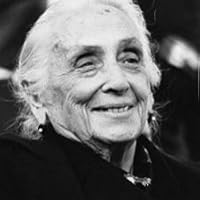
Dolores Ibárruri
Dolores Ibárruri
Author · 3 books

Isidora Dolores Ibárruri Gómez, known more famously as "La Pasionaria" (passion flower) was a Spanish Republican leader of the Spanish Civil War and communist politician of Basque origin, perhaps best known for her defense of the Second Spanish Republic with the famous slogan ¡No Pasarán! ("They Shall Not Pass"), during the Battle of Madrid. She grew up in Gallarta, the daughter of a local Basque miner and a Castillian mother. Upon her marriage to the revolutionary socialist miner Julián Ruiz Gabiña, Ibarruri moved to Somorrosto (Biscay). It was here, during the 1920s, that the once Carlist Catholic young woman became a revolutionary militant activist and one of the first members of the Spanish Communist Party (PCE) when it was founded in 1921. In the 1930s, she became a writer for the PCE publication Mundo Obrero, and was elected to the Cortes as a PCE deputy for Asturias in February 1936 during the Second Republic. After the end of the Spanish Civil War and her exile from Spain, she was appointed General Secretary of the Central Committee of the Communist Party of Spain, a position she held from 1942 to 1960, when she was made honorary president of the PCE, a post she held for the rest of her life. Upon her return to Spain in 1977, she was reelected as a deputy to the Cortes for the same region she had once represented during the Second Republic. She is usually regarded as being one of the greatest public speakers of the twentieth century.

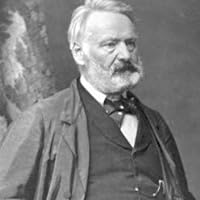
Victor Hugo
Victor Hugo
Author · 185 books

After Napoleon III seized power in 1851, French writer Victor Marie Hugo went into exile and in 1870 returned to France; his novels include The Hunchback of Notre Dame (1831) and Les Misérables (1862). This poet, playwright, novelist, dramatist, essayist, visual artist, statesman, and perhaps the most influential, important exponent of the Romantic movement in France, campaigned for human rights. People in France regard him as one of greatest poets of that country and know him better abroad.

548 Market St PMB 65688, San Francisco California 94104-5401 USA
© 2026 Paratext Inc. All rights reserved