Margins
Margins
Sign in
Margins
Subscribe to our newsletter
548 Market St PMB 65688, San Francisco California 94104-5401 USA
hello@margins.app
·
+1 (650) 223-5283
Privacy Policy
·
Terms of Use
© 2026 Paratext Inc. All rights reserved
📚 Noah Sullivan Vibes
📚
Noah Sullivan Vibes
Snow Country
1948
Yasunari Kawabata
Nobel Prize recipient Yasunari Kawabata's Snow Country is widely considered to be the writer's masterpiece, a powerful tale of wasted love set amid the desolate beauty of western Japan. At an isolated mountain hot spring, with snow blanketing every surface, Shimamura, a wealthy dilettante meets Komako, a lowly geisha. She gives herself to him fully and without remorse, despite knowing that their passion cannot last and that the affair can have only one outcome. In chronicling the course of this doomed romance, Kawabata has created a story for the ages, a stunning novel dense in implication and exalting in its sadness.
No Longer Human
1948
Osamu Dazai
Osamu Dazai's No Longer Human, this leading postwar Japanese writer's second novel, tells the poignant and fascinating story of a young man who is caught between the breakup of the traditions of a northern Japanese aristocratic family and the impact of Western ideas. In consequence, he feels himself "disqualified from being human" (a literal translation of the Japanese title). Donald Keene, who translated this and Dazai's first novel, The Setting Sun, has said of the author's work: "His world … suggests Chekhov or possibly postwar France, … but there is a Japanese sensibility in the choice and presentation of the material. A Dazai novel is at once immediately intelligible in Western terms and quite unlike any Western book." His writing is in some ways reminiscent of Rimbaud, while he himself has often been called a forerunner of Yukio Mishima. Cover painting by Noe Nojechowiz, from the collection of John and Barbara Duncan; design by Gertrude Huston
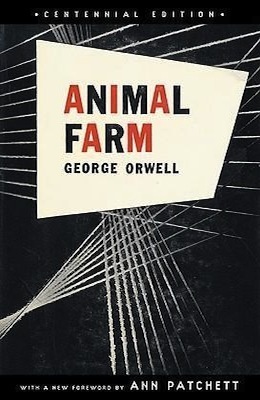
Animal Farm
1945
George Orwell
“All animals are equal, but some animals are more equal than others.” A farm is taken over by its overworked, mistreated animals. With flaming idealism and stirring slogans, they set out to create a paradise of progress, justice, and equality. Thus the stage is set for one of the most telling satiric fables ever penned—a razor-edged fairy tale for grown-ups that records the evolution from revolution against tyranny to a totalitarianism just as terrible. When Animal Farm was first published, Stalinist Russia was seen as its target. Today it is devastatingly clear that wherever and whenever freedom is attacked, under whatever banner, the cutting clarity and savage comedy of George Orwell’s masterpiece have a meaning and message still ferociously fresh.
The Setting Sun
1947
Osamu Dazai
The post-war period in Japan was one of immense social change as Japanese society adjusted to the shock of defeat and to the occupation of Japan by American forces and their allies. Osamu Dazai’s The Setting Sun takes this milieu as its background to tell the story of the decline of a minor aristocratic family. The story is told through the eyes of Kazuko, the unmarried daughter of a widowed aristocrat. Her search for self meaning in a society devoid of use for her forms the crux of Dazai’s novel. It is a sad story, and structurally is a novel very much within the confines of the Japanese take on the novel in a way reminiscent of authors such as Nobel Prize winner Yasunari Kawabata – the social interactions are peripheral and understated, nuances must be drawn, and for readers more used to Western novelistic forms this comes across as being rather wishy-washy. Kazuko’s mother falls ill, and due to their financial circumstances they are forced to take a cottage in the countryside. Her brother, who became addicted to opium during the war is missing. When he returns, Kazuko attempts to form a liaison with the novelist Uehara. This romantic displacement only furthers to deepen her alienation from society.
The Death of Ivan Ilych
1886
Leo Tolstoy
Hailed as one of the world's supreme masterpieces on the subject of death and dying, The Death of Ivan Ilyich is the story of a worldly careerist, a high court judge who has never given the inevitability of his dying so much as a passing thought. But one day, death announces itself to him, and to his shocked surprise, he is brought face to face with his own mortality. How, Tolstoy asks, does an unreflective man confront his one and only moment of truth? This short novel was an artistic culmination of a profound spiritual crisis in Tolstoy's life, a nine-year period following the publication of Anna Karenina during which he wrote not a word of fiction. A thoroughly absorbing, and, at times, terrifying glimpse into the abyss of death, it is also a strong testament to the possibility of finding spiritual salvation.