Authors

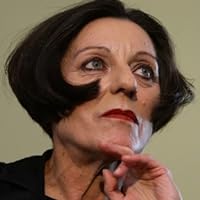
Herta Müller was born in Niţchidorf, Timiş County, Romania, the daughter of Swabian farmers. Her family was part of Romania's German minority and her mother was deported to a labour camp in the Soviet Union after World War II. She read German studies and Romanian literature at Timişoara University. In 1976, Müller began working as a translator for an engineering company, but in 1979 was dismissed for her refusal to cooperate with the Securitate, the Communist regime's secret police. Initially, she made a living by teaching kindergarten and giving private German lessons. Her first book was published in Romania (in German) in 1982, and appeared only in a censored version, as with most publications of the time. In 1987, Müller left for Germany with her husband, novelist Richard Wagner. Over the following years she received many lectureships at universities in Germany and abroad. In 1995 Müller was awarded membership to the German Academy for Writing and Poetry, and other positions followed. In 1997 she withdrew from the PEN centre of Germany in protest of its merge with the former German Democratic Republic branch. The Swedish Academy awarded the 2009 Nobel Prize in Literature to Müller, "who, with the concentration of poetry and the frankness of prose, depicts the landscape of the dispossessed". She currently resides in Berlin, Germany.

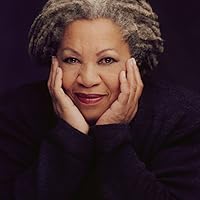
Toni Morrison (born Chloe Ardelia Wofford) was an American author, editor, and professor who won the 1993 Nobel Prize in Literature for being an author "who in novels characterized by visionary force and poetic import, gives life to an essential aspect of American reality." Her novels are known for their epic themes, vivid dialogue, and richly detailed African American characters; among the best known are her novels The Bluest Eye , Song of Solomon , and Beloved , which won the Pulitzer Prize for Fiction in 1988. In 2001 she was named one of "The 30 Most Powerful Women in America" by Ladies' Home Journal.

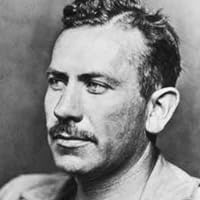
John Ernst Steinbeck Jr. (1902-1968) was an American writer. He wrote the Pulitzer Prize-winning novel, The Grapes of Wrath, published in 1939, and the novella, Of Mice and Men, published in 1937. In all, he wrote twenty-five books, including sixteen novels, six non-fiction books and several collections of short stories. In 1962, Steinbeck received the Nobel Prize for Literature. Steinbeck grew up in the Salinas Valley region of California, a culturally diverse place of rich migratory and immigrant history. This upbringing imparted a regionalistic flavor to his writing, giving many of his works a distinct sense of place. Steinbeck moved briefly to New York City, but soon returned home to California to begin his career as a writer. Most of his earlier work dealt with subjects familiar to him from his formative years. An exception was his first novel Cup of Gold which concerns the pirate Henry Morgan, whose adventures had captured Steinbeck's imagination as a child. In his subsequent novels, Steinbeck found a more authentic voice by drawing upon direct memories of his life in California. Later, he used real historical conditions and events in the first half of 20th century America, which he had experienced first-hand as a reporter. Steinbeck often populated his stories with struggling characters; his works examined the lives of the working class and migrant workers during the Dust Bowl and the Great Depression. His later body of work reflected his wide range of interests, including marine biology, politics, religion, history, and mythology. One of his last published works was Travels with Charley, a travelogue of a road trip he took in 1960 to rediscover America. He died in 1968 in New York of a heart attack, and his ashes are interred in Salinas. Seventeen of his works, including The Grapes of Wrath (1940), Cannery Row (1945), The Pearl (1947), and East of Eden (1952), went on to become Hollywood films, and Steinbeck also achieved success as a Hollywood writer, receiving an Academy Award nomination for Best Story in 1944 for Alfred Hitchcock's Lifeboat.

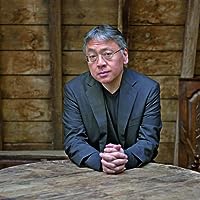
Sir Kazuo Ishiguro (カズオ・イシグロ or 石黒 一雄), OBE, FRSA, FRSL is a British novelist of Japanese origin and Nobel Laureate in Literature (2017). His family moved to England in 1960. Ishiguro obtained his Bachelor's degree from the University of Kent in 1978 and his Master's from the University of East Anglia's creative writing course in 1980. He became a British citizen in 1982. He now lives in London. His first novel, A Pale View of Hills, won the 1982 Winifred Holtby Memorial Prize. His second novel, An Artist of the Floating World, won the 1986 Whitbread Prize. Ishiguro received the 1989 Man Booker prize for his third novel The Remains of the Day. His fourth novel, The Unconsoled, won the 1995 Cheltenham Prize. His latest novel is The Buried Giant, a New York Times bestseller. He was awarded the Nobel Prize in Literature 2017. His novels An Artist of the Floating World (1986), When We Were Orphans (2000), and Never Let Me Go (2005) were all shortlisted for the Man Booker Prize. In 2008, The Times ranked Ishiguro 32nd on their list of "The 50 Greatest British Writers Since 1945". In 2017, the Swedish Academy awarded him the Nobel Prize in Literature, describing him in its citation as a writer "who, in novels of great emotional force, has uncovered the abyss beneath our illusory sense of connection with the world".