Aime Cesaire's masterpiece, Notebook of a Return to the Native Land, is a work of immense cultural significance and beauty. The long poem was the beginning of Cesaire's quest for negritude, and it became an anthem of Blacks around the world. With its emphasis on unusual juxtapositions of object and metaphor, manipulation of language into puns and neologisms, and rhythm, Cesaire considered his style a "beneficial madness" that could "break into the forbidden" and reach the powerful and overlooked aspects of black culture. Clayton Eshleman and Annette Smith achieve a laudable adaptation of Cesaire's work to English by clarifying double meanings, stretching syntax, and finding equivalent English puns, all while remaining remarkably true to the French text. Their treatment of the poetry is marked with imagination, vigor, and accuracy that will clarify difficulties for those already familiar with French, and make the work accessible to those who are not. Andre Breton's introduction, A Great Black Poet, situates the text and provides a moving tribute to C saire. Notebook of a Return to the Native Land is recommended for readers in comparative literature, post-colonial literature, African American studies, poetry, modernism, and French.
Author
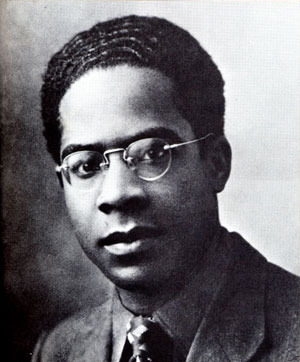
Martinique-born poet, playwright, and politician Aimé Fernand Césaire contributed to the development of the concept of negritude; his primarily surrealist works include The Miracle Weapons (1946) and A Tempest (1969). A francophone author of African descent. His books of include Lost Body, with illustrations by Pablo Picasso, Aimé Césaire: The Collected Poetry, and Return to My Native Land. He is also the author of Discourse on Colonialism, a book of essays which has become a classic text of French political literature and helped establish the literary and ideological movement Negritude, a term Césaire defined as “the simple recognition of the fact that one is black, the acceptance of this fact and of our destiny as blacks, of our history and culture.” Césaire is a recipient of the International Nâzim Hikmet Poetry Award, the second winner in its history. He served as Mayor of Fort-de-France as a member of the Communist Party, and later quit the party to establish his Martinique Independent Revolution Party. He was deeply involved in the struggle for French West Indian rights and served as the deputy to the French National Assembly. He retired from politics in 1993. Césaire died in Martinique.