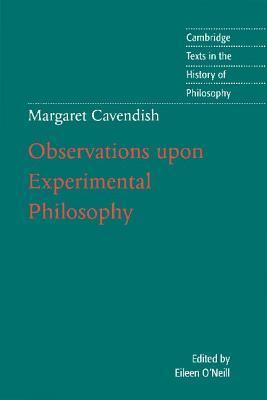
Observations Upon Experimental Philosophy
1668
First Published
3.57
Average Rating
338
Number of Pages
Margaret Cavendish's Observations upon Experimental Philosophy holds a unique position in early modern philosophy. Cavendish rejects the picture of nature as a grand machine that was propounded by Hobbes and Descartes; she also rejects the alternative views of nature that make reference to immaterial spirits. Instead she develops an original system of organicist materialism, and draws on the doctrines of ancient Stoicism to attack the tenets of seventeenth-century mechanical philosophy. Her treatise is a document of major importance in the history of women's contributions to philosophy and science.

Avg Rating
3.57
Number of Ratings
53
5 STARS
25%
4 STARS
26%
3 STARS
34%
2 STARS
11%
1 STARS
4%
goodreads
Author

Margaret Cavendish
Author · 13 books
Margaret Lucas Cavendish, Duchess of Newcastle, was the youngest child of a wealthy Essex family. At the age of 20 she became Maid of Honour to Queen Henrietta Maria and traveled with her into Persian exile in 1644. There she married William Cavendish, Marquis (later Duke) of Newcastle. Between 1653 and 1668 she published many books on a wide variety of subjects, including many stories that are now regarded as some of the earliest examples of science fiction.