Margins
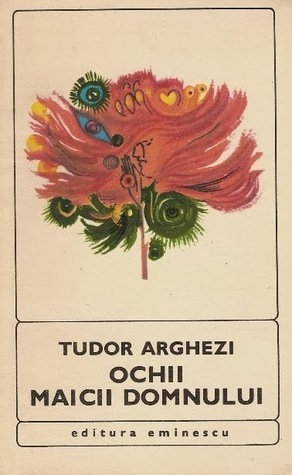
Ochii Maicii Domnului book cover
Ochii Maicii Domnului
1934
First Published
3.66
Average Rating
308
Number of Pages
„...Lunga narațiune a d-lui Arghezi este expresia unui lirism fantastic. Senzaționalul întâmplărilor din care se compune viața lui Vintilă Voinea este ilogicul simbolic al existenței fenomenale, dincolo de a cărei fantasmagorie aflăm unitatea spiritului. Această unitate metafizică a spiritului arghezian am căutat-o și am găsit-o în «romanul» Ochii Maicii Domnului. După cum Sărmanul Dionis este masca unui mit liric sub care se ascunde viziunea eminesciană a existenței, tot astfel, cartea d-lui Arghezi corespunde unui mit poetic încorporat în operele sale anterioare.“ —Pompiliu Constantinescu

Avg Rating
3.66
Number of Ratings
35
5 STARS
31%
4 STARS
29%
3 STARS
23%
2 STARS
9%
1 STARS
9%
goodreads

Author

Tudor Arghezi
Tudor Arghezi
Author · 10 books

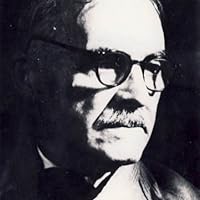
Tudor Arghezi (Romanian pronunciation: [ˈtudor arˈɡezi]; 21 May 1880 – 14 July 1967) was a Romanian writer, best known for his contribution to poetry and children's literature. Born Ion N. Theodorescu in Bucharest (where he also died), he explained that his pen name was related to Argesis, the Latin name for the Argeş River. Arghezi is perhaps the most striking figure of Romanian interwar literature, and one of the major poets of the 20th century. The freshness of his vocabulary represents a most original synthesis between the traditional styles and modernism. He has left behind a vast oeuvre, which includes poetry, novels, essays, journalism, translations and letters. The impact of his writings on Romanian poetic language was revolutionary, through his creation of unusual lyrical structures, new sub-genres in prose - such as the poetic novel, the "tablet" (tableta) and the "ticket" (biletul).[46] He excelled at powerful and concise formulations, the shock value of which he exploited to startle lazy or conformist thinking, and his writings abound in paradoxes, as well as metaphysical or religious arguments.[47] Evidencing the satirical genre's leading role throughout Arghezi's literary career, George Călinescu argued that it had become a contributing factor to much of his poetry and prose fiction.[48] Arghezi re-established an aesthetic of the grotesque, and experimented at length with prosody.[43] In much of his poetry (notably in his Flori de mucigai and Hore), Arghezi also built upon a tradition of slang and argot usage, creating an atmosphere which, according to Călinescu, recalled the universe of Anton Pann, as well as those of Salvatore Di Giacomo and Cesare Pescarella.[49] He introduced a vocabulary of intentional ugliness and decay, with the manifest goal of extending the limits of poetic language, the major theme in his Cuvinte Potrivite; nevertheless, the other half of Arghezi's poetic universe was that of family life, childhood, and small familiar spaces, rendered in minutely detailed poems.[50] In an era when the idea of the impossibility of communication was fashionable, he stood against his contemporaries through his strong belief in the power of the written word to communicate ideas and feelings—he was described by Tudor Vianu as "a fighting poet, subject to attacks as well as returning them".[51] Despite his association with the Communist regime, Arghezi is widely acknowledged as a major literary figure. His work has traditionally been a staple of Romanian literature textbooks for decades.

548 Market St PMB 65688, San Francisco California 94104-5401 USA
© 2026 Paratext Inc. All rights reserved