Margins
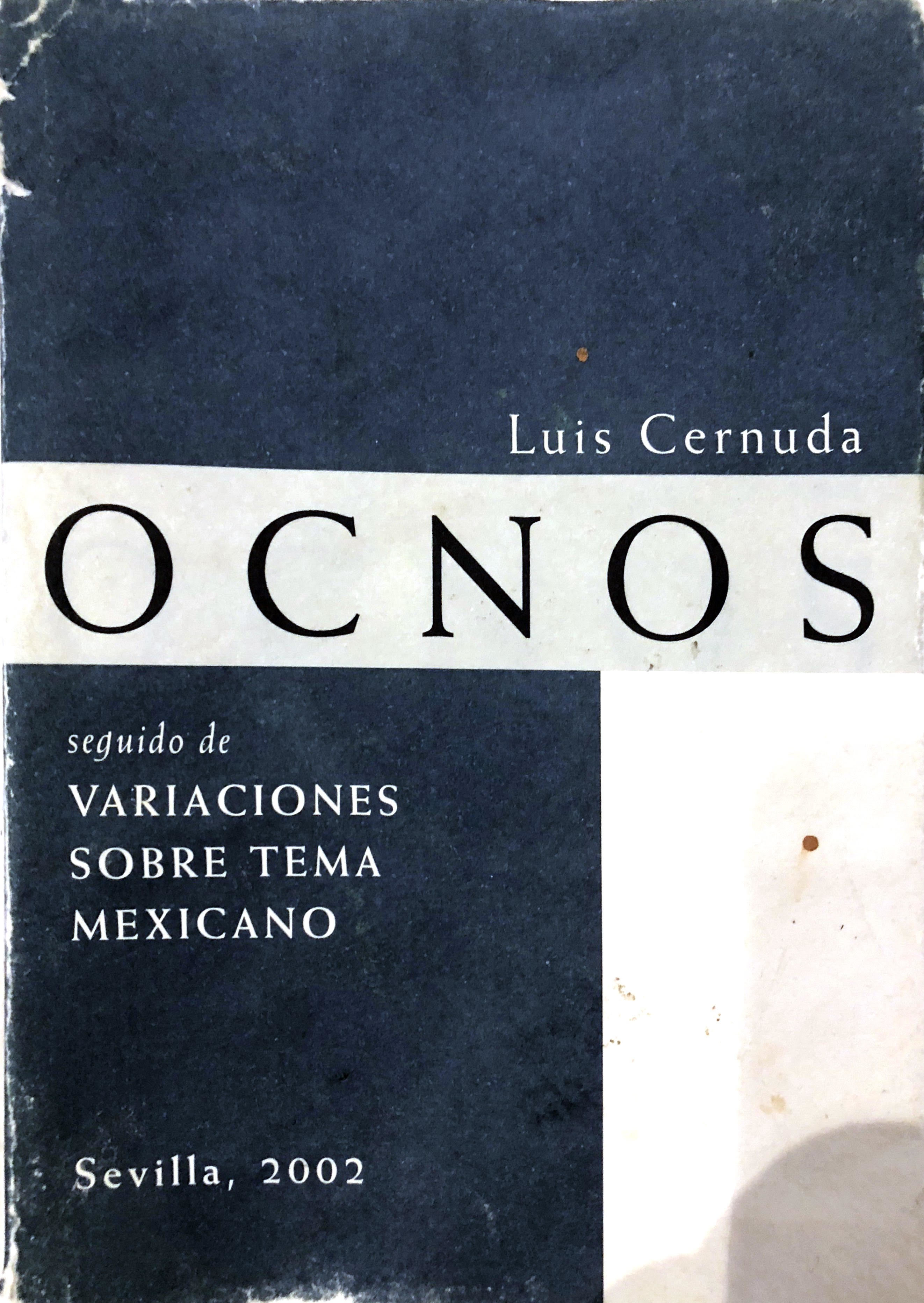
Ocnos. Variaciones sobre tema mexicano. book cover
Ocnos. Variaciones sobre tema mexicano.
2014
First Published
4.12
Average Rating
234
Number of Pages
No sabemos si fue la nostalgia o el resentimiento quien dictó a luis cernuda estos poemas en prosa sobre su Sevilla natal (a la que no se nombra), escritos desde su desesperada soledad en Glasgow. Lo que sí es seguro es que no lo hizo la indiferencia. Con un contradictorio afecto, Cernuda se vuelca sobre sus recuerdos no sólo infantiles, los rescata de donde habita el olvido y con esa memoria va cincelando pequeñas estampas sevillanas, que en las sucesivas ediciones de Ocnos, y siguiendo sus países de acogida, amplían su ámbito geográfico. Cernuda escogió el género del poema en prosa, poco frecuentado en nuestras letras, quizá por ese diferenciarse suyo tan estético (y tan ético). Entre la segunda y la tercera edición de Ocnos, el poeta exiliado descubre México, y ese re-conocimiento (del amor, del paisaje, de la lengua) lo invita a persistir en la estampa en prosa, esta vez bajo el título de Variaciones sobre tema mexicano. En sus últimos años quiso Cernuda ver reunidas ambas obras en un solo volumen, pero por diversas razones esa versión apareció póstumamente. Con la presente edición, Renacimiento vuelve a cumplir el deseo del exigente poeta sevillano. Luis Cernuda (Sevilla, 1902-Ciudad de México, 1963). Poeta y crítico perteneciente a la Generación del 27. Se exilia durante la guerra civil y se dedica a la enseñanza universitaria en Inglaterra, Estados Unidos y México. Su obra poética consta de once libros, que fue agrupando, desde su primera edición en 1936, bajo el título de La Realidad y el Deseo, una de las aventuras poéticas más personales y decisivas en la historia de la lírica en español. En los últimos años, Cernuda ha alcanzado un reconocimiento sólo dado a los grandes autores de nuestra lengua. Fue también un certero y riguroso crítico literario, con opiniones nada convencionales, como demuestran sus Estudios sobre poesía contemporánea (1957) o los dos volúmenes de Poesía y literatura (1960 y 1964). Juan Lamillar (Sevilla 1957). Poeta y crítico literario. Sus dos últimos libros de poemas son La hora secreta (Renacimiento, 2008) y Entretiempo (Vandalia, 2009). Como crítico ha publicado La otra Abisinia (Fundación El Monte, 1998), El desorden del canto (Renacimiento, 2000) y La luz y el horizonte, biografía de Joaquín Romero Murube (Fundación José Manuel Lara, 2004). Ha reunido sus trabajos sobre Luis Cernuda en Música cautiva (Renacimiento, en prensa).

Avg Rating
4.12
Number of Ratings
59
5 STARS
41%
4 STARS
36%
3 STARS
19%
2 STARS
5%
1 STARS
0%
goodreads

Author

Luis Cernuda
Luis Cernuda
Author · 12 books

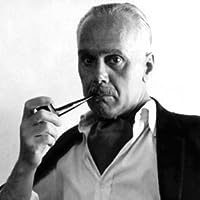
Luis Cernuda was a Spanish poet and literary critic. The son of a military man, Cernuda received a strict education as a child, and then studied law at the University of Seville, where he met the poet and literature professor Pedro Salinas. In 1928, after his mother died, Cernuda left his hometown, with which he had all his life an intense love-hate relationship. He briefly moved to Madrid, where he quickly became part of the literary scene. However, his detached, timid and morose character, his search of perfection frequently made him lose friendships and popularity. His mentor and former professor Salinas arranged for him to take a lectureship for a year at the University of Toulouse. From June 1929 until 1937 Cernuda lived in Madrid and participated actively in the literary and cultural scene of the Spanish capital. Cernuda collaborated with many organisations working to support a more liberal and tolerant Spain. He participated in the Second Congress of Anti-Fascist Intellectuals in Valencia. During the Spanish Civil War a friend secured him a position as teacher in Cranleigh School, where he taught Spanish Language and literature. After WWII another friend got him a lectureship in Holyoke, Massachusetts, USA, where he would spend some years. Later on, moved by his sentimental relationships, he would move to Mexico, where he died. The central concerns of this poet are evident in the title of his life's major opus: La realidad y el deseo ("Reality and Desire"). He published his first collection of verse, Perfil del aire ("Air's profile"), in 1927. Several books followed, and he collected new and already published poetry under this title in 1936. Subsequent editions would include new poetry as new books inside La realidad y el deseo. Expanded on almost until his death in 1963, in this work the poet explores desire, love, subject, object, history and sexuality in poems which draw influences from romanticism, classicism, and the surrealist avant-garde. Besides verse, he also published a collection of reminiscent prose poems, 'Ocnos', about his childhood in Seville. Cernuda is known as a member of the Generation of '27, a group of Spanish poets and artists including Federico García Lorca. He broke new ground with Los Placeres Prohibidos ("Forbidden Pleasures"), an avant-garde work in which the poet used surrealism to explore his sexuality. During his British period he became deeply familiar with English poetry, which he would admire for its containment and lack of superfluous artifice and paraphernalia. He would also translate several poems and plays into Spanish. He would comment that translating Shakespeare's Troilus and Cressida made him intensely happy. Deeply influenced by André Gide, Cernuda embraced his homosexuality at an early age and made homosexual desire and love the core of his poetry. Or, at least, unlike other gay poets at the time, in his poetry he was never ambiguous about the fact that the objects of his desire and love were men. One of the most influential poets in contemporary Spanish poetry, he is definitely a crucial ground-breaking figure for homosexual writing in Spanish. During the Spanish Civil War, deeply moved by the assassination of Federico Garcia Lorca, Cernuda fled to England, where he began an exile that later took him to France, Scotland, Massachusetts (Mount Holyoke College), California and finally settling in Mexico; he never returned to Spain. He never married and had no children. His major English language critics include Derek Harris and Phillip Silver.

548 Market St PMB 65688, San Francisco California 94104-5401 USA
© 2026 Paratext Inc. All rights reserved