



Margins
Okuma Üzerine book cover
Okuma Üzerine
Edebiyat Dersleri
2013
First Published
3.80
Average Rating
28
Number of Pages

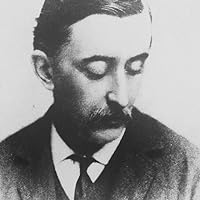
“Ne zaman yeni bir ki­tabın yayımlandığını duyarsanız, eski birini okuyun.” Lafcadio Hearn, çeşitli ülkelerde yaşayıp muhabirlik yaptıktan sonra Japonya’ya yerleşti. Hayatının önemli bir bölümünü Japon kültürüne adadı. Doğaüstü öykülerini bir araya getirdiği Kvaidan adlı başyapıtıyla tarihe geçip “Japonya’nın Poe’su” olarak kabul edildi. Hearn, aynı zamanda önemli bir eğitmendi ve lise ile üniversitelerde ders veriyordu. Bu derslerin metinlerinden derlediğimiz Okuma Üzerine’de hem insanın okuma alışkanlıkları hem de doğaüstü kurgu, yüksek sanat, romantik ve klasik edebiyat gibi konular ele alınıyor.
Avg Rating
3.80
Number of Ratings
25
5 STARS
28%
4 STARS
40%
3 STARS
16%
2 STARS
16%
1 STARS
0%
goodreads

Author

Lafcadio Hearn
Lafcadio Hearn
Author · 59 books

Greek-born American writer Lafcadio Hearn spent 15 years in Japan; people note his collections of stories and essays, including Kokoro (1896), under pen name Koizumi Yakumo. Rosa Cassimati (Ρόζα Αντωνίου Κασιμάτη in Greek), a Greek woman, bore Patrick Lafcadio Hearn (Πατρίκιος Λευκάδιος Χερν in Greek or 小泉八雲 in Japanese), a son, to Charles Hearn, an army doctor from Ireland. After making remarkable works in America as a journalist, he went to Japan in 1890 as a journey report writer of a magazine. He arrived in Yokohama, but because of a dissatisfaction with the contract, he quickly quit the job. He afterward moved to Matsué as an English teacher of Shimané prefectural middle school. In Matsué, he got acquainted with Nishida Sentarô, a colleague teacher and his lifelong friend, and married Koizumi Setsu, a daughter of a samurai. In 1891, he moved to Kumamoto and taught at the fifth high school for three years. Kanô Jigorô, the president of the school of that time, spread judo to the world. Hearn worked as a journalist in Kôbé and afterward in 1896 got Japanese citizenship and a new name, Koizumi Yakumo. He took this name from "Kojiki," a Japanese ancient myth, which roughly translates as "the place where the clouds are born". On that year, he moved to Tôkyô and began to teach at the Imperial University of Tôkyô. He got respect of students, many of whom made a remarkable literary career. In addition, he wrote much reports of Japan and published in America. So many people read his works as an introduction of Japan. He quit the Imperial University in 1903 and began to teach at Waseda University on the year next. Nevertheless, after only a half year, he died of angina pectoris.

548 Market St PMB 65688, San Francisco California 94104-5401 USA
© 2026 Paratext Inc. All rights reserved