Margins
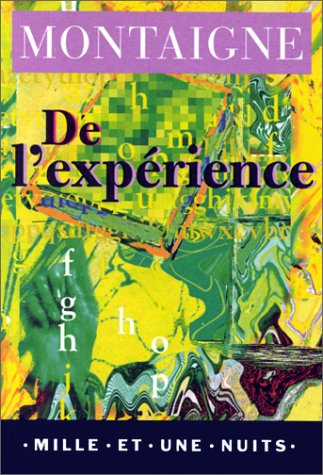
On Experience book cover
On Experience
1595
First Published
3.69
Average Rating
110
Number of Pages
Le dernier des Essais, écrit par Montaigne (1533-1592) au soir de sa vie. Il constitue une véritable synthèse de sa réflexion, marquée par les doctrines stoïcienne et sceptique : la "diversité et variété" de la nature nous interdisent d'atteindre une connaissance définitive, un ordre du monde stable. L'auteur se moque donc des lois qui prétendent corseter par avance le hasard des événements, des commentaires qui font oublier les textes originaux, des dogmes qui veulent réduire le débat religieux "à l'expresse parole de la Bible". Contre les prétentions uniformisantes du discours, il défend le libre exercice du jugement, la diversité sociale et culturelle."Prétendre épuiser la richesse sociale de la vie, écrit Montaigne, c'est se montrer aussi naïf que les enfants cherchant à retenir dans leurs mains le mercure fuyard...".

Avg Rating
3.69
Number of Ratings
52
5 STARS
31%
4 STARS
19%
3 STARS
38%
2 STARS
12%
1 STARS
0%
goodreads

Author

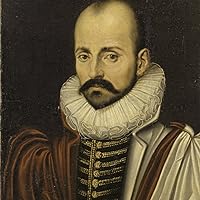
Michel de Montaigne
Michel de Montaigne
Author · 42 books

Michel Eyquem de Montaigne (1532-1592) was one of the most influential writers of the French Renaissance. Montaigne is known for popularizing the essay as a literary genre. He became famous for his effortless ability to merge serious intellectual speculation with casual anecdotes and autobiography—and his massive volume Essais (translated literally as "Attempts") contains, to this day, some of the most widely influential essays ever written. Montaigne had a direct influence on writers the world over, from William Shakespeare to René Descartes, from Ralph Waldo Emerson to Stephan Zweig, from Friedrich Nietzsche to Jean-Jacques Rousseau. He was a conservative and earnest Catholic but, as a result of his anti-dogmatic cast of mind, he is considered the father, alongside his contemporary and intimate friend Étienne de La Boétie, of the "anti-conformist" tradition in French literature. In his own time, Montaigne was admired more as a statesman then as an author. The tendency in his essays to digress into anecdotes and personal ruminations was seen as detrimental to proper style rather than as an innovation, and his declaration that, "I am myself the matter of my book", was viewed by his contemporaries as self-indulgent. In time, however, Montaigne would be recognized as embodying, perhaps better than any other author of his time, the spirit of freely entertaining doubt which began to emerge at that time. He is most famously known for his skeptical remark, "Que sais-je?" ("What do I know?"). Remarkably modern even to readers today, Montaigne's attempt to examine the world through the lens of the only thing he can depend on implicitly—his own judgment—makes him more accessible to modern readers than any other author of the Renaissance. Much of modern literary nonfiction has found inspiration in Montaigne, and writers of all kinds continue to read him for his masterful balance of intellectual knowledge and personal storytelling.

548 Market St PMB 65688, San Francisco California 94104-5401 USA
© 2026 Paratext Inc. All rights reserved