



On Passing Deadman’s Island SEE you, beneath yon cloud so dark, Fast gliding along a gloomy bark? Her sails are full,—though the wind is still, And there blows not a breath her sails to fill! Say, what doth that vessel of darkness bear? The silent calm of the grave is there, Save now and again a death-knell rung, And the flap of the sails with night-fog hung. There lieth a wreck on the dismal shore Of cold and pitiless Labrador; Where, under the moon, upon mounts of frost, Full many a mariner’s bones are tost. Yon shadowy bark hath been to that wreck, And the dim blue fire, that lights her deck, Doth play on as pale and livid a crew As ever yet drank the churchyard dew. To Deadman’s Isle, in the eye of the blast, To Deadman’s Isle, she speeds her fast; By skeleton shapes her sails are furled, And the hand that steers is not of this world! Oh! hurry thee on,—oh! hurry thee on, Thou terrible bark, ere the night be gone, Nor let morning look on so foul a sight As would blanch forever her rosy light!
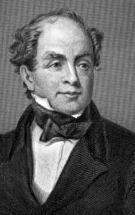
Author

Thomas Moore, was an Irish writer, poet, and lyricist celebrated for his Irish Melodies. His setting of English-language verse to old Irish tunes marked the transition in popular Irish culture from Irish to English. Politically, Moore was recognised in England as a press, or "squib", writer for the aristocratic Whigs; in Ireland he was accounted a Catholic patriot. Married to a Protestant actress and hailed as "Anacreon Moore" after the classical Greek composer of drinking songs and erotic verse, Moore did not profess religious piety. Yet in the controversies that surrounded Catholic Emancipation, Moore was seen to defend the tradition of the Church in Ireland against both evangelising Protestants and uncompromising lay Catholics. Longer prose works reveal more radical sympathies. The Life and Death of Lord Edward Fitzgerald depicts the United Irish leader as a martyr in the cause of democratic reform. Complementing Maria Edgeworth's Castle Rackrent, Memoirs of Captain Rock is a saga, not of Anglo-Irish landowners, but of their exhausted tenants driven to the semi-insurrection of "Whiteboyism". Today Moore is remembered almost alone either for his Irish Melodies (typically "The Minstrel Boy" and "The Last Rose of Summer") or, less generously, for the role he is thought to have played in the loss of the memoirs of his friend Lord Byron.