


Margins
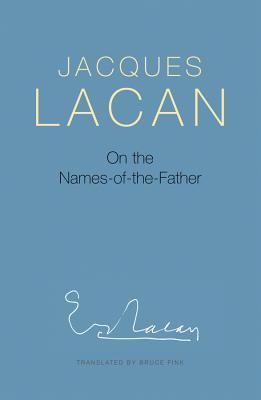
On the Names-of-the-Father book cover
On the Names-of-the-Father
2005
First Published
3.78
Average Rating
104
Number of Pages

What astonishing success the Name-of-the-Father has had! Everyone finds something in it. Who one’s father is isn’t immediately obvious, hardly being visible to the naked eye. Paternity is determined first and foremost by one’s culture. As Lacan said, "the Name-of-the-Father creates the function of the father." But then where does the plural stem from? It isn’t pagan, for it is found in the Bible. He who speaks from the burning bush says of Himself that He doesn't have just one Name. In other words, the Father has no proper Name. It is not a figure of speech, but rather a function. The Father has as many names as the function has props. What is its function? The religious function par excellence, that of tying things together. What things? The signifier and the signified, law and desire, thought and the body. In short, the symbolic and the imaginary. Yet if these two become tied to the real in a three-part knot, the Name-of-the-Father is no longer anything but mere semblance. On the other hand, if without it everything falls apart, it is the symptom of a failed knotting.
  • Jacques-Alain Miller Table of Contents: Foreword by Jacques-Alain Miller The Symbolic, the Imaginary, and the Real Introduction to the Names-of-the-Father Bio-bibliographical Notes Translator’s Notes
Avg Rating
3.78
Number of Ratings
234
5 STARS
29%
4 STARS
33%
3 STARS
25%
2 STARS
9%
1 STARS
3%
goodreads

Author

Jacques Lacan
Jacques Lacan
Author · 30 books

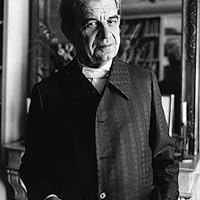
Jacques-Marie-Émile Lacan was a French psychoanalyst, psychiatrist, and doctor, who made prominent contributions to the psychoanalytic movement. His yearly seminars, conducted in Paris from 1953 until his death in 1981, were a major influence in the French intellectual milieu of the 1960s and 1970s, particularly among post-structuralist thinkers. Lacan's ideas centered on Freudian concepts such as the unconscious, the castration complex, the ego, focusing on identifications, and the centrality of language to subjectivity. His work was interdisciplinary, drawing on linguistics, philosophy, mathematics, amongst others. Although a controversial and divisive figure, Lacan is widely read in critical theory, literary studies, and twentieth-century French philosophy, as well as in the living practice of clinical psychoanalysis.

548 Market St PMB 65688, San Francisco California 94104-5401 USA
© 2026 Paratext Inc. All rights reserved