Margins
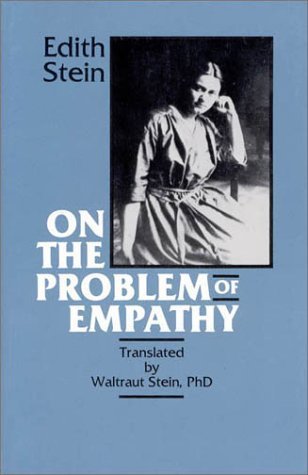
On the Problem of Empathy book cover
On the Problem of Empathy
1916
First Published
4.18
Average Rating
161
Number of Pages
The radical viewpoint of phenomenology is presented by T 3 Edmund Husserl in his Ideas. This viewpoint seems quite simple at first, but becomes exceedingly complex and involves intricate distinctions when attempts are made to apply it to actual problems. Therefore, it may be well to attempt a short statement of this position in order to note the general problems with which it is dealing as well as the method of solution which it proposes. I shall emphasize the elements of phenomenology which seem most relevant to E. Stein's work. Husserl deals with two traditional philosophical questions, and in answering them, develops the method of phenomenological reduction which he maintains is the basis of all science. These questions are, "What is it that can be known without doubt?" and "How is this knowledge possible in the most general sense?" In the tradition of idealism he takes consciousness as the area to be investigated. He posits nothing about the natural world. He puts it in "brackets," as a portion of an algebraic formula is put in brackets, and makes no use of the material within these brackets. This does not mean that the "real" wor!d does not exist, he says emphatically; it only means that this existence is a presupposition must be suspended to achieve pure description.

Avg Rating
4.18
Number of Ratings
208
5 STARS
43%
4 STARS
35%
3 STARS
19%
2 STARS
1%
1 STARS
1%
goodreads

Author

Edith Stein
Edith Stein
Author · 13 books

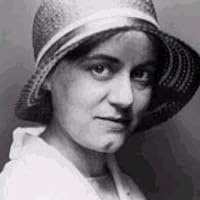
Edith Stein, also known as St. Teresa Benedicta of the Cross, OCD, (German: Teresia Benedicta vom Kreuz, Latin: Teresia Benedicta a Cruce) (12 October 1891 – 9 August 1942), was a German Jewish philosopher who converted to the Roman Catholic Church and became a Discalced Carmelite nun. She is a martyr and saint of the Catholic Church. She was born into an observant Jewish family, but was an atheist by her teenage years. Moved by the tragedies of World War I, in 1915 she took lessons to become a nursing assistant and worked in a hospital for the prevention of disease outbreaks. After completing her doctoral thesis in 1916 from the University of Göttingen, she obtained an assistantship at the University of Freiburg. From reading the works of the reformer of the Carmelite Order, St. Teresa of Jesus, OCD, she was drawn to the Catholic Faith. She was baptized on 1 January 1922 into the Roman Catholic Church. At that point she wanted to become a Discalced Carmelite nun, but was dissuaded by her spiritual mentors. She then taught at a Catholic school of education in Speyer. As a result of the requirement of an "Aryan certificate" for civil servants promulgated by the Nazi government in April 1933 as part of its Law for the Restoration of the Professional Civil Service, she had to quit her teaching position. She was admitted to the Discalced Carmelite monastery in Cologne the following October. She received the religious habit of the Order as a novice in April 1934, taking the religious name Teresa Benedicta of the Cross ("Teresa blessed by the Cross"). In 1938 she and her sister Rosa, by then also a convert and an extern Sister of the monastery, were sent to the Carmelite monastery in Echt, Netherlands for their safety. Despite the Nazi invasion of that state in 1940, they remained undisturbed until they were arrested by the Nazis on 2 August 1942 and sent to the Auschwitz concentration camp, where they died in the gas chamber on 9 August 1942.

548 Market St PMB 65688, San Francisco California 94104-5401 USA
© 2026 Paratext Inc. All rights reserved