Margins
Opere complete. VIII book cover
Opere complete. VIII
Frammenti e Paralipomena
2014
First Published
2.67
Average Rating
520
Number of Pages
Al pari di quell'affascinante affresco della modernità, anche il presente volume è composto da materiale frammentario, ossia da testi - brani, appunti, aforismi, semplici schemi - che Walter Benjamin accumulò nell'arco di quasi un trentennio in funzione di quanto stava scrivendo, di quanto aveva in mente di scrivere ma poi non realizzò, o magari in vista dell'ampliamento o del rifacimento di quanto aveva già pubblicato. Un materiale quindi composito, che è stato suddiviso in due grandi gruppi, comprendenti da un lato i Frammenti, quindi i testi relativamente autonomi non riferibili ad alcuna delle opere compiute, e dall'altro i Paralipomena, ossia i brani che hanno invece un preciso nesso con scritti pubblicati (si pensi al grande saggio su Kafka del 1934) o comunque in via di avanzata definizione (ad esempio Infanzia berlinese). Una raccolta che proprio per la sua eterogeneità e incompletezza apre scorci interessanti sulla grande officina di un pensatore che continua a essere di straordinaria attualità.

Avg Rating
2.67
Number of Ratings
3
5 STARS
0%
4 STARS
33%
3 STARS
33%
2 STARS
0%
1 STARS
33%
goodreads

Author

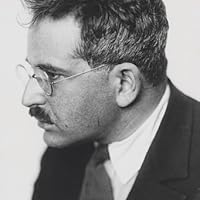
Walter Benjamin
Walter Benjamin
Author · 72 books

Walter Bendix Schönflies Benjamin was a German-Jewish Marxist literary critic, essayist, translator, and philosopher. He was at times associated with the Frankfurt School of critical theory and was also greatly inspired by the Marxism of Bertolt Brecht and Jewish mysticism as presented by Gershom Scholem. As a sociological and cultural critic, Benjamin combined ideas drawn from historical materialism, German idealism, and Jewish mysticism in a body of work which was a novel contribution to western philosophy, Marxism, and aesthetic theory. As a literary scholar, he translated the Tableaux Parisiens edition of Baudelaire's Les Fleurs du mal as well as Proust's In Search of Lost Time. His work is widely cited in academic and literary studies, in particular his essays The Task of the Translator and The Work of Art in the Age of Mechanical Reproduction. Influenced by Bachofen, Benjamin gave the name "auratic perception" to the aesthetic faculty through which civilization would recover a lost appreciation of myth.

548 Market St PMB 65688, San Francisco California 94104-5401 USA
© 2026 Paratext Inc. All rights reserved