Margins
Organisms and Environments book cover 1
Organisms and Environments book cover 2
Organisms and Environments book cover 3
Organisms and Environments
Series · 9 books · 2002-2018

Books in series

American Bison book cover
#3

American Bison

A Natural History

2002

American Bison combines the latest scientific information and one man's personal experience in an homage to one of the most magnificent animals to have roamed America's vast, vanished grasslands. Dale F. Lott, a distinguished behavioral ecologist who was born on the National Bison Range and has studied the buffalo for many years, relates what is known about this iconic animal's life in the wild and its troubled history with humans. Written with unusual grace and verve, American Bison takes us on a journey into the bison's past and shares a compelling vision for its future, offering along the way a valuable introduction to North American prairie ecology. We become Lott's companions in the field as he acquaints us with the social life and physiology of the bison, sharing stories about its impressive physical prowess and fascinating relationships. Describing the entire grassland community in which the bison live, he writes about the wolves, pronghorn, prairie dogs, grizzly bears, and other animals and plants, detailing the interdependent relationships among these inhabitants of a lost landscape. Lott also traces the long and dramatic relationship between the bison and Native Americans, and gives a surprising look at the history of the hide hunts that delivered the coup de grâce to the already dwindling bison population in a few short years. This book gives us a peek at the rich and unique ways of life that evolved in the heart of America. Lott also dismantles many of the myths we have created about these ways of life, and about the bison in particular, to reveal the animal ruminating, reproducing, and rutting in its full glory. His portrait of the bison ultimately becomes a plea to conserve its wildness and an eloquent meditation on the importance of the wild in our lives.
Lizards book cover
#5

Lizards

Windows to the Evolution of Diversity

2003

From tiny to gigantic, from drab to remarkably beautiful, from harmless to venomous, lizards are spectacular products of natural selection. This book, lavishly illustrated with color photographs, is the first comprehensive reference on lizards around the world. Accessible, scientifically up-to-date, and written with contagious enthusiasm for the subject, Windows to the Evolution of Diversity covers species evolution, diversity, ecology, and biology. Eric R. Pianka and Laurie J. Vitt have studied and photographed members of almost all lizard families worldwide, and they bring to the book a deep knowledge based on extensive firsthand experience with the animals in their natural habitats. Part One explores lizard lifestyles, answering such questions as why lizards are active when they are, why they behave as they do, how they avoid predators, why they eat what they eat, and how they reproduce and socialize. In Part Two the authors take us on a fascinating tour of the world's manifold lizard species, beginning with iguanians, an evolutionary group that includes some of the most bizarre lizards, the true chameleons of Africa and Madagascar. We also meet the glass lizard, able to break its tail into many highly motile pieces to distract a predator from its body; lizards that can run across water; and limbless lizards, such as snakes. Part Three gives an unprecedented global view of evolutionary trends that have shaped present-day lizard communities and considers the impact of humans on their future. A definitive resource containing many entertaining anecdotes, this magnificent book opens a new window to the natural world and the evolution of life on earth.
Twilight of the Mammoths book cover
#7

Twilight of the Mammoths

Ice Age Extinctions and the Rewilding of America

2005

As recently as 11,000 years ago—"near time" to geologists—mammoths, mastodons, gomphotheres, ground sloths, giant armadillos, native camels and horses, the dire wolf, and many other large mammals roamed North America. In what has become one of science's greatest riddles, these large animals vanished in North and South America around the time humans arrived at the end of the last great ice age. Part paleontological adventure and part memoir, Twilight of the Mammoths presents in detail internationally renowned paleoecologist Paul Martin's widely discussed and debated "overkill" hypothesis to explain these mysterious megafauna extinctions. Taking us from Rampart Cave in the Grand Canyon, where he finds himself "chest deep in sloth dung," to other important fossil sites in Arizona and Chile, Martin's engaging book, written for a wide audience, uncovers our rich evolutionary legacy and shows why he has come to believe that the earliest Americans literally hunted these animals to death. As he discusses the discoveries that brought him to this hypothesis, Martin relates many colorful stories and gives a rich overview of the field of paleontology as well as his own fascinating career. He explores the ramifications of the overkill hypothesis for similar extinctions worldwide and examines other explanations for the extinctions, including climate change. Martin's visionary thinking about our missing megafauna offers inspiration and a challenge for today's conservation efforts as he speculates on what we might do to remedy this situation—both in our thinking about what is "natural" and in the natural world itself.
Grass book cover
#8

Grass

In Search of Human Habitat

2009

Part autobiography, part philosophical rumination, this evocative conservation odyssey explores the deep affinities between humans and our original grasslands. In a richly drawn, anecdotally driven narrative, Joe C. Truett, a grasslands ecologist who writes with a flair for language, traces the evolutionary, historical, and cultural forces that have reshaped North American rangelands over the past two centuries. He introduces an intriguing cast of characters―wildlife and grasslands biologists, archaeologists, ranchers, and petroleum geologists―to illuminate a wide range of related our love affair with turf and how it manifests in lawns and sports, the ecological and economic dimensions of ranching, the glory of cowboy culture, grasslands and restoration ecology, and more. His book ultimately provides the background against which we can envision a new paradigm for restoring rangeland ecosystems―and a new paradigm for envisioning a more sustainable future.
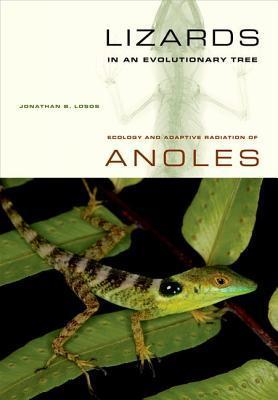
Lizards in an Evolutionary Tree book cover
#9

Lizards in an Evolutionary Tree

Ecology and Adaptive Radiation of Anoles

2009

Adaptive radiation, which results when a single ancestral species gives rise to many descendants, each adapted to a different part of the environment, is possibly the single most important source of biological diversity in the living world. One of the best-studied examples involves Caribbean Anolis lizards. With about 400 species, Anolis has played an important role in the development of ecological theory and has become a model system exemplifying the integration of ecological, evolutionary, and behavioral studies to understand evolutionary diversification. This major work, written by one of the best-known investigators of Anolis, reviews and synthesizes an immense literature. Jonathan B. Losos illustrates how different scientific approaches to the questions of adaptation and diversification can be integrated and examines evolutionary and ecological questions of interest to a broad range of biologists.
Evolution's Wedge book cover
#10

Evolution's Wedge

Competition and the Origins of Diversity (Volume 12)

2012

Evolutionary biology has long sought to explain how new traits and new species arise. Darwin maintained that competition is key to understanding this biodiversity and held that selection acting to minimize competition causes competitors to become increasingly different, thereby promoting new traits and new species. Despite Darwin’s emphasis, competition’s role in diversification remains controversial and largely underappreciated. In their synthetic and provocative book, evolutionary ecologists David and Karin Pfennig explore competition's role in generating and maintaining biodiversity. The authors discuss how selection can lessen resource competition or costly reproductive interactions by promoting trait evolution through a process known as character displacement. They further describe character displacement’s underlying genetic and developmental mechanisms. The authors then consider character displacement’s myriad downstream effects, ranging from shaping ecological communities to promoting new traits and new species and even fueling large-scale evolutionary trends. Drawing on numerous studies from natural populations, and written for a broad audience, Evolution’s Wedge seeks to inspire future research into character displacement’s many implications for ecology and evolution.
Cane Toad Wars (Volume 15) book cover
#11

Cane Toad Wars (Volume 15)

2018

In 1935, an Australian government agency imported 101 specimens of the Central and South American Cane Toad in an attempt to manage insects that were decimating sugar-cane harvests. In Australia the Cane Toad adapted and evolved with abandon, voraciously consuming native wildlife and killing predators with its lethal skin toxin. Today, hundreds of millions of Cane Toads have spread across the northern part of Australia and continue to move westward. The humble Cane Toad has become a national villain. Cane Toad Wars chronicles the work of intrepid scientist Rick Shine, who has been documenting the toad’s ecological impact in Australia and seeking to buffer it. Despite predictions of devastation in the wake of advancing toad hordes, the author’s research reveals a more complex and nuanced story. A firsthand account of a perplexing ecological problem and an important exploration of how we measure evolutionary change and ecological resilience, this book makes an effective case for the value of long-term natural history research in informing conservation practice.
A Sea of Glass book cover
#12

A Sea of Glass

Searching for the Blaschkas' Fragile Legacy in an Ocean at Risk (Volume 13)

2016

"The author makes an eloquent plea for marine biodiversity conservation."—Library Journal "Harvell seems to channel the devotion that motivated the Blaschkas."—The Guardian Winner of the 2016 National Outdoor Book Award, Environment Category It started with a glass octopus. Dusty, broken, and all but forgotten, it caught Drew Harvell’s eye. Fashioned in intricate detail by the father-son glassmaking team of Leopold and Rudolf Blaschka, the octopus belonged to a menagerie of unusual marine creatures that had been packed away for decades in a storage unit. More than 150 years earlier, the Blaschkas had been captivated by marine invertebrates and spun their likenesses into glass, documenting the life of oceans untouched by climate change and human impacts. Inspired by the Blaschkas’ uncanny replicas, Harvell set out in search of their living counterparts. In A Sea of Glass, she recounts this journey of a lifetime, taking readers along as she dives beneath the ocean's surface to a rarely seen world, revealing the surprising and unusual biology of some of the most ancient animals on the tree of life. On the way, we glimpse a century of change in our ocean ecosystems and learn which of the living matches for the Blaschkas’ creations are, indeed, as fragile as glass. Drew Harvell and the Blaschka menagerie are the subjects of the documentary Fragile Legacy, which won the Best Short Film award at the 2015 Blue Ocean Film Festival & Conservation Summit. Learn more about the film and check out the trailer here.
Serendipity book cover
#13

Serendipity

2016

"Many of the findings in the book . . . are classics of ecology... A rare and delightful insight into timely science."—Jane Lubchenco, Nature "Estes' refreshing narrative deftly weaves rigorous science with personal reflection to create an absorbing and introspective read that is equal parts memoir, ecological textbook, and motivational guidebook for young ecologists."— Science To newly minted biologist James Estes, the sea otters he was studying in the leafy kelp forests off the coast of Alaska appeared to have an unbalanced relationship with their greater environment. Gorging themselves on the sea urchins that grazed among the kelp, these small charismatic mammals seemed to give little back in return. But as Estes dug deeper, he unearthed a far more complex relationship between the otter and its underwater environment, discovering that otters play a critical role in driving positive ecosystem dynamics. While teasing out the connective threads, he began to question our assumptions about ecological relationships. These questions would ultimately inspire a lifelong quest to better understand the surprising complexity of our natural world and the unexpected ways we discover it. Serendipity tells the story of James Estes’s life as a naturalist and the concepts that have driven his interest in researching the ecological role of top-level predators. Using the relationships between sea otters, kelp, and sea urchins as a touchstone, Estes retraces his investigations of numerous other species, ecosystems, and ecological processes in an attempt to discover why ecologists can learn so many details about the systems in which they work and yet understand so little about the broader processes that influence these systems. Part memoir, part natural history, and deeply inquisitive, Serendipity will entertain and inform readers as it raises thoughtful questions about our relationship with the natural world.

Authors

Paul Martin
Author · 3 books
Paul Sidney Martin was an American anthropologist and archaeologist.
C. Drew Harvell
C. Drew Harvell
Author · 1 book

Drew Harvell is Professor of Ecology and Evolutionary Biology at Cornell University and Curator of the Blaschka Marine Invertebrate Collection. She teaches courses in marine ecology, marine invertebrate biodiversity and conservation oceanography. Her research on the sustainability of marine ecosystems has taken her from directing projects with The World Bank on the reefs of Mexico, Indonesia, Myanmar and Hawaii to the cold waters of the Pacific Northwest. She is a Fellow of the Ecological Society of America and the Atkinson Center for a Sustainable Future and a winner of the Society of American Naturalist Jasper Loftus-Hills Award. She has published over 170 articles in journals such as Science, Nature, and Ecology and her lab was most recently featured in New York Times article,https://www.nytimes.com/2017/02/16/sc.... https://www.nytimes.com/2019/01/30/cl... Her first book, A Sea of Glass (2016) won a National Outdoor Book Award for Natural History Literature, a Rachel Carson Environmental Literature Award and was one of 2016’s best “Art Meets Science” books by Smithsonian Magazine and was featured by Discover, Scientific American, The Guardian, The New York Times and Nature. Her second book, Ocean Outbreak: Confronting a Rising Tide of Marine Disease, releases April 2019.

Rick Shine
Author · 1 book
Rick Shine is Professor of Biology at the University of Sydney. He has published more than a thousand scientific papers on the ecology of reptiles and amphibians and he has received a host of national and international awards for his research.
548 Market St PMB 65688, San Francisco California 94104-5401 USA
© 2026 Paratext Inc. All rights reserved