Margins
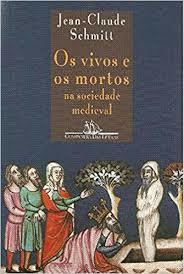
Os Vivos e Os Mortos na Sociedade Medieval book cover
Os Vivos e Os Mortos na Sociedade Medieval
1994
First Published
3.53
Average Rating
328
Number of Pages
La croyance aux revenants semble de tous les temps ; elle a pourtant aussi son histoire. Que signifiait au Moyen Âge cette "croyance" et comment la saisir ?Les dix siècles qui vont de l'Antiquité tardive à la veille de la Renaissance ont vu se succéder et se combiner les vieilles croyances païennes et les rituels lentement christianisés. Ils sont contenus dans la notion de memoria, de "mémoire des morts", faite de liturgie, de larmes et de prières ; une mémoire en réalité destinée à aider la séparation des vivants et du défunt, à régler le fonctionnement social de l'oubli.Les revenants médiévaux, c'étaient les rares morts qui, obstinément, pendant une durée assez brève, tenaient en échec le fonctionnement réglé de la memoria chrétienne, faisant obstacle au déroulement nécessaire du "travail du deuil". Revenants pitoyables ou terrifiants, le plus souvent solitaires, surgissant de leur tombe pour hanter la conscience des proches et des parents, coupable ou douloureuse.On saisit immédiatement l'ampleur des problèmes que fait surgir l'analyse rigoureuse de cette moisson de textes et d'images qui racontent l'apparition des morts, et où le spirituel se mêle au corporel, l'individuel au collectif, la personne à la parenté, le jour à la nuit, le merveilleux à l'ordre social. Ce livre ouvre à l'histoire sociale un secteur nouveau : la science des rêves.

Avg Rating
3.53
Number of Ratings
34
5 STARS
15%
4 STARS
38%
3 STARS
38%
2 STARS
3%
1 STARS
6%
goodreads

Author

Jean-Claude Schmitt
Jean-Claude Schmitt
Author · 7 books

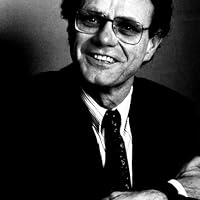
Jean-Claude Schmitt (born March 4, 1946 in Colmar) is a prominent French medievalist, the former student of Jacques Le Goff. He studies the socio-cultural aspects of medieval history in Western Europe and has made important contributions in his use of anthropological and art historical methods to interpret history. His most significant work has dealt with the relationships among elites and laymen in medieval life, particularly in the realm of religious culture, where he has focused on ideas and topics such as superstition, the occult and heresy in order to flesh out the differing world-views of the lay peasantry and the clerical elites who attempted to define religious practice. He has contributed numerous books, articles and encyclopedia entries on these and related topics. He has also written widely on the cult of saints, the idea of adolescence, visions and dreams, and preaching. Among Schmitt's best known works translated in English are The Holy Greyhound (1983), about the strange cult of a holy dog in medieval France, and Ghosts in the Middle Ages (1998) about notions of death, the afterlife and paranormal visions in medieval culture. Both works are considered important examples of "historical anthropology," or the use of methods and approaches borrowed from anthropology and other social sciences to investigate the past. Schmitt has argued that this has helped correct for the tendency among medievalists in the past to focus on elites, political institutions and narrative history to the exclusion of the lower classes and their less well-documented experiences of life. Schmitt is currently Director of Studies at the École des Hautes Études en Sciences Sociales and directs the society of professional historians, Groupe d'Anthropologie Historique de l'Occident Médiéval.

548 Market St PMB 65688, San Francisco California 94104-5401 USA
© 2026 Paratext Inc. All rights reserved