Margins
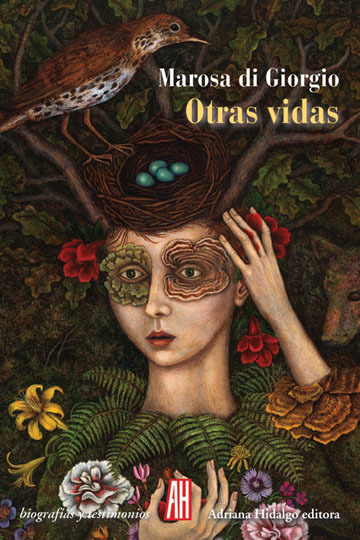
Otras vidas book cover
Otras vidas
2017
First Published
3.83
Average Rating
248
Number of Pages
Otras vidas reúne perfiles biográficos, entrevistas, prólogos y reseñas que Marosa escribió durante las últimas décadas de su vida y en donde da cuenta de su cosmos literario, con sus planetas, estrellas y cometas. En estos textos la poeta habla de sus fuentes, de sus colegas, de los libros que le gustaban, de sus amigas, de su mundo. Escribe sobre escritoras (y algunos escritores) fundamentalmente uruguayas (aunque también de otras latitudes), que en conjunto conforman el bellísimo parnaso marosiano. Según dice el poeta y ensayista uruguayo Eduardo Espina en el prólogo: “Con una impermeable ligereza característica de su condición, vivía su permanencia de tránsito en el lugar o tiempo donde le tocara estar. Salía a la realidad con su plan interpretado, cargando con ella un sistema de aprendizaje y absorción que no volvían obligatorio el regreso inmediato al orden del mundo. A la mirada la hacía responsable de sus asombros. Marosa andaba por donde le tocara, iluminada por el sol de su infancia, aunque eso no apareciera mencionado en los noticieros de sus días. Si bien era una mujer de modales impecables, una dama en ejercicio constante de una ralea victoriana, no era alguien fácilmente accesible que anduviera regalando ritos de gregaria adulación al primero que apareciese. Era muy amiga de sus amigos, de lealtad a prueba de fuego, aunque también muy distante con los desconocidos. Marosa fue ánima y animal fluvial, de las que aparecen cuando hay una orilla cerca”.

Avg Rating
3.83
Number of Ratings
12
5 STARS
25%
4 STARS
33%
3 STARS
42%
2 STARS
0%
1 STARS
0%
goodreads

Author

Marosa Di Giorgio
Marosa Di Giorgio
Author · 8 books

Marosa di Giorgio (1932–2004) was a Uruguayan poet and novelist. Marosa di Giorgio is considered one of the most singular voices in Latin America. Critics tend to agree that her writing is greatly influenced by European surrealism, although her vocabulary, style, and imagery are uniquely her own. Her work deals predominately with the imaginary world of childhood and nature. In the past few years, Latin American critics such as Hugo Achugar, Luis Bravo, Leonardo Garet, Sylvia Guerra, María Alejandra Minelli, and María Rosa Olivera-Williams have explored Marosa Di Giorgio's writing. Uruguayan poet Roberto Echavarren published in 1991 "Transplatinos", which offers an excellent introduction to Di Giorgio's writing. Selected poems from The March Hare have been translated into English by K.A. Kopple and published in the 1995 by Exact Change Yearbook. An article discussing gender politics, parody, and desire (as elaborated by Gilles Deleuze) also written by K.A. Kopple appeared in March 2000 in the Journal of Latin American Cultural Studies. In'Identity, Nation, Discourse: Latin American Women Writers and Artists, edited by Claire Taylor (Cambridge Scholars Publishing, 2009), Soledad Montañez opens up a new discussion of Di Giorgio's erotic writing. Montañez shows how "Di Giorgio's erotic prose illustrates the representation and performance of patriarchal hierarchy as a perverse comedy, creating a genre that constructs gender narratives in order to undermine the patriarchal system from within."Montañez also affirms that "The effect achieved in Marosa's radicalised narrative is ultimately a mocking performance, a burlesque discourse that reveals and denounces domination and power. Through a perverse representation Marosa exposes the complicated matter of culturally constructed sexual norms and develops a writing that is at the same time disturbing and astonishing" (2009: 158). In 1982 she received the Fraternity Award for literature

548 Market St PMB 65688, San Francisco California 94104-5401 USA
© 2026 Paratext Inc. All rights reserved