Oxford Studies in Medieval European History
Series · 6 books · 2016-2019
Books in series

#3
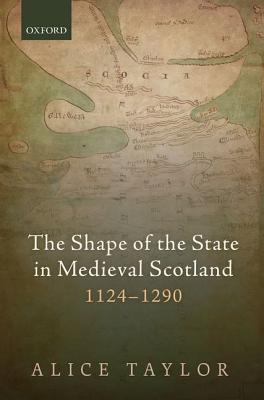
The Shape of the State in Medieval Scotland, 1124 - 1290
2016
This is the first full-length study of Scottish royal government in the twelfth and thirteenth centuries ever to have been written. It uses untapped legal evidence to set out a new narrative of governmental development. Between 1124 and 1290, the way in which kings of Scots ruled their kingdom transformed. By 1290 accountable officials, a system of royal courts, and complex common law procedures had all been introduced, none of which could have been envisaged in 1124.
The Shape of the State in Medieval Scotland, 1124 - 1290 argues that governmental development was a dynamic phenomenon, taking place over the long term. For the first half of the twelfth century, kings ruled primarily through personal relationships and patronage, only ruling through administrative and
judicial officers in the south of their kingdom. In the second half of the twelfth century, these officers spread north but it was only in the late twelfth century that kings routinely ruled through institutions. Throughout this period of profound change, kings relied on aristocratic power as an increasingly formal part of royal government. In putting forward this narrative, Alice Taylor refines or overturns previous understandings in Scottish historiography of subjects as diverse as the development of the Scottish common law, feuding and compensation, Anglo-Norman 'feudalism', the
importance of the reign of David I, recordkeeping, and the kingdom's military organisation. In addition, she argues that Scottish royal government was not a miniature version of English government; there were profound differences between the two polities arising from the different role and function
aristocratic power played in each kingdom.
The volume also has wider significance. The formalisation of aristocratic power within and alongside the institutions of royal government in Scotland forces us to question whether the rise of royal power necessarily means the consequent decline of aristocratic power in medieval polities. The book thus not only explains an important period in the history of Scotland, it places the experience of Scotland at the heart of the process of European state formation as a whole.

#7
Contesting the City
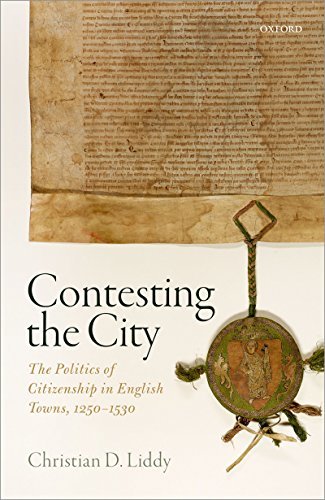
The Politics of Citizenship in English Towns, 1250 - 1530
2017
The political narrative of late medieval English towns is often reduced to the story of the gradual intensification of oligarchy, in which power was exercised and projected by an ever smaller ruling group over an increasingly subservient urban population. Contesting the City takes its inspiration not from English historiography, but from a more dynamic continental scholarship on towns in the southern Low Countries, Germany, and France. Its premise is thatscholarly debate about urban oligarchy has obscured contemporary debate about urban citizenship. It identifies from the records of English towns a tradition of urban citizenship, which did not draw upon the intellectual legacy of classical models of the 'citizen'. This was a vernacular citizenship, which wasnot peculiar to England, but which was present elsewhere in late medieval Europe. It was a citizenship that was defined and created through action. There were multiple, and divergent, ideas about citizenship, which encouraged townspeople to make demands, to assert rights, and to resist authority. This volume exploits the rich archival sources of the five major towns in England - Bristol, Coventry, London, Norwich, and York - in order to present a new picture of town government and urbanpolitics over three centuries. The power of urban governors was much more precarious than historians have imagined. Urban oligarchy could never prevail - whether ideologically or in practice - when there was never a single, fixed meaning of the citizen.

#8
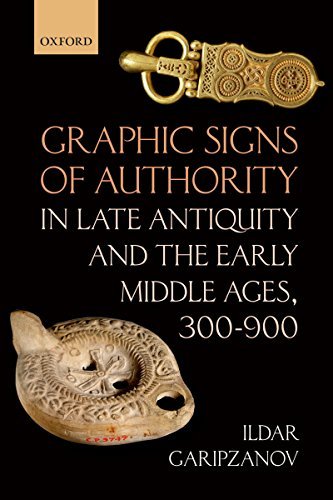
Graphic Signs of Authority in Late Antiquity and the Early Middle Ages, 300-900
2018
Graphic Signs of Authority in Late Antiquity and the Early Middle Ages presents a cultural history of graphic signs and examines how they were employed to communicate secular and divine authority in the late antique Mediterranean and early medieval Europe. Visual materials such as the sign of the cross, christograms, monograms, and other such devices, are examined against the backdrop of the cultural, religious, and socio-political transition from the lateGraeco-Roman world to that of medieval Europe.This monograph is a synthetic study of graphic visual evidence from a wide range of material media that have rarely been studied collectively, including various mass-produced items and unique objects of art, architectural monuments and epigraphic inscriptions, as well as manuscripts and charters. This study promises to provide a timely reference tool for historians, art historians, archaeologists, epigraphists, manuscript scholars, and numismatists.

#10
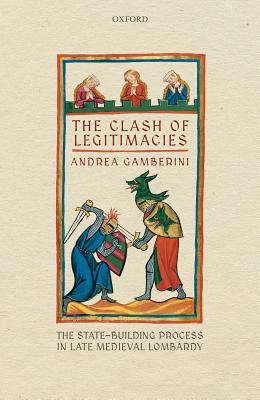
The Clash of Legitimacies
The State-Building Process in Late Medieval Lombardy
2018
The Clash of Legitimacies makes an innovative contribution to the history of the state-building process in late medieval Lombardy (during the 13th to 15th centuries), by illuminating myriad conflicts attending the legitimacy of power and authority at different levels of society. Through the analysis of the rhetorical forms and linguistic repertoires deployed by the many protagonists (not only the prince, but also the cities, communities, peasants, and political factions) to express their own ideals of shared political life, this volume reveals the depth of the conflicts in which opposing political actors were not only inspired by competing material interests—as in the traditional interpretation to be found in previous historiography—but also often were guided by differing concepts of authority.
From this comes a largely new image of the late medieval and early Renaissance state, one without a monopoly of force—as has been shown in many studies since the 1970s—and one that did not even have the monopoly of legitimacy. The limitations of attempts by governors to present the political principles that inspired their acts as shared and universally recognized are revealed by a historical analysis firmly intent on investigating the existence, in particular territorial or social ambits, of other political cultures which based obedience to authority on different, and frequently original, ideals.

#11
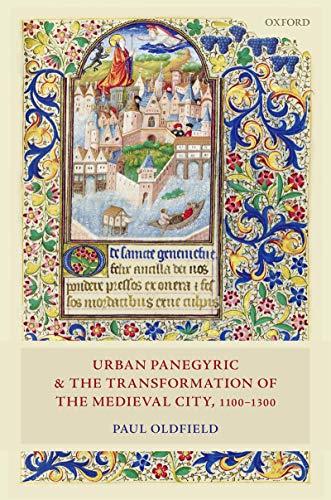
Urban Panegyric and the Transformation of the Medieval City, 1100-1300
2018
This study offers the first extensive analysis of the function and significance of urban panegyric in the Central Middle Ages, a flexible literary genre which enjoyed a marked and renewed popularity in the period 1100 to 1300. In doing so, it connects the production of urban panegyric to major underlying transformations in the medieval city and explores praise of cities primarily in England, Flanders, France, Germany, Iberia, and Italy (including the South andSicily). The volume demonstrates how laudatory ideas on the city appeared in extremely diverse textual formats which had the potential to interact with a wide audience via multiple textual and material sources. When contextualized within the developments of the twelfth and thirteenth centuries these ideascould reflect more than formulaic, rhetorical outputs for an educated elite, they were instead integral to the process of urbanisation. In Urban Panegyric and the Transformation of the Medieval City, 1100-1300, Paul Oldfield assesses the generation of ideas on the Holy City, on counter-narratives associated with the Evil City, on the inter-relationship between the City and abundance (primarily through discourses on commercial productivity, hinterlands and population size), onlandscapes and sites of power, and on knowledge generation and the construction of urban histories.Urban panegyric can enable us to comprehend more deeply material, functional, and ideological change associated with the city during a period of notable urbanization, and, importantly, how this change might have been experienced by contemporaries. This study therefore highlights the importance of urban panegyric as a product of, and witness to, a period of substantial urban change. In examining the laudatory depiction of medieval cities in a thematic analysis it can contribute to a deeperunderstanding of civic identity and its important connection to urban transformation.


#12
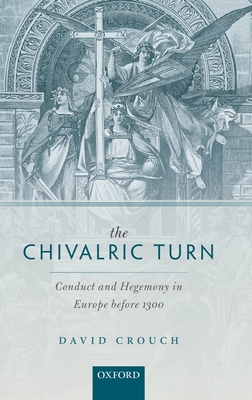
The Chivalric Turn
Conduct and Hegemony in Europe before 1300
2019
The Chivalric Turn examines the medieval obsession with defining and practising superior conduct, and the social consequences that followed from it. Historians since the seventeenth century have tended to understand medieval conduct through the eyes of the writers of the Enlightenment, viewing superior conduct as 'knightly' behaviour, and categorising it as chivalry.
Using, for the first time, the full range of the considerable twelfth- and thirteenth-century literature on conduct in the European vernaculars and in Latin, The Chivalric Turn describes and defines what superior lay conduct was in European society before chivalry, and maps how and why chivalry emerged and redefined superior conduct in the last generation of the twelfth century. The emergence of chivalry was only one part of a major social change, because it changed how people understood the concept of nobility, which had consequences for the medieval understanding of gender, social class, violence, and the limits of law.
Authors
David Crouch
Author · 10 books
David Bruce Crouch, FRHistS, FBA, was Professor of Medieval History at the University of Hull, where he taught from 2003 until his retirement in 2018.

Alice Taylor
Author · 1 book
Alice Taylor is Professor of Medieval History at King's College, London. She received my doctorate in medieval history from the University of Oxford in 2009 and held a research fellowship at King’s College, Cambridge. Between 2014 and 2017, she was Co-Investigator on the AHRC-funded project Models of Authority: Scottish Charters and the Emergence of Government, 1100 - 1250 and, since 2017, she has led the collaborative project .