Margins
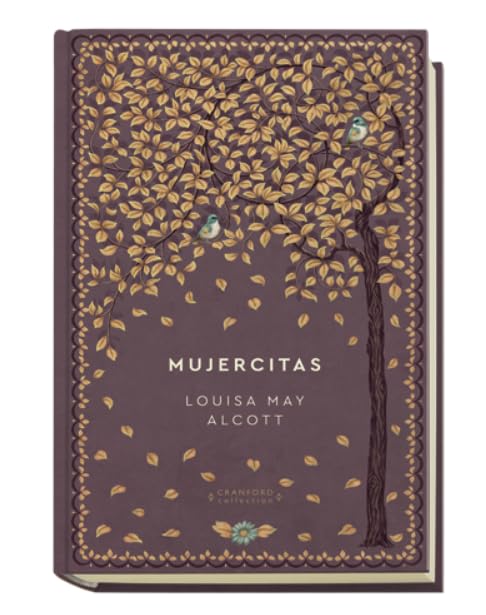
Pack novelas eternas I book cover
Pack novelas eternas I
Mujercitas, La edad de la inocencia y Marianela
2023
First Published
4.24
Average Rating
944
Number of Pages
Avg Rating
4.24
Number of Ratings
49
5 STARS
53%
4 STARS
29%
3 STARS
10%
2 STARS
6%
1 STARS
2%
goodreads

Authors

Emily Bronte
Emily Bronte
Author · 89 books

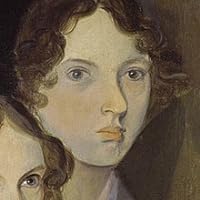
Emily Jane Brontë was an English novelist and poet, now best remembered for her only novel Wuthering Heights, a classic of English literature. Emily was the second eldest of the three surviving Brontë sisters, being younger than Charlotte Brontë and older than Anne Brontë. She published under the masculine pen name Ellis Bell. Emily was born in Thornton, near Bradford in Yorkshire to Patrick Brontë and Maria Branwell. She was the younger sister of Charlotte Brontë and the fifth of six children. In 1824, the family moved to Haworth, where Emily's father was perpetual curate, and it was in these surroundings that their literary oddities flourished. In childhood, after the death of their mother, the three sisters and their brother Patrick Branwell Brontë created imaginary lands (Angria, Gondal, Gaaldine, Oceania), which were featured in stories they wrote. Little of Emily's work from this period survived, except for poems spoken by characters (The Brontës' Web of Childhood, Fannie Ratchford, 1941). In 1842, Emily commenced work as a governess at Miss Patchett's Ladies Academy at Law Hill School, near Halifax, leaving after about six months due to homesickness. Later, with her sister Charlotte, she attended a private school in Brussels. They later tried to open up a school at their home, but had no pupils. It was the discovery of Emily's poetic talent by Charlotte that led her and her sisters, Charlotte and Anne, to publish a joint collection of their poetry in 1846, Poems by Currer, Ellis, and Acton Bell. To evade contemporary prejudice against female writers, the Brontë sisters adopted androgynous first names. All three retained the first letter of their first names: Charlotte became Currer Bell, Anne became Acton Bell, and Emily became Ellis Bell. In 1847, she published her only novel, Wuthering Heights, as two volumes of a three volume set (the last volume being Agnes Grey by her sister Anne). Its innovative structure somewhat puzzled critics. Although it received mixed reviews when it first came out, the book subsequently became an English literary classic. In 1850, Charlotte edited and published Wuthering Heights as a stand-alone novel and under Emily's real name. Like her sisters, Emily's health had been weakened by the harsh local climate at home and at school. She caught a chill during the funeral of her brother in September, and, having refused all medical help, died on December 19, 1848 of tuberculosis, possibly caught from nursing her brother. She was interred in the Church of St. Michael and All Angels family capsule, Haworth, West Yorkshire, England.

Louisa May Alcott
Louisa May Alcott
Author · 227 books

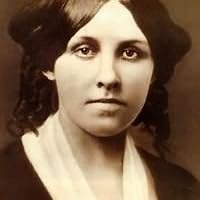
People best know American writer Louisa May Alcott for Little Women (1868), her largely autobiographical novel. As A.M. Barnard: Behind a Mask, or a Woman's Power (1866) The Abbot's Ghost, or Maurice Treherne's Temptation (1867) A Long Fatal Love Chase (1866 – first published 1995) First published anonymously: A Modern Mephistopheles (1877) Philosopher-teacher Amos Bronson Alcott, educated his four daughters, Anna, Louisa, Elizabeth and May and Abigail May, wife of Amos, reared them on her practical Christianity. Louisa spent her childhood in Boston and Concord, Massachusetts, where visits to library of Ralph Waldo Emerson, excursions into nature with Henry David Thoreau, and theatricals in the barn at Hillside (now "Wayside") of Nathaniel Hawthorne enlightened her days. Like Jo March, her character in Little Women, young Louisa, a tomboy, claimed: "No boy could be my friend till I had beaten him in a race, ... and no girl if she refused to climb trees, leap fences...." Louisa wrote early with a passion. She and her sisters often acted out her melodramatic stories of her rich imagination for friends. Louisa preferred to play the "lurid" parts in these plays, "the villains, ghosts, bandits, and disdainful queens." At 15 years of age in 1847, the poverty that plagued her family troubled her, who vowed: "I will do something by and by. Don’t care what, teach, sew, act, write, anything to help the family; and I’ll be rich and famous and happy before I die, see if I won’t!" Confronting a society that offered little opportunity to women, seeking employment, Louisa determined "...I will make a battering-ram of my head and make my way through this rough and tumble world." Whether as a teacher, seamstress, governess, or household servant, Louisa ably found work for many years. Career of Louisa as an author began with poetry and short stories in popular magazines. In 1854, people published Flower Fables, her first book, at 22 years of age. From her post as a nurse in Washington, District of Columbia, during the Civil War, she wrote home letters that based Hospital Sketches (1863), a milestone along her literary path. Thomas Niles, a publisher in Boston, asked 35-year-old Louisa in 1867 to write "a book for girls." She wrote Little Women at Orchard House from May to July 1868. Louisa and her sisters came of age in the novel, set in New England during Civil War. From her own individuality, Jo March, the first such American juvenile heroine, acted as a living, breathing person rather than the idealized stereotype that then prevailed in fiction of children. Louisa published more than thirty books and collections of stories. Only two days after her father predeceased her, she died, and survivors buried her body in Sleepy Hollow cemetery in Concord.

548 Market St PMB 65688, San Francisco California 94104-5401 USA
© 2026 Paratext Inc. All rights reserved