Margins
Margins
548 Market St PMB 65688, San Francisco California 94104-5401 USA
hello@margins.app
·
+1 (650) 223-5283
Privacy Policy
·
Terms of Use
© 2026 Paratext Inc. All rights reserved
Paideia Commentaries on the New Testament
Paideia Commentaries on the New Testament
Series · 7 books · 2007-2014
By
Charles H. Talbert
,
Mary Ann Beavis
,
Jo-Ann A. Brant
, and more
Books in series
#1
Matthew
2010
In this fresh commentary, the fourth of eighteen volumes in the Paideia series, a leading New Testament scholar examines cultural context and theological meaning in Matthew. Paideia commentaries explore how New Testament texts form Christian readers by • Attending to the ancient narrative and rhetorical strategies the text employs • Showing how the text shapes theological convictions and moral habits • Commenting on the final, canonical form of each New Testament book • Focusing on the cultural, literary, and theological settings of the text • Making judicious use of maps, photos, and sidebars in a reader-friendly format
#2
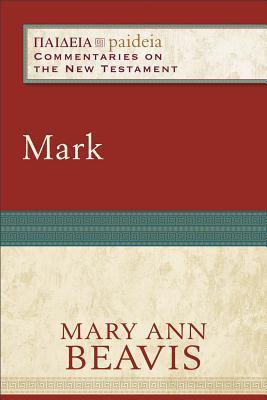
Mark
2011
In this addition to the well-received Paideia series, Mary Ann Beavis examines cultural context and theological meaning in Mark. Paideia commentaries explore how New Testament texts form Christian readers by • attending to the ancient narrative and rhetorical strategies the text employs • showing how the text shapes theological convictions and moral habits • commenting on the final, canonical form of each New Testament book • focusing on the cultural, literary, and theological settings of the text • making judicious use of maps, photos, and sidebars in a reader-friendly format Students, pastors, and other readers will appreciate the insights that Beavis derives from interrogating the text through multiple perspectives.
#3
John
2011
In this addition to the well-received Paideia series, Jo-Ann Brant examines cultural context and theological meaning in John. Paideia commentaries explore how New Testament texts form Christian readers by • attending to the ancient narrative and rhetorical strategies the text employs • showing how the text shapes theological convictions and moral habits • commenting on the final, canonical form of each New Testament book • focusing on the cultural, literary, and theological settings of the text • making judicious use of maps, photos, and sidebars in a reader-friendly format This commentary, like each in the projected eighteen-volume series, proceeds by sense units rather than word-by-word or verse-by-verse.
#5
Romans
2010
In this fresh and readable addition to the Paideia series, well-respected New Testament scholar Frank Matera examines cultural context and theological meaning in Romans. Paideia commentaries explore how New Testament texts form Christian readers by • attending to the ancient narrative and rhetorical strategies the text employs • showing how the text shapes theological convictions and moral habits • commenting on the final, canonical form of each New Testament book • focusing on the cultural, literary, and theological settings of the text • making judicious use of maps, photos, and sidebars in a reader-friendly format
#6
Ephesians and Colossians
2007
Ephesians and Colossians is the first of eighteen volumes in the new Paideia commentary series. This series approaches each text in its final, canonical form, proceeding by sense units rather than word-by-word or verse-by-verse. Each sense unit is explored in three (1) introductory matters, (2) tracing the train of thought, (3) key hermeneutical and theological questions. The commentaries shed fresh light on the text while avoiding idiosyncratic readings, attend to theological meaning without presuming a specific theological stance in the reader, and show how the text uses narrative and rhetorical strategies from the ancient educational context to form and shape the reader. Professors, graduate and seminary students, and pastors will benefit from this readable commentary, as will theological libraries.
#7
Hebrews
2008
Hebrews, the second of eighteen volumes in the Paideia commentary series, brings the insight of a veteran teacher and writer to bear on a New Testament book whose rich imagery and memorable phrases have long shaped Christian discourse. The Paideia series approaches each text in its final, canonical form, proceeding by sense units rather than word-by-word or verse-by-verse. Each sense unit is explored in three (1) introductory matters, (2) tracing the train of thought, (3) key hermeneutical and theological questions. The commentaries shed fresh light on the text while avoiding idiosyncratic readings, attend to theological meaning without presuming a specific theological stance in the reader, and show how the text uses narrative and rhetorical strategies from the ancient educational context to form and shape the reader.
#8
First, Second, and Third John
2014
In this addition to the well-received Paideia series, a respected New Testament scholar examines cultural context and theological meaning in First, Second, and Third John. Paideia commentaries explore how New Testament texts form Christian readers by attending to the ancient narrative and rhetorical strategies the text employs, showing how the text shapes theological convictions and moral habits, and making judicious use of maps, photos, and sidebars in a reader-friendly format.
Authors
Charles H. Talbert
Author · 6 books
Mary Ann Beavis
Author · 1 book
Jo-Ann A. Brant
Author · 1 book
Frank J. Matera
Author · 8 books
James W. Thompson
Author · 7 books
George L. Parsenios
Author · 1 book