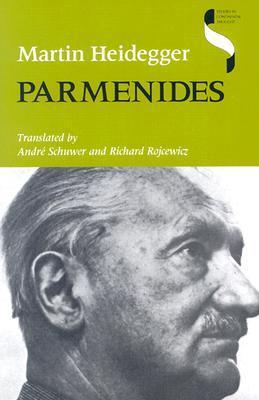
Parmenides, a lecture course delivered by Martin Heidegger at the University of Freiburg in 1942-1943, presents a highly original interpretation of ancient Greek philosophy. A major contribution to Heidegger's provocative dialogue with the pre-Socratics, the book attacks some of the most firmly established conceptions of Greek thinking and of the Greek world. The central theme is the question of truth and the primordial understanding of truth to be found in Parmenides' "didactic poem." Heidegger highlights the contrast between Greek and Roman thought and the reflection of that contrast in language. He analyzes the decline in the primordial understanding of truth—and, just as importantly, of untruth—that began in later Greek philosophy and that continues, by virtue of the Latinization of the West, down to the present day. Beyond an interpretation of Greek philosophy, Parmenides (volume 54 of Heidegger's Collected Works) offers a strident critique of the contemporary world, delivered during a time that Heidegger described as "out of joint."