Margins
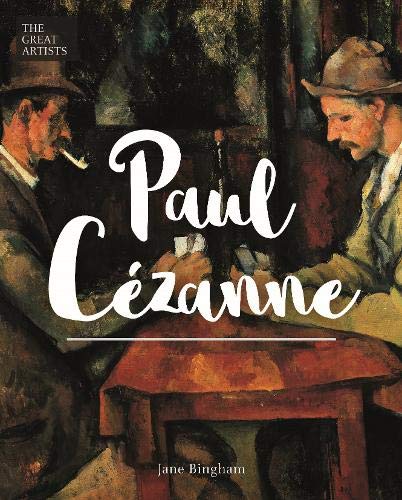
Paul Cézanne book cover
Paul Cézanne
2018
First Published
4.29
Average Rating
96
Number of Pages
This introduction to some of the great artists of the past 150 years looks at their lives and inspirations, and showcases a selection of their most significant paintings. Paul C'zanne's immersive approach to art resulted in a new kind of analytical discipline where the canvas becomes a screen through which the artist's visual sensations are recorded. He described this practice as 'a harmony parallel to nature', an almost architectural approach to his subject which often moved beyond the figurative tradition and towards abstraction. The book describes Cezanne's technique, the materials he used, and his importance as the greatest Post-Impressionist and fulcrum between Impressionism and the later Fauvist, Cubist and Expressionist movements. Beautifully presented introduction to the work of the great Post-Impressionist artist. The descriptions of style and technique will inspire readers to try painting in this style for themselves. This engaging introduction to the work of the Post-Impressionists may lead to further in-depth study.

Avg Rating
4.29
Number of Ratings
24
5 STARS
38%
4 STARS
54%
3 STARS
8%
2 STARS
0%
1 STARS
0%
goodreads

Author

Jane Bingham
Author · 30 books

Jane M. Bingham spent most of her adult life teaching college students about children's literature at Oakland University, collecting and studying children's books from across history and around the world, and campaigning for better materials for children to read. After she retired from that career, she began writing children's books of her own. Bingham has since authored several nonfiction books that seek to explain contemporary issues to children, including divorce, the dangers of drug abuse, and the art and culture of civilizations around the world. In Why Do Families Break Up? Bingham attempts to demystify the process of divorce for middle-school students. The book begins by examining some of the reasons a couple might decide to divorce, then moves on to explain the process of coping and moving on after a family separates. School Library Journal contributor Sharon A. Neal described the book as "supportive [and] unbiased" and noted, "Despite the nature of the topic, the book is hopeful." Tiananmen Square: June 4, 1989 examines the studentled protest against China's Communist rulers that occurred there, in the middle of Beijing, in the spring of 1989. On June 4 the government mobilized the army, including tanks, to disperse the demonstrators, killing several of them in the process. "The excellent illustrations and clear narrative," Elizabeth Talbot wrote in School Library Journal, make Tiananmen Square a "good introduction" to the protest and its aftermath. Bingham is the author of three installments in the "World Art and Culture" series, examining India, Africa, and Aboriginal Australia. Each book is brief, only fifty-six pages long, and "the texts are straightforward and concise," Gillian Engberg noted in a review of AfricanArt and Culture for Booklist. Despite this brevity, much information is packed into each volume. Bingham opens each book with a chapter about the history of the region, from thousands of years ago to the present day, and follows with chapters about the art forms practiced in that area. These include architecture, basket-weaving, creating musical instruments, dance, and body modification (tattoos, piercings, and the like), among others. Indian Art and Culture also includes a chapter on one of that country's modern art forms, the "Bollywood" movie industry. As Donna Cardon noted in School Library Journal, "The texts not only describe the art forms and how they are created, but also explain the role that art plays in the cultures." Bingham once wrote: "In 1981 I completed a trip which took me to American Samoa, New Zealand, Australia, Hong Kong, China, Thailand, Bangladesh, India, Kenya, South Africa, and Swaziland. I collected examples of children's books along the way and became acutely aware of the need for books and other teaching resources in many developing countries. I was especially impressed with the variety of India's and Bangladesh's children's books—in spite of the difficulties their creators often encounter in publishing and promoting them. I also found that becoming aware of and enjoying the literature from other countries enriched my appreciation of American children's books. I found myself asking over and over why we, with the plethora we have to choose from, too often opt for the mediocre rather than the 'rarest kind of best.' As educators, creators, and consumers, we all too often forget to think of children's books as real literature because we fail to apply critical literary standards. It is my hope that my teaching and writing will draw attention to the continuing need for quality books in our own country and will also encourage American students and teachers to adopt a wider, world view of children's literature."

548 Market St PMB 65688, San Francisco California 94104-5401 USA
© 2026 Paratext Inc. All rights reserved