Margins
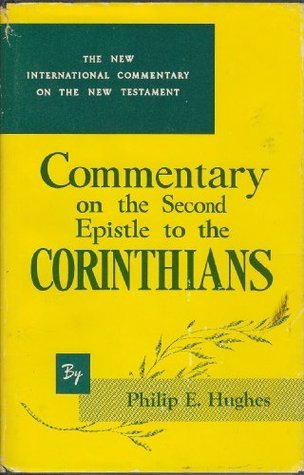
Paul's Second Epistle to the Corinthians book cover
Paul's Second Epistle to the Corinthians
1962
First Published
4.20
Average Rating
526
Number of Pages

Part of Series

Begun in the late 1940s by an international team of scholars, the New International Commentary on the New Testament (NICNT) series has become recognized by pastors, students, and scholars alike as a critical yet orthodox commentary marked by solid biblical scholarship within the evangelical Protestant tradition. While based on a thorough study of the Greek text, the commentary introductions and expositions contain a minimum of Greek references. The NICNT authors evaluate significant textual problems and take into account the most important exegetical literature. More technical aspects—such as grammatical, textual, and historical problems—are dealt with in footnotes, special notes, and appendixes.

Avg Rating
4.20
Number of Ratings
10
5 STARS
50%
4 STARS
20%
3 STARS
30%
2 STARS
0%
1 STARS
0%
goodreads

Authors

Paul the Apostle
Paul the Apostle
Author · 37 books

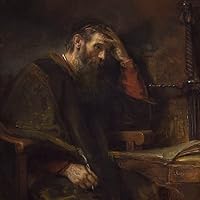
Paul commonly known as Paul the Apostle and Saint Paul, was a Christian apostle who spread the teachings of Jesus in the first-century world Generally regarded as one of the most important figures of the Apostolic Age, he founded several Christian communities in Asia Minor and Europe from the mid-40s to the mid-50s AD. The main source of information on Paul's life and works is the Acts of the Apostles book in the New Testament, with approximately half of its content documenting them. According to the Acts, Paul lived as a Pharisee and participated in the persecution of early disciples of Jesus, possibly Hellenised diaspora Jews converted to Christianity, in the area of Jerusalem, prior to his conversion. Some time after having approved of the execution of Stephen, Paul was traveling on the road to Damascus so that he might find any Christians there and bring them "bound to Jerusalem". At midday, a light brighter than the sun shone around both him and those with him, causing all to fall to the ground, with the risen Christ verbally addressing Paul regarding his persecution. Having been made blind, along with being commanded to enter the city, his sight was restored three days later by Ananias of Damascus. After these events, Paul was baptized, beginning immediately to proclaim that Jesus of Nazareth was the Jewish messiah and the Son of God. He made three missionary journeys to spread the Christian message to non-Jews communities in Asia Minor, Greece, Macedonia, Cyprus, Judea and Syria, as narrated in the Acts. Fourteen of the 27 books in the New Testament have traditionally been attributed to Paul. Seven of the Pauline epistles are undisputed by scholars as being authentic, with varying degrees of argument about the remainder. Pauline authorship of the Epistle to the Hebrews is not asserted in the Epistle itself and was already doubted in the 2nd and 3rd centuries. It was almost unquestioningly accepted from the 5th to the 16th centuries that Paul was the author of Hebrews, but that view is now almost universally rejected by scholars. The other six are believed by some scholars to have come from followers writing in his name, using material from Paul's surviving letters and letters written by him that no longer survive. Other scholars argue that the idea of a pseudonymous author for the disputed epistles raises many problems. Today, Paul's epistles continue to be vital roots of the theology, worship and pastoral life in the Latin and Protestant traditions of the West, as well as the Eastern Catholic and Orthodox traditions of the East. Paul's influence on Christian thought and practice has been characterized as being as "profound as it is pervasive", among that of many other apostles and missionaries involved in the spread of the Christian faith.

Philip Edgcumbe Hughes
Author · 3 books

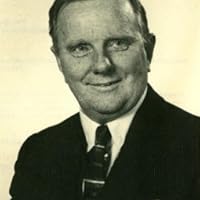
Philip Edgcumbe Hughes (Sydney, Australia, 1915 – Rydal, PA, USA, 1990) was an Anglican clergyman and New Testament scholar whose life spanned four continents: Australia, where he was born; South Africa; England, where he was ordained; and the USA, where he died in 1990, aged 75. Dr. Hughes was born in Australia and received his B.A., M.A., and D.L.H. from the University of Cape Town, B.D. from the University of London, and Th.D. from the Australian College of Theology. From 1947 to 1953 Hughes taught at Tyndale Hall in England. From 1953 to 1956 he was Secretary of Church Society; and from 1959 to 1967 editor of Church Society’s journal, The Churchman. From 1964 to 1968 he taught at Columbia Theological Seminary, Decatur, Georgia. From 1964 he moved to the United States to teach at American seminaries, including Westminster Theological Seminary, Philadelphia, PA, Gordon-Conwell Theological Seminary, South Hamilton, MA, and Trinity School for Ministry, Ambridge, PA.

548 Market St PMB 65688, San Francisco California 94104-5401 USA
© 2026 Paratext Inc. All rights reserved