Margins




548 Market St PMB 65688, San Francisco California 94104-5401 USA
© 2026 Paratext Inc. All rights reserved
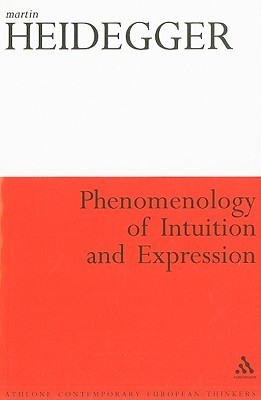
Phenomenology of Intuition and Expression is a crucial text for understanding the early development of Heidegger's thought. This lecture course was presented in the summer semester of 1920 at the University of Freiburg. At the center of this course is Heidegger's elaboration of the meaning and function of the phenomenological destruction. In no other work by Heidegger do we find as comprehensive a treatment of the theme of destruction as in this lecture course. Culminating in a destruction of contemporaneous philosophy in terms of its understanding of 'life' as a primal phenomenon, this lecture course can be seen to open the way towards a renewal of the meaning of philosophy as such. This hugely important philosophical work is now available in English for the first time. Phenomenology of Intuition and Expression is a crucial text for understanding the early development of Heidegger's thought. This lecture course was presented in the summer semester of 1920 at the University of Freiburg. At the center of this course is Heidegger's elaboration of the meaning and function of the phenomenological destruction. In no other work by Heidegger do we find as comprehensive a treatment of the theme of destruction as in this lecture course. Culminating in a destruction of contemporaneous philosophy in terms of its understanding of 'life' as a primal phenomenon, this lecture course can be seen to open the way towards a renewal of the meaning of philosophy as such. This hugely important philosophical work is now available in English for the first time.