Margins
Margins
Sign in
Margins
Subscribe to our newsletter
548 Market St PMB 65688, San Francisco California 94104-5401 USA
hello@margins.app
·
+1 (650) 223-5283
Privacy Policy
·
Terms of Use
© 2026 Paratext Inc. All rights reserved
📚
Philosphy
The Passion According to G.H.
1964
Clarice Lispector
Aficionados of South American fiction as well as literary critics will welcome this posthumous translation of a nearly plotless novel by one of Brazil's foremost writers. Availing herself of a single character, Lispector transforms a banal situation—a woman at home, alone—into an amphitheater for philosophical investigations. The first-person narration jousts with language, playfully but forcefully examining the ambiguous nature of words, with results ranging from the profound to the pretentious: "Prehuman divine life is a life of singeing nowness" or "The world interdepended with me, and I am not understanding what I say, never! never again shall I understand what I say. For how will I be able to speak without the word lying for me?" These linguistic games frame existential and experiential crises that Lispector savors and overcomes. Although this idiosyncratic novel will not have wider appeal, those with academic or markedly erudite tastes should find much to savour.
The Trial
1925
Franz Kafka
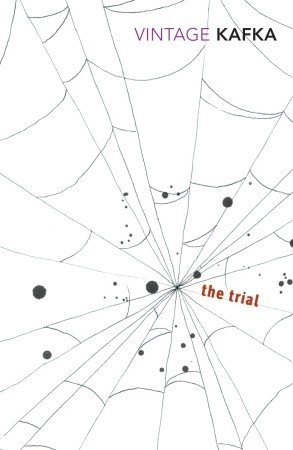
Written in 1914 but not published until 1925, a year after Kafka’s death, The Trial is the terrifying tale of Josef K., a respectable bank officer who is suddenly and inexplicably arrested and must defend himself against a charge about which he can get no information. Whether read as an existential tale, a parable, or a prophecy of the excesses of modern bureaucracy wedded to the madness of totalitarianism, The Trial has resonated with chilling truth for generations of readers.
Middlemarch
1872
George Eliot
Taking place in the years leading up to the First Reform Bill of 1832, Middlemarch explores nearly every subject of concern to modern life: art, religion, science, politics, self, society, human relationships. Among her characters are some of the most remarkable portraits in English literature: Dorothea Brooke, the heroine, idealistic but naive; Rosamond Vincy, beautiful and egoistic: Edward Casaubon, the dry-as-dust scholar: Tertius Lydgate, the brilliant but morally-flawed physician: the passionate artist Will Ladislaw: and Fred Vincey and Mary Garth, childhood sweethearts whose charming courtship is one of the many humorous elements in the novel's rich comic vein.
📚 Philosphy