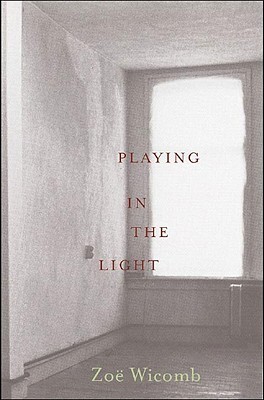



Set in a beautifully rendered 1990s Cape Town, Zoë Wicomb’s celebrated novel revolves around Marion Campbell, who runs a travel agency but hates traveling, and who, in post-apartheid society, must negotiate the complexities of a knotty relationship with Brenda, her first black employee. As Alison McCulloch noted in the New York Times, “Wicomb deftly explores the ghastly soup of racism in all its unglory—denial, tradition, habit, stupidity, fear—and manages to do so without moralizing or becoming formulaic.” Caught in the narrow world of private interests and self-advancement, Marion eschews national politics until the Truth and Reconciliation Commission throws up information that brings into question not only her family’s past but her identity and her rightful place in contemporary South African society. “Stylistically nuanced and psychologically astute” (Kirkus), Playing in the Light is as powerful in its depiction of Marion’s personal journey as it is in its depiction of South Africa’s bizarre, brutal history.
Author

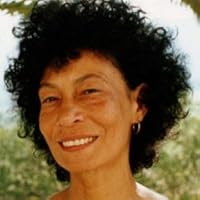
Zoë Wicomb attended the University of the Western Cape, and after graduating left South Africa for England in 1970, where she continued her studies at Reading University. She lived in Nottingham and Glasgow and returned to South Africa in 1990, where she taught for three years in the department of English at the University of the Western Cape She gained attention in South Africa and internationally with her first work, a collection of short stories, You Can't Get Lost in Cape Town (1987), which takes place during the apartheid era. Her second novel, David's Story (2002), takes place in 1991 toward the close of the apartheid era and uses the ambiguous classification of coloureds to explore racial identity. Playing in the Light, her third novel, released in 2006, covers similar terrain conceptually, though this time set in contemporary South Africa and centering around a white woman who learns that her parents were actually coloured. She published her second collection of short stories, The One That Got Away. The stories, set mainly in Cape Town and Glasgow, explore a range of human relationships: marriage, friendships, family ties or relations with servants. She was a winner of the 2013 Windham–Campbell Literature Prize for Fiction. Zoe Wicomb resides in Glasgow where she teaches creative writing and post-colonial literature at the University of Strathclyde.