Margins
Margins
Sign in
Margins
Subscribe to our newsletter
548 Market St PMB 65688, San Francisco California 94104-5401 USA
hello@margins.app
·
+1 (650) 223-5283
Privacy Policy
·
Terms of Use
© 2026 Paratext Inc. All rights reserved
🎭
Plays
The Crucible
1953
Arthur Miller
"I believe that the reader will discover here the essential nature of one of the strangest and most awful chapters in human history," Arthur Miller wrote of his classic play about the witch-hunts and trials in seventeenth-century Salem, Massachusetts. Based on historical people and real events, Miller's drama is a searing portrait of a community engulfed by hysteria. In the rigid theocracy of Salem, rumors that women are practicing witchcraft galvanize the town's most basic fears and suspicions; and when a young girl accuses Elizabeth Proctor of being a witch, self-righteous church leaders and townspeople insist that Elizabeth be brought to trial. The ruthlessness of the prosecutors and the eagerness of neighbor to testify against neighbor brilliantly illuminates the destructive power of socially sanctioned violence. Written in 1953, The Crucible is a mirror Miller uses to reflect the anti-communist hysteria inspired by Senator Joseph McCarthy's "witch-hunts" in the United States. Within the text itself, Miller contemplates the parallels, writing, "Political opposition... is given an inhumane overlay, which then justifies the abrogation of all normally applied customs of civilized behavior. A political policy is equated with moral right, and opposition to it with diabolical malevolence." WIth an introduction by Christopher Bigsby. (back cover)
A Raisin in the Sun
1959
Lorraine Hansberry
"Never before, in the entire history of the American theater, has so much of the truth of black people's lives been seen on the stage," observed James Baldwin shortly before A Raisin in the Sun opened on Broadway in 1959. Indeed Lorraine Hansberry's award-winning drama about the hopes and aspirations of a struggling, working-class family living on the South Side of Chicago connected profoundly with the psyche of black America—and changed American theater forever. The play's title comes from a line in Langston Hughes' poem "Harlem," which warns that a dream deferred might "dry up/like a raisin in the sun." "The events of every passing year add resonance to A Raisin in the Sun," said The New York Times. "It is as if history is conspiring to make the play a classic." This Modern Library edition presents the fully restored, uncut version of Hansberry's landmark work with an introduction by Robert Nemiroff.
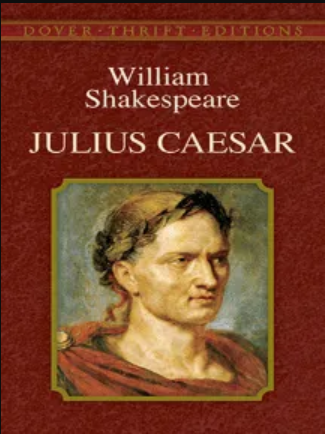
Julius Caesar
1599
William Shakespeare
The Oxford School Shakespeare has become the preferred introduction to the literary legacy of the greatest playwright in the English language. This exclusive collection of the Bard's best works has been designed specifically for readers new to Shakespeare's rich literary legacy. Each play is presented complete and unabridged, in large print. Every book is well illustrated, and starts with a commentary and character summary. Scene synopses and character summaries clarify confusing plots, while incisive essays explore the historical context and Shakespeare's sources. Each book ends with a complete list of Shakespeare's plays and a brief chronology of the Bard's life. The detailed explanatory notes are written clearly and positioned right next to the text—no more squinting at microscopic footnotes or flipping pages back and forth in search of endnotes! The new edition of the series features new covers and new illustrations, including both new drawings and photos from recent productions of Shakespeare's plays around the globe. In addition, the notes and the introductory material have been completely revised in line with new research and in order to make them clearer and more accessible. Finally, the entire text has been redesigned and reset to enhance readability. The new edition achieves the feat of unprecedented clarity of presentation without any cuts to the original text or the detailed explanations.
A Streetcar Named Desire
1947
Tennessee Williams
The Pulitzer Prize and Drama Critics Circle Award winning play—reissued with an introduction by Arthur Miller (Death of a Salesman and The Crucible), and Williams’ essay “The World I Live In.” It is a very short list of 20th-century American plays that continue to have the same power and impact as when they first appeared—57 years after its Broadway premiere, Tennessee Williams’ A Streetcar Named Desire is one of those plays. The story famously recounts how the faded and promiscuous Blanche DuBois is pushed over the edge by her sexy and brutal brother-in-law, Stanley Kowalski. Streetcar launched the careers of Marlon Brando, Jessica Tandy, Kim Hunter, and Karl Malden, and solidified the position of Tennessee Williams as one of the most important young playwrights of his generation, as well as that of Elia Kazan as the greatest American stage director of the ’40s and ’50s.
Romeo and Juliet
1597
William Shakespeare
In Romeo and Juliet, Shakespeare creates a violent world, in which two young people fall in love. It is not simply that their families disapprove; the Montagues and the Capulets are engaged in a blood feud. In this death-filled setting, the movement from love at first sight to the lovers’ final union in death seems almost inevitable. And yet, this play set in an extraordinary world has become the quintessential story of young love. In part because of its exquisite language, it is easy to respond as if it were about all young lovers.
Inherit the Wind
1955
Jerome Lawrence
A meaningful play based on the Scopes Monkey Trial of 1925, in which a Tennessee teacher was tried for teaching evolution. The accused was a slight, frightened man who'd deliberately broken the law. His trial was a Roman circus, the chief gladiators being the two great legal giants of the century. Locked in mortal combat, they bellowed & roared imprecations & abuse. The spectators sat uneasily in the sweltering heat with murder in their hearts, barely restraining themselves. America's freedom was at stake.
🎭 Plays