Margins
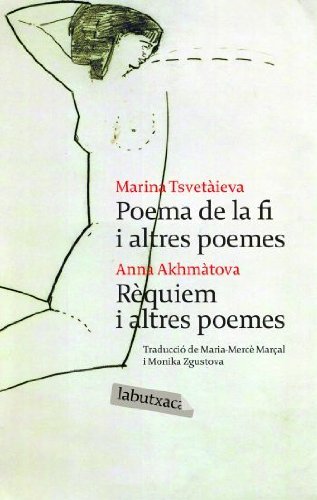
Poema de la fi. Rèquiem i altres poemes book cover
Poema de la fi. Rèquiem i altres poemes
2008
First Published
4.06
Average Rating
192
Number of Pages
Aquest llibre dibuixa un recorregut per la vida i l'obra de dues poetes russes que van inserir amb majúscules la seva obra dins la literatura universal. La poesia d'Anna Akhmàtova (1889-1966) és elegant, clàssica, serena en la seva tristesa; la de Marina Tsvetàieva (1892-1941) és original, inclassificable, un crit esdevingut poesia. Les seves diferències es projecten damunt un fons comú de circumstàncies històriques aclaparadores -la dictadura estalinista, l'exili interior i exterior, l'ostracisme i la pobresa material-, i circumstàncies personals -les persecucions a elles i les seves famílies, les relacions amoroses i l'amistat amb grans personatges de la vida cultural europea com Rilke, Pasternak, Mandelstam i i Isaiah Berlin.

Avg Rating
4.06
Number of Ratings
18
5 STARS
22%
4 STARS
67%
3 STARS
6%
2 STARS
6%
1 STARS
0%
goodreads

Authors

Marina Tsvetáieva
Author · 3 books

Alternative spelling profile for Marina Tsvetaeva Nacida en Moscú (1892) su destino está inextricablemente unido a la historia contemporánea de Europa, marcada por dos guerras mundiales y el advenimiento de dos regímenes totalitarios. Casada muy joven con Serguéi Efrón, queda sola en Moscú, con dos niñas pequeñas—Irina, la menor, morirá de inanición durante la gran hambruna del invierno de 1919-1920—, cuando su marido marcha como voluntario del Ejército Blanco. En 1922 deja Rusia y, previo paso por Berlín, va a Praga donde se reencuentra con su marido. En Bohemia, Marina pasa uno de los períodos más felices y cruciales de su vida, intensifica su producción poética y su correspondencia; vive, además, una relación amorosa con Konstantín Rodzévich, que dio lugar a numerosos poemas, entre ellos el que sin duda es una de sus obras mayores, Poema del fin. En 1925, la familia se trasladó a París, donde Marina continuó con su actividad literaria. En 1938, y tras un período de angustiosas dudas—teme por el destino de los suyos y por el suyo propio, por el futuro de su hijo Mur y por las condiciones de vida que le esperan—vuelve con su hijo menor a Rusia, donde se encuentran su marido y su hija, Alia, colaboradores del gobierno soviético. Al cabo de dos meses, sin embargo, Serguéi Efrón es arrestado y Alia enviada a los campos. El Estado le prohíbe entonces publicar. El círculo parece cerrarse y la vida se convierte en un callejón sin salida. En 1941, Marina y su hijo son evacuados junto con un grupo de escritores a un remoto pueblo tártaro, donde, presa de la desesperación y la tristeza, se suicidó poco después.

Anna Akhmatova
Anna Akhmatova
Author · 34 books

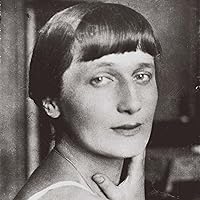
also known as: Анна Ахматова Personal themes characterize lyrical beauty of noted work of Russian poet Anna Akhmatova, pseudonym of Anna Andreevna Gorenko; the Soviet government banned her books between 1946 and 1958. People credit this modernist of the most acclaimed writers in the canon. Her writing ranges from short lyrics to universalized, ingeniously structured cycles, such as Requiem (1935-40), her tragic masterpiece about the Stalinist terror. Her work addresses a variety of themes including time and memory, the fate of creative women, and the difficulties of living and writing in the shadow of Stalinism. She has been widely translated into many languages, and is one of the best-known Russian poets of 20th century. In 1910, she married the poet, Nikolay Gumilyov, who very soon left her for lion hunting in Africa, the battlefields of World War I, and the society of Parisian grisettes. Her husband did not take her poems seriously, and was shocked when Alexander Blok declared to him that he preferred her poems to his. Their son, Lev, born in 1912, was to become a famous Neo-Eurasianist historian. Nikolay Gumilyov was executed in 1921 for activities considered anti-Soviet; Akhmatova then married a prominent Assyriologist Vladimir Shilejko, and then an art scholar, Nikolay Punin, who died in the Stalinist Gulag camps. After that, she spurned several proposals from the married poet, Boris Pasternak. After 1922, Akhmatova was condemned as a bourgeois element, and from 1925 to 1940, her poetry was banned from publication. She earned her living by translating Leopardi and publishing essays, including some brilliant essays on Pushkin, in scholarly periodicals. All of her friends either emigrated or were repressed. Her son spent his youth in Stalinist gulags, and she even resorted to publishing several poems in praise of Stalin to secure his release. Their relations remained strained, however. Akhmatova died at the age of 76 in St. Peterburg. She was interred at Komarovo Cemetery. There is a museum devoted to Akhmatova at the apartment where she lived with Nikolai Punin at the garden wing of the Fountain House (more properly known as the Sheremetev Palace) on the Fontanka Embankment, where Akhmatova lived from the mid 1920s until 1952.

548 Market St PMB 65688, San Francisco California 94104-5401 USA
© 2026 Paratext Inc. All rights reserved