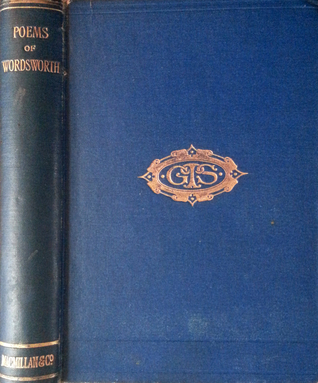
Excerpt from Poems of Wordsworth Mr. Tennyson's decisive appearance dates from 1842. One cannot say that he effaced Wordsworth as Scott and Byron had effaced him. The poetry of Wordsworth had been so long before the public, the suffrage of good judges was so steady and so strong in its favour, that by 1842 the verdict of posterity, one may almost say, had been already pronounced, and Wordsworth's English fame was secure. But the vogue, the ear and applause of the great body of poetry-readers, never quite thoroughly perhaps his, he gradually lost more and more, and Mr. Tennyson gained them. Mr. Tennyson drew to himself, and away from Wordsworth, the poetry-reading public, and the new generations. Even in 1850, when Wordsworth died, this diminution of popularity was visible, and occasioned the remark of Lord Macaulay which I quoted at starting. The diminution has continued. The in?uence of Coleridge has waned, a-nd Wordsworth's poetry can no longer draw succour from this ally. The poetry has not, however, wanted eulogists; and it may be said to have brought its eulogists luck, for almost every one who has praised Wordsworth's poetry has praised it well. But the public has remained cold, or, at least, undetermined.
Author

William Wordsworth (1770-1850) was a major English romantic poet who, with Samuel Taylor Coleridge, helped launch the Romantic Age in English literature with their 1798 joint publication, Lyrical Ballads. Wordsworth's masterpiece is generally considered to be The Prelude, an autobiographical poem of his early years, which the poet revised and expanded a number of times. The work was posthumously titled and published, prior to which, it was generally known as the poem "to Coleridge". Wordsworth was England's Poet Laureate from 1843 until his death in 1850.