


Margins
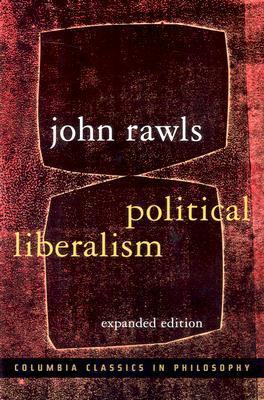
Political Liberalism book cover
Political Liberalism
1993
First Published
3.94
Average Rating
486
Number of Pages

This book continues and revises the ideas of justice as fairness that John Rawls presented in "A Theory of Justice" but changes its philosophical interpretation in a fundamental way. That previous work assumed what Rawls calls a "well-ordered society," one that is stable and relatively homogenous in its basic moral beliefs and in which there is broad agreement about what constitutes the good life. Yet in modern democratic society a plurality of incompatible and irreconcilable doctrines—religious, philosophical, and moral—coexist within the framework of democratic institutions. Recognizing this as a permanent condition of democracy, Rawls asks how a stable and just society of free and equal citizens can live in concord when divided by reasonable but incompatible doctrines? This edition includes the essay "The Idea of Public Reason Revisited," which outlines Rawls' plans to revise "Political Liberalism, " which were cut short by his death. "An extraordinary well-reasoned commentary on "A Theory of Justice."..a decisive turn towards political philosophy." —"Times Literary Supplement"
Avg Rating
3.94
Number of Ratings
1,167
5 STARS
36%
4 STARS
34%
3 STARS
21%
2 STARS
7%
1 STARS
2%
goodreads

Author

John Rawls
John Rawls
Author · 11 books

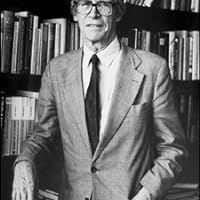
John Bordley Rawls was an American philosopher and a leading figure in moral and political philosophy. He held the James Bryant Conant University Professorship at Harvard. His magnum opus A Theory of Justice (1971) is now regarded as "one of the primary texts in political philosophy." His work in political philosophy, dubbed Rawlsianism, takes as its starting point the argument that "most reasonable principles of justice are those everyone would accept and agree to from a fair position." Rawls employs a number of thought experiments—including the famous veil of ignorance—to determine what constitutes a fair agreement in which "everyone is impartially situated as equals," in order to determine principles of social justice. Rawls received both the Schock Prize for Logic and Philosophy and the National Humanities Medal in 1999, the latter presented by President Bill Clinton, in recognition of how Rawls' thought "helped a whole generation of learned Americans revive their faith in democracy itself."

548 Market St PMB 65688, San Francisco California 94104-5401 USA
© 2026 Paratext Inc. All rights reserved