Political Theory and Contemporary Philosophy
Series · 9 books · 2011-2018
Books in series

#2
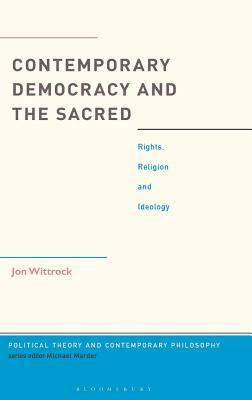
Contemporary Democracy and the Sacred
Rights, Religion and Ideology
2018
Debates on the impact of religious traditions upon secular politics have raged throughout the last century and continue today. Exposing the ambiguity of secularity in political life, Jon Wittrock investigates the contemporary relevance of the scared beyond established religious communities and within wider civic society. In the context of globalization, characterized by the spread of capitalist commodification and new technologies of transportation and communication, determining the legitimacy of democratic nation-states is particularly urgent.
Questioning ontological challenges to democracy, this book confronts the public narratives, symbols and rituals of the political domain. It analyses modern scholarship on the impact of eschatological figures of thought on government and political ideologies, what hopes there are for universal rights or justice, and the “public worship” of contemporary democracies.
Bridging the analytical and continental sides of the philosophical divide, this book draws upon conceptual analysis as well as phenomenology and deconstruction. It advocates neither a left- nor a right-wing political approach, but seeks to outline what political secularization could and should mean.

#3
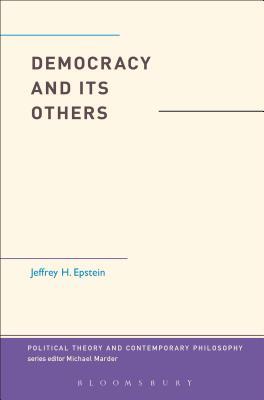
Democracy and Its Others
2016
Today's unprecedented levels of human migration present urgent challenges to traditional conceptualizations of national identity, nation-state sovereignty, and democratic citizenship. Foreigners are commonly viewed as outsiders whose inclusion within or exclusion from “the people” of the democratic state rests upon whether they benefit or threaten the unity of the nation. Against this instrumentalization of the foreigner, this book traces the historical development of the concepts of sovereignty and foreignness through the thought of philosophers such as Plato, Locke, Hobbes, Rousseau, Derrida, and Benhabib in order to show that foreignness is a structural feature of sovereignty that cannot be purged or assimilated. Understood in this light, foreignness allows for new forms of democratic political unity to be imagined that reject local practices which deprive individuals of political membership solely on the basis of national citizenship. This cosmopolitan model for citizenship provides a novel conceptual framework that simultaneously upholds the legal importance of democratic citizenship for political justice while ceaselessly contesting the exclusionary logic of the nation-state that reserves democratic rights for members of the nation alone.

#4
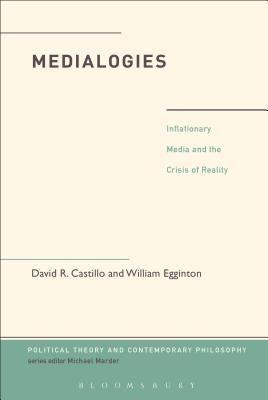
Medialogies
Reading Reality in the Age of Inflationary Media
2016
We are living in a time of inflationary media. While technological change has periodically altered and advanced the ways humans process and transmit knowledge, for the last 100 years the media with which we produce, transmit, and record ideas have multiplied in kind, speed, and power. Saturation in media is provoking a crisis in how we perceive and understand reality. Media become inflationary when the scope of their representation of the world outgrows the confines of their culture's prior grasp of reality. We call the resulting concept of reality that emerges the culture's medialogy.
Medialogies offers a highly innovative approach to the contemporary construction of reality in cultural, political, and economic domains. Castillo and Egginton, both luminary scholars, combine a very accessible style with profound theoretical analysis, relying not only on works of philosophy and political theory but also on novels, Hollywood films, and mass media phenomena. The book invites us to reconsider the way reality is constructed, and how truth, sovereignty, agency, and authority are understood from the everyday, philosophical, and political points of view. A powerful analysis of actuality, with its roots in early modernity, this work is crucial to understanding reality in the information age.


#5
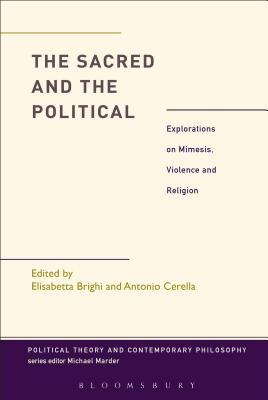
Sacred and the Political, The
Explorations on Mimesis, Violence and Religion
2016
What is the relationship between the sacred and the political, transcendence and immanence, religion and violence? And how has this complex relation affected the history of Western political reason? In this volume an international group of scholars explore these questions in light of mimetic theory as formulated by René Girard (1923-2015), one of the most original thinkers of our time. From Aristotle and his idea of tragedy, passing through Machiavelli and political modernity, up to contemporary biopolitics, this work provides an indispensable guide to those who want to assess the thorny interconnections of sacrality and politics in Western political thought and follow an unexplored yet critical path from ancient Greece to our post-secular condition. While looking at the past, this volume also seeks to illuminate the future relevance of the sacred/secular divide in the so-called 'age of globalization'.

#6
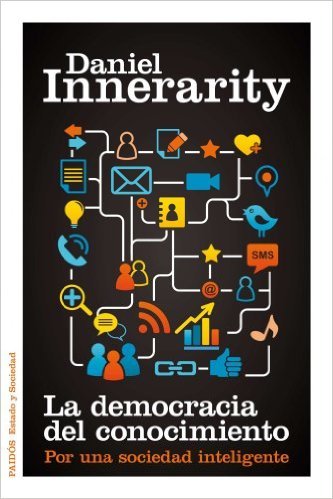
La democracia del conocimiento
Por una sociedad inteligente
2011
El conocimiento, más que un medio para saber es un instrumento para convivir. Su función más importante no consiste en reflejar una supuesta verdad objetiva, adecuando nuestras percepciones a la realidad exterior, sino en convertirse en el dispositivo más poderoso a la hora de configurar un espacio democrático de vida común entre los seres humanos. Y es que nuestros principales problemas colectivos no son, contra lo que suele afirmarse, problemas de voluntad, de falta de decisión o de inmoralidad; deberíamos considerarlos también fracasos cognoscitivos o que tienen su origen en un organización deficiente del conocimiento desde el punto de vista de su legitimidad democrática. Este libro desarrolla la tesis de que el conocimiento y sus aledaños (las políticas de la ciencia y la innovación, el asesoramiento político a los gobiernos, la evaluación de las políticas públicas, la comprensión de las actuales transformaciones sociales o la competencia cognoscitiva de los reguladores) son ámbitos donde se decide no sólo la prosperidad económica sino, fundamentalmente, la calidad democrática. Las políticas del conocimiento y a través del conocimiento se nos han convertido en un asunto de ciudadanía democrática, donde nos jugamos muchos problemas teóricos pero, principalmente, la calidad de nuestro espacio público.

#7
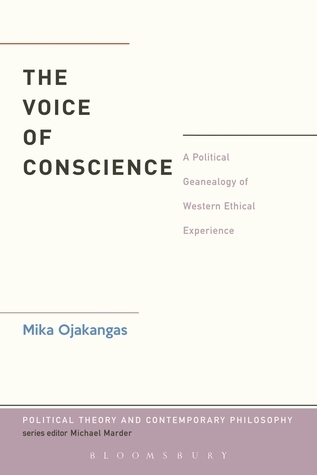
Voice of Conscience, The
A Political Genealogy of Western Ethical Experience
2013
In Western thought, it has been persistently assumed that in moral and political matters, people should rely on the inner voice of conscience rather than on external authorities, laws, and regulations. This volume investigates this concept, examining the development of the Western politics of conscience, from Socrates to the present, and the formation of the Western ethico-political subject.
The work opens with a discussion of the ambiguous role of conscience in politics, contesting the claim that it is the best defense against totalitarianism. It then look back at canonical authors, from the Church Fathers and Luther to Rousseau and Derrida, to show how the experience of conscience constitutes the foundation of Western ethics and politics.
This unique work not only synthesizes philosophical and political insights, but also pays attention to political theology to provide a compelling and innovative argument that the experience of conscience has always been at the core of the political Western tradition. An engaging and accessible text, it will appeal to political theorists and philosophers as well as theologians and those interested in the critique of the Western civilization.

#9
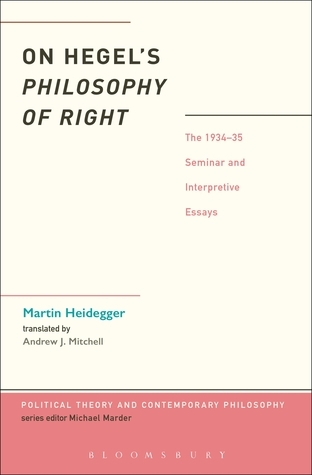
On Hegel's Philosophy of Right
2014
This is the first English translation of the seminar Martin Heidegger gave during the Winter of 1934-35, which dealt with Hegel's Philosophy of Right. This remarkable text is the only one in which Heidegger interprets Hegel's masterpiece in the tradition of Continental political philosophy while offering a glimpse into Heidegger's own political thought following his engagement with Nazism. It also confronts the ideas of Carl Schmitt, allowing readers to reconstruct the relation between politics and ontology.
The book is enriched by a collection of interpretations of the seminar, written by select European and North American political thinkers and philosophers. Their essays aim to make the seminar accessible to students of political theory and philosophy, as well as to open new directions for debating the relation between the two disciplines. A unique contribution, this volume makes available key lectures by Heidegger that will interest a wide readership of students and scholars.

#13
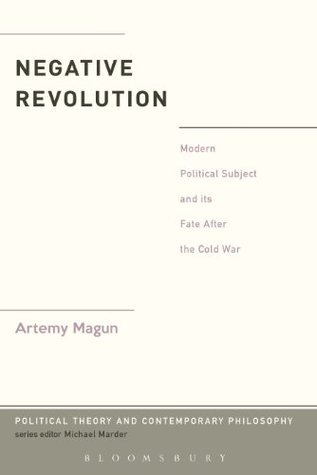
Negative Revolution
Modern Political Subject and its Fate After the Cold War
2013
This thought-provoking work analyzes concrete political events and reinterprets key concepts in modern political science. Building on the works of Kant, Badiou, Adorno, Hegel, and more, it posits that the dynamics of revolution can be encapsulated in the concept of negation, since a revolution essentially negates "what is" by rejecting the power in place.
The work argues that revolution is the true ground of Western democracy and that the proof of a true democracy is the activity of protest movements. It discusses how modern philosophy conceives political truth as revolutionary or eventful, and that one aspect of revolution is negativity, which fluctuates between inertia and melancholia. It examines the problem of revolution in the context of modern philosophy, providing a diagnosis of the historical developments since the fall of the Soviet Union to the Arab Spring, setting forth an original theory of revolution while shedding light on the notion of negativity in contemporary thought. This innovative work will appeal to anyone interested in political theory and political philosophy.

#14
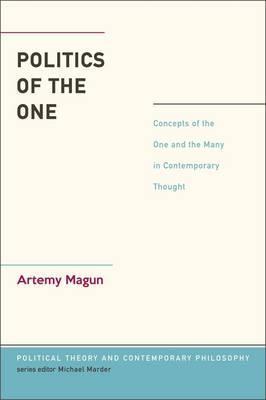
Politics of the One
Concepts of the One and the Many in Contemporary Thought
2012
This volume in the Political Theory and Contemporary Philosophy series examines one of the most important topics in contemporary political how to conceptualize the relationship between the one and the many. The essays discuss how to reconcile multiple ontologies without subsuming them to a totalitarian unity. While one school of thought (Deleuze, Negri) seeks to create a new ontology based on the many instead of the one, (which, politically, is close to anarchy), another proposes to understand the "one" as the "ultra-one" of the event (Badiou). In this groundbreaking work, leading thinkers explore these debates and offer alternative concepts. Building on Jean-Luc Nancy's essay who proposes an ontology of "singular plurality," contributors aim to synthesize the one and the many and suggest different ways of forming collectives, beyond the dominant representative political forms.An original and challenging work, "Politics of the One" addresses new possible ways of bringing people together, integrating philosophy with theoretical and practical problems of politics.
Authors
Artemy Magun
Author · 1 book
Artemy Magun is Professor of Democratic Theory and Chair of the Department of Political Science and Sociology at the European University at Saint-Petersburg, Russia. He also teaches at the Smolny College of the Saint-Peterburg State University.

Daniel Innerarity
Author · 10 books
Daniel Innerarity is professor of social and political philosophy at the University of the Basque Country, research professor at the Basque Foundation for Science (IKERBASQUE) and director of the Institute for Democratic Governance (Globernance).

William Egginton
Author · 6 books
William Egginton is a literary critic and philosopher. He has written extensively on a broad range of subjects, including theatricality, fictionality, literary criticism, psychoanalysis and ethics, religious moderation, and theories of mediation. William Egginton was born in Syracuse, New York in 1969. He received his PhD in Comparative Literature from Stanford University in 1999. His doctoral thesis, "Theatricality and Presence: a Phenomenology of Space and Spectacle in Early Modern France and Spain," was written under the direction of Hans Ulrich Gumbrecht. He currently resides with his wife, Bernadette Wegenstein, and their three children, in Baltimore, Maryland. William Egginton is the Decker Professor in the Humanities and Director of the Alexander Grass Humanities Institute at the Johns Hopkins University, where he teaches on Spanish and Latin American literature, literary theory, and the relation between literature and philosophy.
Jon Wittrock
Author · 1 book
Jon Wittrock is Senior Lecturer in Political Science at Södertörn University, Sweden.

Martin Heidegger
Author · 91 books
Martin Heidegger (1889-1976) was a German philosopher whose work is perhaps most readily associated with phenomenology and existentialism, although his thinking should be identified as part of such philosophical movements only with extreme care and qualification. His ideas have exerted a seminal influence on the development of contemporary European philosophy. They have also had an impact far beyond philosophy, for example in architectural theory (see e.g., Sharr 2007), literary criticism (see e.g., Ziarek 1989), theology (see e.g., Caputo 1993), psychotherapy (see e.g., Binswanger 1943/1964, Guignon 1993) and cognitive science (see e.g., Dreyfus 1992, 2008; Wheeler 2005; Kiverstein and Wheeler forthcoming).