


Margins
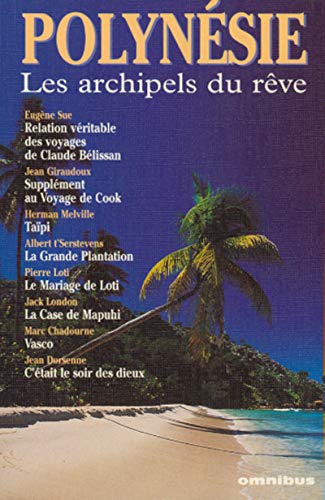
Polynésie les archipels du rêve book cover
Polynésie les archipels du rêve
1996
First Published
1
Number of Pages

"Adieu, peuple heureux et sage, soyez toujours ce que vous êtes, c'est la véritable utopie." Depuis Bougainville, les iles du Pacifique n'ont cessé de nourrir le mythe puissant du Paradis perdu dans les mers du Sud. Toute une littérature s'y est développée dans l'ombre de Stevenson et de Gauguin. Chargée de fantasmes d'amour et de fuite, de révolte et d'échec, elle s'est faite aussi le porte-parole d'un peuple maohi silencieux. Avec les premières photographies de Tahiti (1859) et des dessins de Pierre Loti Romans, nouvelles et illustrations réunis et présentés par Alain Quella-Villéger
Authors

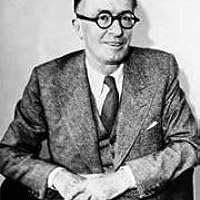
Jack London
Jack London
Author · 286 books

John Griffith Chaney (1876-1916), better known as Jack London, was an American novelist, journalist, and social activist. A pioneer of commercial fiction and American magazines, he was one of the first American authors to become an international celebrity and earn a large fortune from writing. He was also an innovator in the genre that would later become known as science fiction. His most famous works include The Call of the Wild and White Fang, both set in the Klondike Gold Rush, as well as the short stories, "To Build a Fire", "An Odyssey of the North", and "Love of Life". He also wrote about the South Pacific in stories such as "The Pearls of Parlay", and "The Heathen". London was part of the radical literary group, "The Crowd," in San Francisco and a passionate advocate of unionization, workers' rights, and socialism. He wrote several works dealing with these topics, such as his dystopian novel, The Iron Heel, his non-fiction exposé The People of the Abyss, War of the Classes, and Before Adam. London died November 22, 1916, in a sleeping porch in a cottage on his ranch. London's ashes were buried on his property, not far from the Wolf House. The grave is marked by a mossy boulder. The buildings and property were later preserved as Jack London State Historic Park, in Glen Ellen, California.

Pierre Loti
Pierre Loti
Author · 25 books

Louis Marie-Julien Viaud was a writer, who used the pseudonym Pierre Loti. Viaud was born in Rochefort, Charente-Maritime, France, to an old Protestant family. His education began in Rochefort, but at the age of seventeen, being destined for the navy, he entered the naval school in Brest and studied on Le Borda. He gradually rose in his profession, attaining the rank of captain in 1906. In January 1910 he went on the reserve list. His pseudonym has been said to be due to his extreme shyness and reserve in early life, which made his comrades call him after "le Loti", an Indian flower which loves to blush unseen. Other explanations have been put forth by scholars. It is also said that he got the name in Tahiti where he got a sun burn and was called Roti (because he was all red like a local flower), he couldn't pronounce the r well so he stuck with Loti. He was in the habit of claiming that he never read books (when he was received at the Académie française, he said, "Loti ne sait pas lire" ("Loti doesn't know how to read"), but testimony from friends and acquaintances proves otherwise, as does his library, much of which is preserved in his house in Rochefort. In 1876 fellow naval officers persuaded him to turn into a novel passages in his diary dealing with some curious experiences at Istanbul. The result was Aziyadé, a novel which, like so many of Loti's, is part romance, part autobiography, like the work of his admirer, Marcel Proust, after him. (There is a popular cafe in current-day Istanbul dedicated to the time Loti spent in Turkey.) He proceeded to the South Seas as part of his naval training, and several years after leaving Tahiti published the Polynesian idyll originally named Rarahu (1880), which was reprinted as Le Mariage de Loti, the first book to introduce him to the wider public. This was followed by Le Roman d'un spahi (1881), a record of the melancholy adventures of a soldier in Senegambia. Loti on the day of his reception at the Académie française on 7 April, 1892. In 1882, Loti issued a collection of four shorter pieces, three stories and a travel piece, under the general title of Fleurs d'ennui (Flowers of Boredom). In 1883 he entered the wider public spotlight. First, he publish the critically acclaimed Mon frere Yves (My Brother Yves), a novel describing the life of a French naval officer (Pierre Loti), and a Breton sailor (Yves Kermadec), described by Edmund Gosse as "one of his most characteristic productions".[1] Second, while taking part as a naval officer in the undeclared hostilities that preceded the outbreak of the Sino-French War (August 1884 to April 1885), Loti wrote an article in the newspaper Le Figaro about atrocities that occurred during the French bombardment of the Thuan An forts that guarded the approaches to Hue (August 1883), and was threatened with suspension from the service, thus gaining wider public notoriety. In 1886 he published a novel of life among the Breton fisherfolk, called Pêcheur d'Islande (Iceland Fisherman), which Edmund Gosse characterized as "the most popular and finest of all his writings."[1] It shows Loti adapting some of the Impressionist techniques of contemporary painters, especially Monet, to prose, and is a classic of French literature. In 1887 he brought out a volume "of extraordinary merit, which has not received the attention it deserves",[1] Propos d'exil, a series of short studies of exotic places, in his characteristic semi-autobiographic style. The novel of Japanese manners, Madame Chrysanthème—a precursor to Madame Butterfly and Miss Saigon and a work that is a combination of narrative and travelog—was published the same year. During 1890 he published Au Maroc, the record of a journey to Fez in company with a French embassy, and Le Roman d'un enfant (The Story of a Child), a somewhat fictionalized recollection of Loti's childhood that would greatly influence Marcel Proust. A collection

Eugène Sue
Eugène Sue
Author · 12 books

From Wikipedia: Joseph Marie Eugène Sue (20 January 1804 – 3 August 1857) was a French novelist. He was born in Paris, the son of a distinguished surgeon in Napoleon's army, and is said to have had the Empress Joséphine for godmother. Sue himself acted as surgeon both in the Spanish campaign undertaken by France in 1823 and at the Battle of Navarino (1828). In 1829 his father's death put him in possession of a considerable fortune, and he settled in Paris. A street in Paris is named for Eugene Sue, in the 18th Arrondissement: Rue Eugene Sue is located near the Poissonnière Metro station, and is not far from Montmartre and the Basilica of the Sacré Coeur.

Jean Giraudoux
Jean Giraudoux
Author · 15 books

Greek mythology or Biblical stories base dramas, such as Electra (1937), of French writer Hippolyte Jean Giraudoux, who also wrote several novels. He fathered Jean-Pierre Giraudoux. People consider this French novelist, essayist, diplomat. and playwright among the most important French dramatists of the period between World War I and World War II. They note his work for its stylistic elegance and poetic fantasy. The relationship between man and woman or some unattainable ideal in some cases dominates themes of Giraudoux . Léger Giraudoux, father of Jean Giraudoux, worked for the ministry of transport. Giraudoux studied at the Lycée Lakanal in Sceaux and upon graduation traveled extensively in Europe. After his return to France in 1910, he accepted a position with the ministry of foreign affairs. With the outbreak of World War I, he served with distinction and in 1915 became the first writer ever to be awarded the wartime Legion of Honour. He married in 1918 and in the subsequent inter-war period produced the majority of his writing. He first achieved literary success through his novels, notably Siegfried et le Limousin (1922) and Eglantine (1927). An ongoing collaboration with actor and theater director Louis Jouvet, beginning in 1928 with Jouvet's radical streamlining of Siegfried for the stage, stimulated his writing. But it is through his plays that gained him international renown. He became well known in the English-speaking world largely because of the award-winning adaptations of his plays by Christopher Fry (The Trojan War Will Not Take Place) and Maurice Valency (The Madwoman of Chaillot, Ondine, The Enchanted, The Apollo of Bellac). Giraudoux served as a juror with Florence Meyer Blumenthal in awarding the Prix Blumenthal, a grant given between 1919 and 1954 to painters, sculptors, decorators, engravers, writers, and musicians. He is buried in the Cimetière de Passy in Paris. His son, Jean-Pierre Giraudoux, was also a writer.

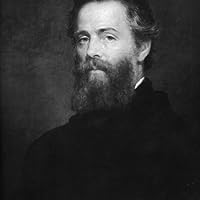
Herman Melville
Herman Melville
Author · 113 books

There is more than one author with this name Herman Melville was an American novelist, short story writer, essayist, and poet. His first two books gained much attention, though they were not bestsellers, and his popularity declined precipitously only a few years later. By the time of his death he had been almost completely forgotten, but his longest novel, Moby Dick—largely considered a failure during his lifetime, and most responsible for Melville's fall from favor with the reading public—was rediscovered in the 20th century as one of the chief literary masterpieces of both American and world literature.

548 Market St PMB 65688, San Francisco California 94104-5401 USA
© 2026 Paratext Inc. All rights reserved