Margins
Margins
Sign in
Margins
Subscribe to our newsletter
548 Market St PMB 65688, San Francisco California 94104-5401 USA
hello@margins.app
·
+1 (650) 223-5283
Privacy Policy
·
Terms of Use
© 2026 Paratext Inc. All rights reserved
🌅
postcolonial studies
The Souls of Black Folk
1903
W.E.B. Du Bois
This landmark book is a founding work in the literature of black protest. W. E. B. Du Bois (1868–1963) played a key role in developing the strategy and program that dominated early 20th-century black protest in America. In this collection of essays, first published together in 1903, he eloquently affirms that it is beneath the dignity of a human being to beg for those rights that belong inherently to all mankind. He also charges that the strategy of accommodation to white supremacy advanced by Booker T. Washington, then the most influential black leader in America, would only serve to perpetuate black oppression. Publication of The Souls of Black Folk was a dramatic event that helped to polarize black leaders into two groups: the more conservative followers of Washington and the more radical supporters of aggressive protest. Its influence cannot be overstated. It is essential reading for everyone interested in African-American history and the struggle for civil rights in America.
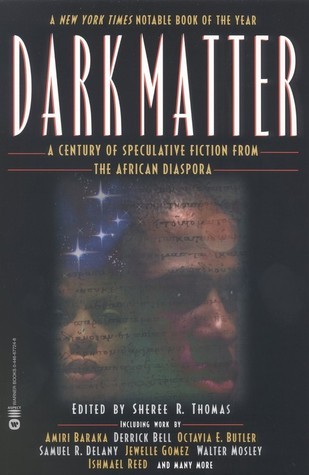
Dark Matter
Series • 2 books
W.E.B. Du Bois, Kalamu ya Salaam, Samuel R. Delany
Orientalism
1978
Edward W. Said
More than three decades after its first publication, Edward Said's groundbreaking critique of the West's historical, cultural, and political perceptions of the East has become a modern classic. In this wide-ranging, intellectually vigorous study, Said traces the origins of "orientalism" to the centuries-long period during which Europe dominated the Middle and Near East and, from its position of power, defined "the orient" simply as "other than" the occident. This entrenched view continues to dominate western ideas and, because it does not allow the East to represent itself, prevents true understanding. Essential, and still eye-opening, Orientalism remains one of the most important books written about our divided world.
Black Skin, White Masks
1952
Frantz Fanon
A major influence on civil rights, anti-colonial, and black consciousness movements around the world, Black Skin, White Masks is the unsurpassed study of the black psyche in a white world. Hailed for its scientific analysis and poetic grace when it was first published in 1952, the book remains a vital force today.
A Dying Colonialism
1959
Frantz Fanon
Frantz Fanon's seminal work on anticolonialism and the fifth year of the Algerian Revolution. Psychiatrist, humanist, revolutionary, Frantz Fanon was one of the great political analysts of our time, the author of such seminal works of modern revolutionary theory as The Wretched of the Earth and Black Skin, White Masks . He has had a profound impact on civil rights, anticolonialism, and black consciousness movements around the world. A Dying Colonialism is Fanon's incisive and illuminating account of how, during the Algerian Revolution, the people of Algeria changed centuries-old cultural patterns and embraced certain ancient cultural practices long derided by their colonialist oppressors as "primitive," in order to destroy those oppressors. Fanon uses the fifth year of the Algerian Revolution as a point of departure for an explication of the inevitable dynamics of colonial oppression. This is a strong, lucid, and militant book; to read it is to understand why Fanon says that for the colonized, "having a gun is the only chance you still have of giving a meaning to your death."
The Wretched of the Earth
1961
Frantz Fanon
A distinguished psychiatrist from Martinique who took part in the Algerian Nationalist Movement, Frantz Fanon was one of the most important theorists of revolutionary struggle, colonialism, and racial difference in history. Fanon's masterwork is a classic alongside Edward Said's Orientalism or The Autobiography of Malcolm X, and it is now available in a new translation that updates its language for a new generation of readers. The Wretched of the Earth is a brilliant analysis of the psychology of the colonized and their path to liberation. Bearing singular insight into the rage and frustration of colonized peoples, and the role of violence in effecting historical change, the book incisively attacks the twin perils of post-independence colonial politics: the disenfranchisement of the masses by the elites on the one hand, and intertribal and interfaith animosities on the other. Fanon's analysis, a veritable handbook of social reorganization for leaders of emerging nations, has been reflected all too clearly in the corruption and violence that has plagued present-day Africa. The Wretched of the Earth has had a major impact on civil rights, anticolonialism, and black consciousness movements around the world, and this bold new translation by Richard Philcox reaffirms it as a landmark.
Sister Outsider
Essays and Speeches
Audre Lorde
A collection of fifteen essays written between 1976 and 1984 gives clear voice to Audre Lorde's literary and philosophical personae. These essays explore and illuminate the roots of Lorde's intellectual development and her deep-seated and longstanding concerns about ways of increasing empowerment among minority women writers and the absolute necessity to explicate the concept of difference—difference according to sex, race, and economic status. The title Sister Outsider finds its source in her poetry collection The Black Unicorn (1978). These poems and the essays in Sister Outsider stress Lorde's oft-stated theme of continuity, particularly of the geographical and intellectual link between Dahomey, Africa, and her emerging self. Notes from a trip to Russia Poetry is not a luxury The transformation of silence into language and action Scratching the surface : some notes on barriers to women and loving Uses of the erotic : the erotic as power Sexism : an American disease in blackface An open letter to Mary Daly Man child : a black lesbian feminist's response An interview : Audre Lorde and Adrienne Rich The Master's tools will never dismantle the Master's house Age, race, class, and sex : women redefining difference The uses of anger : women responding to racism Learning from the 60s Eye to eye : black women, hatred, and anger Grenada revisited : an interim report
🌅 postcolonial studies