Margins
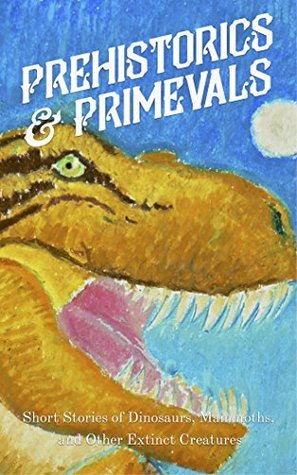
Prehistorics & Primevals book cover
Prehistorics & Primevals
Short Stories of Dinosaurs, Mammoths, and Other Extinct Creatures
2014
First Published
5.00
Average Rating
133
Number of Pages
Dinosaurs have fired the imaginations of writers almost since their discovery in the 1800s. This anthology collects a dozen of the earliest stories featuring dinosaurs, mammoths, and other prehistoric creatures, ranging from Victorian era genre-benders to the pulpiest of science fiction—time travel, previous lives, moon men, crypto-survivors, and more. Fully illustrated with an introduction by the artist.

Avg Rating
5.00
Number of Ratings
1
5 STARS
100%
4 STARS
0%
3 STARS
0%
2 STARS
0%
1 STARS
0%
goodreads

Authors

Bernard Capes
Bernard Capes
Author · 7 books
Bernard Edward Joseph Capes was an English author.
Ambrose Bierce
Ambrose Bierce
Author · 171 books

Ambrose Gwinnett Bierce (1842-1914) was an American editorialist, journalist, short story writer, fabulist and satirist. Today, he is best known for his short story, An Occurrence at Owl Creek Bridge and his satirical lexicon, The Devil's Dictionary. The sardonic view of human nature that informed his work – along with his vehemence as a critic, with his motto "nothing matters" – earned him the nickname "Bitter Bierce." Despite his reputation as a searing critic, however, Bierce was known to encourage younger writers, including poet George Sterling and fiction writer W. C. Morrow. Bierce employed a distinctive style of writing, especially in his stories. This style often embraces an abrupt beginning, dark imagery, vague references to time, limited descriptions, the theme of war, and impossible events. Bierce disappeared in December 1913 at the age of 71. He is believed to have traveled to Mexico to gain a firsthand perspective on that country's ongoing revolution. Despite an abundance of theories, Bierce's ultimate fate remains a mystery. He wrote in one of his final letters: "Good-bye. If you hear of my being stood up against a Mexican stone wall and shot to rags, please know that I think it is a pretty good way to depart this life. It beats old age, disease, or falling down the cellar stairs. To be a Gringo in Mexico—ah, that is euthanasia!"

Eden Phillpotts
Eden Phillpotts
Author · 8 books

See also: Harrington Hext Eden Philpotts was an English novelist, short-story writer, and playwright with a particular interest in the county of Devon. His works include a cycle of 18 novels set in Dartmoor.

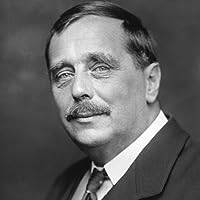
H.G. Wells
H.G. Wells
Author · 307 books

Herbert George Wells was born to a working class family in Kent, England. Young Wells received a spotty education, interrupted by several illnesses and family difficulties, and became a draper's apprentice as a teenager. The headmaster of Midhurst Grammar School, where he had spent a year, arranged for him to return as an "usher," or student teacher. Wells earned a government scholarship in 1884, to study biology under Thomas Henry Huxley at the Normal School of Science. Wells earned his bachelor of science and doctor of science degrees at the University of London. After marrying his cousin, Isabel, Wells began to supplement his teaching salary with short stories and freelance articles, then books, including The Time Machine (1895), The Island of Dr. Moreau (1896), The Invisible Man (1897), and The War of the Worlds (1898). Wells created a mild scandal when he divorced his cousin to marry one of his best students, Amy Catherine Robbins. Although his second marriage was lasting and produced two sons, Wells was an unabashed advocate of free (as opposed to "indiscriminate") love. He continued to openly have extra-marital liaisons, most famously with Margaret Sanger, and a ten-year relationship with the author Rebecca West, who had one of his two out-of-wedlock children. A one-time member of the Fabian Society, Wells sought active change. His 100 books included many novels, as well as nonfiction, such as A Modern Utopia (1905), The Outline of History (1920), A Short History of the World (1922), The Shape of Things to Come (1933), and The Work, Wealth and Happiness of Mankind (1932). One of his booklets was Crux Ansata, An Indictment of the Roman Catholic Church. Although Wells toyed briefly with the idea of a "divine will" in his book, God the Invisible King (1917), it was a temporary aberration. Wells used his international fame to promote his favorite causes, including the prevention of war, and was received by government officials around the world. He is best-remembered as an early writer of science fiction and futurism. He was also an outspoken socialist. Wells and Jules Verne are each sometimes referred to as "The Fathers of Science Fiction". D. 1946. More: http://philosopedia.org/index.php/H.\_... http://www.online-literature.com/well... http://www.hgwellsusa.50megs.com/ http://www.britannica.com/EBchecked/t... http://en.wikipedia.org/wiki/H.\_G.\_Wells

Charles John Cutcliffe Wright Hyne
Author · 2 books

Born on the 11th of May 1865, in Bibury, Gloucestershire, but raised in Yorkshire, Charles John Cutcliffe Wright Hyne attended Cambridge University, where he received both a Bachelor's and Master's degree. Best remembered today for his The Lost Continent, he was also extremely popular at one time for his fanciful tales of Captain Kettle, a dashing Raffles of the Sea. Besides these he wrote historical novels, travelogues, political commentary and an autobiography, totalling roughly fifty novels and a large number of short stories. He also wrote under the names C.J. Cutcliffe-Hyne and Weatherby Chesney. Hyne died on 10 March 1944, at the age of seventy-eight.

548 Market St PMB 65688, San Francisco California 94104-5401 USA
© 2026 Paratext Inc. All rights reserved