


Margins
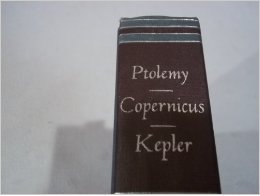
Ptolemy | Copernicus | Kepler book cover
Ptolemy | Copernicus | Kepler
1952
First Published
4.12
Average Rating
1085
Number of Pages

Ptolemy (C. 100-C. 178) The Almagest Copernicus (1473–1543) On the Revolutions of the Heavenly Spheres Kepler (1571-1630) Epitome of Copernican IV – V The Harmonies of the V
Avg Rating
4.12
Number of Ratings
25
5 STARS
44%
4 STARS
36%
3 STARS
12%
2 STARS
4%
1 STARS
4%
goodreads

Authors

Ptolemy
Ptolemy
Author · 1 book

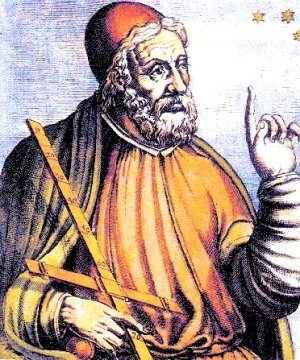
Geocentric model of Greek astronomer and geographer Ptolemy, who flourished in 2nd century at Alexandria, for the universe dominated cosmological theory until the Renaissance. Ptolemy compiled Almagest, a comprehensive treatise on astronomy, geography, and mathematics, about 150. Claudius Ptolemy (circa 90 – circa 168), a Roman citizen of Egypt, wrote. As a poet, he composed a single epigram in the Anthology. He lived in Egypt under Roman rule. Theodore Meliteniotes proposed possibly correct but late and unsupported birthplace in the town of Ptolemais Hermiou in the Thebaid circa 1360. No reason exists to suppose that he ever lived anywhere else. Ptolemy authored at least three works of continuing importance to later Islamic and European science. People first knew originally Μαθηματικὴ Σύνταξις, "Mathematical Treatise"). The second Geography thoroughly discusses the knowledge of the Roman world. In the third, known sometimes as the Apotelesmatika (Ἀποτελεσματικά), more commonly as the Tetrabiblos (Τετράβιβλος, and in Latin as the Quadripartitum or four books, he attempted to adapt horoscopes to the Aristotelian natural philosophy of his day.

Mikołaj Kopernik
Mikołaj Kopernik
Author · 1 book

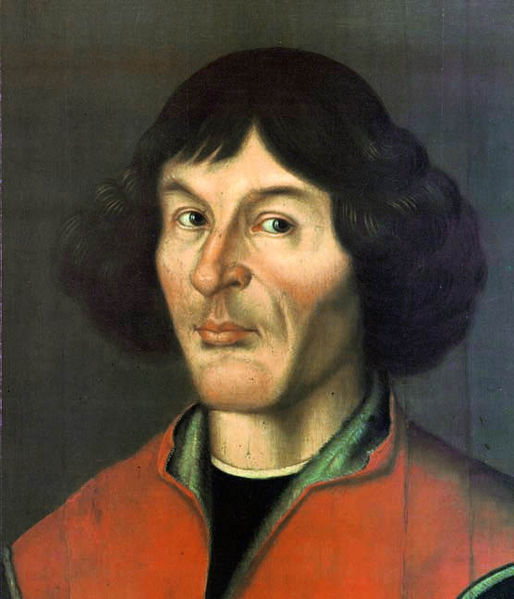
Nicolaus Copernicus (19 February 1473 – 24 May 1543) was the first astronomer to formulate a comprehensive heliocentric cosmology, which displaced the Earth from the center of the universe. His epochal book, De revolutionibus orbium coelestium (On the Revolutions of the Celestial Spheres), published in 1543 just before he died, is often regarded as the starting point of modern astronomy and the defining epiphany that began the Scientific Revolution. His heliocentric model, with the sun at the center of the universe, demonstrated that the observed motions of celestial objects can be explained without putting the Earth at rest in the center of the universe. His work stimulated further scientific investigations, becoming a landmark in the history of modern science that is now often referred to as the Copernican Revolution. Among the great polymaths of the Renaissance, Copernicus was a mathematician, astronomer, physician, quadrilingual polyglot, classical scholar, translator, artist, Catholic cleric, jurist, governor, military leader, diplomat and economist. Among his many responsibilities, astronomy figured as little more than an avocation—yet it was in that field that he made his mark upon the world.

548 Market St PMB 65688, San Francisco California 94104-5401 USA
© 2025 Paratext Inc. All rights reserved