Margins




548 Market St PMB 65688, San Francisco California 94104-5401 USA
© 2026 Paratext Inc. All rights reserved
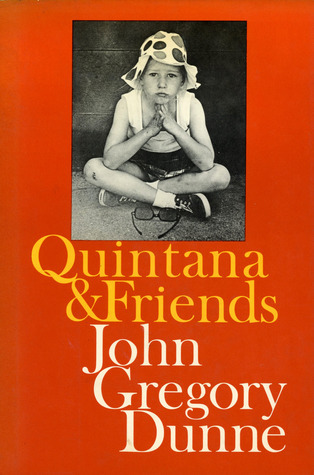
Quintana & Friends is John Gregory Dunne's first book since his bestselling True Confessions. Long regarded as one of our finest reporters, he is noted for his ironic wit and his keen ability to capture the nuances of any scene or situation he covers. This is his first collection of the nonfiction pieces he has written over the past fifteen years, and it is a brilliant book. Underlying its four sections ("Software," "Hardware," "Tinsel" and "Continental Drift") is a single thread: the confrontation between a transplanted Easterner's sensibilities and the culture of the contemporary West. Dunne finds his subjects in a tiny desert community on the edge of Death Valley, in a missile silo in Montana, in a town on San Francisco Bay with memories of being leveled during a World War II munitions explosion. He inhales the aroma of a small-time fight club; he experiences the doldrums of a road trip with a big-league baseball team; he visits a private detective who specializes in lost cat capers and spends the day with a stunt man who falls on his head for a living. Throughout the section called "Hardware," he offers an insightful and compassionate view of certain volatile issues of the sixties. In the wonderfully sardonic essays in "Tinsel," he is able, as observer and more importantly as participant, to reflect cooly on Hollywood and the film business from the inside out. And in the two memorable title piece, he explores the nature of a guarded friendship between two men and what it means to him to be the father of an adopted daughter. The thirty-three essays in Quintana & Friends appeared (sometimes in slightly different form) in such publications as the old Saturday Evening Post, Esquire, the Atlantic Monthly and New York. Taken together, they represent John Gregory Dunne at his best—which is to say, a remarkably perceptive and highly entertaining look at American life.