Margins
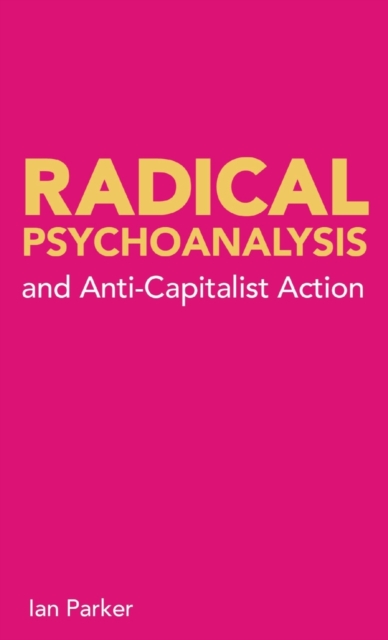
Radical Psychoanalysis and Anti-Capitalist Action book cover
Radical Psychoanalysis and Anti-Capitalist Action
2022
First Published
3.59
Average Rating
75
Number of Pages
Politicians of all stripes now talk about 'mental health'. They tell us how they have suffered, and promise more resources to put things right. At the same time, welfare services are being cut, people are told to sort problems out for themselves, and the state is beefed up to deal with dissent. With increasing misery comes increasing anger, some of it directed at capitalism and some of it turned around against ourselves, even into ourselves, so this sick system also makes us sick. Energy that could other throw this rotten system is turned around to sabotage our collective struggles for a world beyond capitalism. Mainstream 'mental health' and well-being' programmes are too-often focused on making us change our thoughts, urging us to be happy, and fit it. But there is an alternative. The alternative comes through political action, through anti-capitalist resistance and many other political struggles, and this is where radical psychoanalysis can be our ally. But to make it our ally we need to know what it is and what it could be. Another world is possible, and psychoanalysis opens up possibilities for personal and political change.

Avg Rating
3.59
Number of Ratings
32
5 STARS
28%
4 STARS
28%
3 STARS
25%
2 STARS
13%
1 STARS
6%
goodreads

Author

Ian Parker
Ian Parker
Author · 8 books

Ian Parker is a British psychologist who has been a principal exponent of three quite diverse critical traditions inside the discipline. His writing has provided compass points for researchers searching for alternatives to ‘mainstream’ psychology in the English-speaking world (that is, mainstream psychology that is based on laboratory-experimental studies that reduce behavior to individual mental processes). The three critical traditions Parker has promoted are ‘discursive analysis’, ‘Marxist psychology’ and ‘psychoanalysis’. Each of these traditions is adapted by him to encourage an attention to ideology and power, and this modification has given rise to fierce debates, not only from mainstream psychologists but also from other ‘critical psychologists’. Parker moves in his writing from one focus to another, and it seems as if he is not content with any particular tradition of research, using each of the different critical traditions to throw the others into question.

548 Market St PMB 65688, San Francisco California 94104-5401 USA
© 2026 Paratext Inc. All rights reserved