


Margins
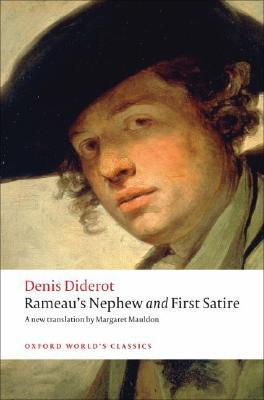
Rameau's Nephew and First Satire book cover
Rameau's Nephew and First Satire
1769
First Published
3.54
Average Rating
175
Number of Pages

In his brilliant and witty dialogue, Denis Diderot invents a chance encounter in a Paris cafe between two acquaintances. Their talk ranges broadly across art, music, education, and the contemporary scene, as the nephew of composer Rameau, amoral and bohemian, alternately shocks and amuses the moral, bourgeois figure of his interlocutor. Exuberant and highly entertaining, the dialogue exposes the corruption of society in Diderot's characteristic philosophical exploration. The debates of the French Enlightenment speak to us vividly in this sparkling new translation, which also includes the only English translation of First Satire, a related work that provides the context for Rameau's Nephew, Diderot's 'second satire.' Edited by distinguished translator Margaret Mauldon, with lively introduction and notes by Nicholas Cronk, the edition includes, for the first time in English, extracts from Goethe's commentary on this seminal Enlightenment work. It will prove a valuable addition to the library to any lover of French literature. About the Series: For over 100 years Oxford World's Classics has made available the broadest spectrum of literature from around the globe. Each affordable volume reflects Oxford's commitment to scholarship, providing the most accurate text plus a wealth of other valuable features, including expert introductions by leading authorities, voluminous notes to clarify the text, up-to-date bibliographies for further study, and much more.
Avg Rating
3.54
Number of Ratings
127
5 STARS
19%
4 STARS
31%
3 STARS
36%
2 STARS
12%
1 STARS
2%
goodreads

Author

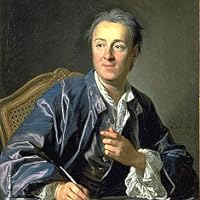
Denis Diderot
Denis Diderot
Author · 45 books

Work on the Encyclopédie (1751-1772), supreme accomplishment of French philosopher and writer Denis Diderot, epitomized the spirit of thought of Enlightenment; he also wrote novels, plays, critical essays, and brilliant letters to a wide circle of friends and colleagues. Jean le Rond d'Alembert contributed. This artistic prominent persona served as best known co-founder, chief editor, and contributor. He also contributed notably to literature with Jacques le fataliste et son maître (Jacques the Fatalist and his Master), which emulated Laurence Sterne in challenging conventions regarding structure and content, while also examining ideas about free will. Diderot also authored of the known dialogue, Le Neveu de Rameau (Rameau's Nephew), basis of many articles and sermons about consumer desire. His articles included many topics. Diderot speculated on free will, held a completely materialistic view of the universe, and suggested that heredity determines all human behavior. He therefore warned his fellows against an overemphasis on mathematics and against the blind optimism that sees in the growth of physical knowledge an automatic social and human progress. He rejected the idea of progress. His opinion doomed the aim of progressing through technology to fail. He founded on experiment and the study of probabilities. He wrote several articles and supplements concerning gambling, mortality rates, and inoculation against smallpox. He discreetly but firmly refuted technical errors and personal positions of d'Alembert on probability.

548 Market St PMB 65688, San Francisco California 94104-5401 USA
© 2026 Paratext Inc. All rights reserved