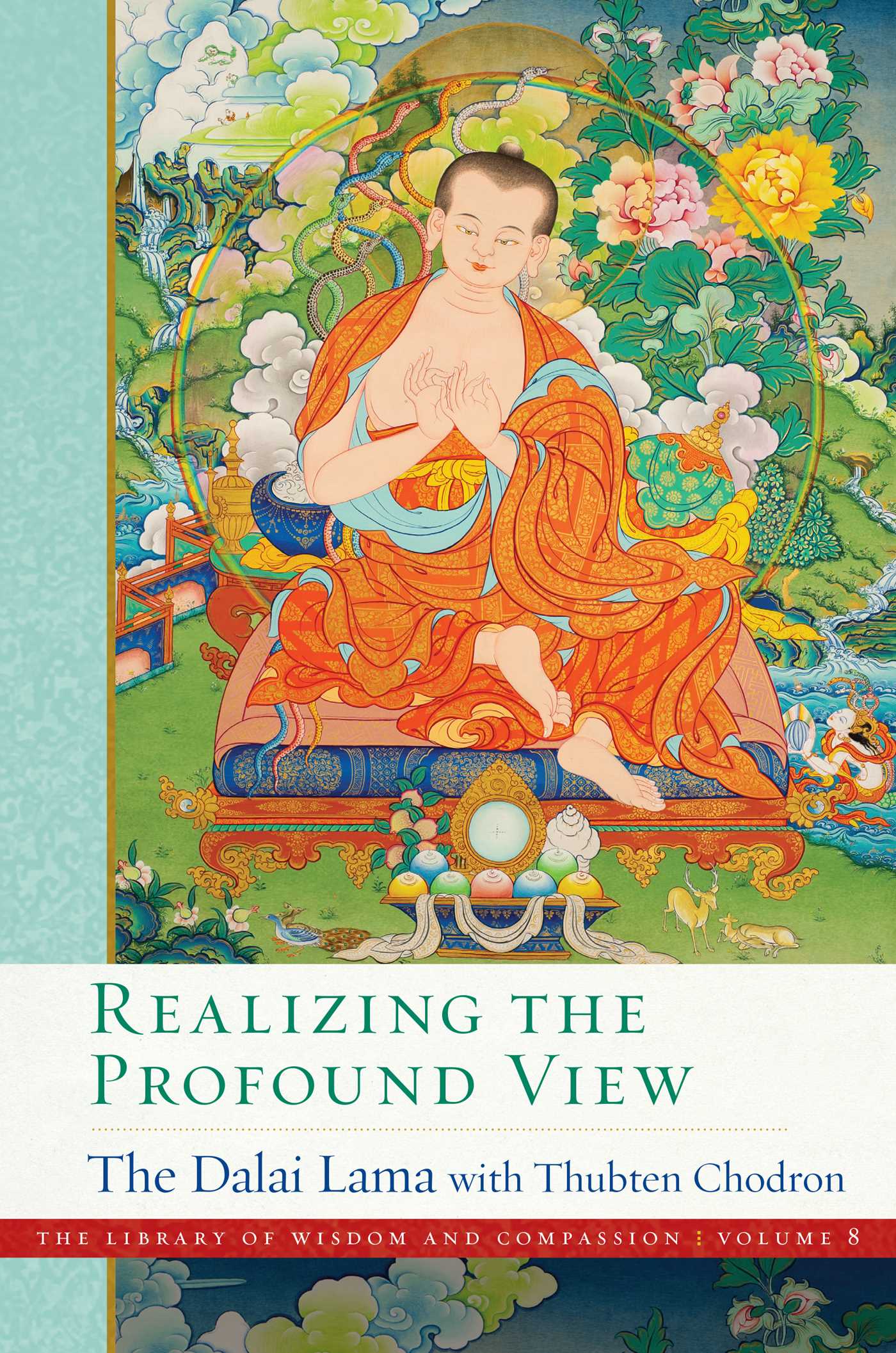
The eighth volume in the Dalai Lama’s definitive and bestselling Library of Wisdom and Compassion series, and the second of three focusing on emptiness. In Realizing the Profound View the Dalai Lama presents the analysis and meditations necessary to realize the ultimate nature of reality. With attention to Nagarjuna’s five-point analysis, Candrakirti’s seven-point examination, and Pali sutras, the Dalai Lama leads us to investigate who or what is the person. Are we our body? Our mind? If we are not inherently either of them, how do we exist, and what carries the karma from one life to the next? As we explore these and other fascinating questions, he skillfully guides us along the path, avoiding the chasms of absolutism and nihilism, and introduces us to dependent arising. We find that although all persons and phenomena lack an inherent essence, they do exist dependently. This nominally imputed mere I carries the karmic seeds. We discover that all phenomena exist by being merely designated by term and concept—they appear as like illusions, unfindable under ultimate analysis but functioning on the conventional level. Furthermore, we come to understand that emptiness dawns as the meaning of dependent arising, and dependent arising dawns as the meaning of emptiness. The ability to posit subtle dependent arisings in the face of realizing emptiness and to establish ultimate and conventional truths as non-contradictory brings us to the culmination of the correct view. The second of three volumes on the nature of reality in the Library of Wisdom and Compassion series, Realizing the Profound View challenges the ways we view the self and the world, bringing us that much closer to liberation.
Authors
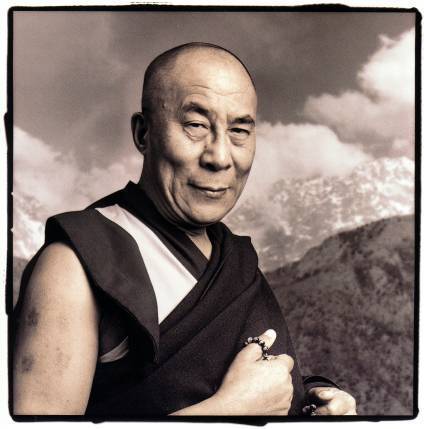
Jetsun Jamphel Ngawang Lobsang Yeshe Tenzin Gyatso (born Lhamo Döndrub), the 14th Dalai Lama, is a practicing member of the Gelug School of Tibetan Buddhism and is influential as a Nobel Peace Prize laureate, the world's most famous Buddhist monk, and the leader of the exiled Tibetan government in India. Tenzin Gyatso was the fifth of sixteen children born to a farming family. He was proclaimed the tulku (an Enlightened lama who has consciously decided to take rebirth) of the 13th Dalai Lama at the age of two. On 17 November 1950, at the age of 15, he was enthroned as Tibet's ruler. Thus he became Tibet's most important political ruler just one month after the People's Republic of China's invasion of Tibet on 7 October 1950. In 1954, he went to Beijing to attempt peace talks with Mao Zedong and other leaders of the PRC. These talks ultimately failed. After a failed uprising and the collapse of the Tibetan resistance movement in 1959, the Dalai Lama left for India, where he was active in establishing the Central Tibetan Administration (the Tibetan Government in Exile) and in seeking to preserve Tibetan culture and education among the thousands of refugees who accompanied him. Tenzin Gyatso is a charismatic figure and noted public speaker. This Dalai Lama is the first to travel to the West. There, he has helped to spread Buddhism and to promote the concepts of universal responsibility, secular ethics, and religious harmony. He was awarded the Nobel Peace Prize in 1989, honorary Canadian citizenship in 2006, and the United States Congressional Gold Medal on 17 October 2007.