Authors

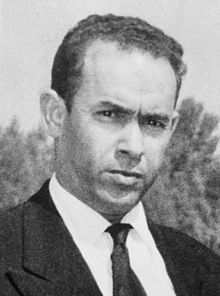
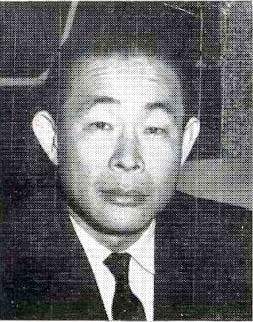
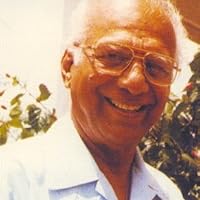
Leading figure of the Pathet Lao and an elder statesman of the Lao People's Democratic Republic. Son of a civil servant, he was educated in the Lao capital Vientiane, after which he joined the colonial civil service. After postings in Vientiane, Luang Prabang and Xieng Khouang, he was promoted to district chief ("chao muang") and served in Xieng Khouang (1939) and Vientiane (1940 - 1945). In January 1945 he was appointed governor ("chao khoueng") of Houaphan where he remained until the Japanese surrender in August 1945. The following month, Phoumi cooperated with Free French forces when they briefly seized the town of Sam Neua, but subsequently he joined the anti-colonialist Lao Issara movement and worked closely with the Viet Minh to oppose the return of French authority in Indochina. In 1946, after the French reasserted their authority in Laos, Phoumi made his way to northern Thailand where for the next three years he was active in the Lao Issara. At the end of 1949, having refused to accept the offer of amnesty upon dissolution of the Lao Issara government-in-exile in Thailand, Phoumi was one of the handful of Lao who joined Souphanouvong in northern Vietnam. There he attended the founding congress of the Neo Lao Issara (the Free Laos Front). Phoumi was nominated both Secretary-General of the Front, and Minister of the Interior and Deputy Prime Minister in the Pathet Lao Resistance government that the Front established in opposition to the Royal Lao government in Vientiane. The Resistance government gained no international recognition, but Phoumi nominally retained both positions until the Geneva Agreements of 1954 brought the First Indochina War to an end. In 1954 and 1955, Phoumi led Pathet Lao delegations in negotiations with the Royal Lao government over reintegration of the provinces of Phong Saly and Houaphan. In March 1955, Phoumi was one of the founding members of the Lao People's Party and was elected to its Political Bureau. The following January he was elected to the Central Committee of the Lao Patriotic Front (Neo Lao Hak Xat). In 1956, Phoumi continued to be involved in negotiations over integration which eventuated in the signing of a series of agreements, known as the Vientiane Agreements, the following year. These opened the way for formation of the First Coalition government in which Phoumi served as Minister of Religion and Fine Arts. (The other Pathet Lao minister was Souphanouvong at the Ministry of Economy and Plan.) From this time, Phoumi took a lively interest in the Buddhist Sangha, recognizing its potential as a propaganda organ for opposition to the Americanization of Lao society, but also as a vehicle for the propagation of Lao cultural values. In the supplementary elections of May 1958, Phoumi was elected to the National Assembly to serve as a deputy for Luang Prabang. In the political crisis that followed the electoral success of the left, Phoumi lost his ministry. In July 1959 he was arrested along with other Pathet Lao deputies, and imprisoned without ever being brought to trial. In a famous May 1960 episode he escaped with Souphanouvong and other leading Pathet Lao prisoners and their guards, and made the long march to the Pathet Lao zone in Xieng Khouang. After the Battle of Vientiane in December 1960 and the subsequent retreat of Neutralist forces to the Plain of Jars, Phoumi was instrumental in arranging for Pathet Lao-Neutralist collaboration. He led the Pathet Lao delegation to the Geneva Conference on the neutrality of Laos in 1962, and served as Minister of Information, Propaganda and Tourism in the Second Coalition government. In 1964, after a series of political assassinations, Phoumi left Vientiane with other Pathet Lao ministers. By this time Laos had been dragged into the Vietnam War (Second Indochina War) between the United States and North Vietnam. For the next ten years, Phoumi alternated between living in the limestone caverns of Viengxay and leading various

(Arabic:عبدالله الأحمر)is a Syrian politician and prominent member of the Arab Socialist Ba'ath Party. He is the Assistant Secretary-General of the Ba'ath Party's National Command. Ahmar joined the Ba'ath Party in the 1950s and graduated from the Faculty of Law at the University of Damascus in 1964. Soon after, he was appointed as a governor of Hama (1967-1969) then Idlib (1969-1970). In 1970, the regional Ba'ath conference elected him to the Syrian Regional Command together with Hafez Al-Assad after an internal coup in the party that expelled Salah Jadid's faction from power. A few months later, Assad's faction held a meeting and appointed a new National Command that elected Assad as a general secretary and Ahmar his deputy. This National Command is competing with another one that was based in Iraq on being the sole legitimate National Command. In 1980, Ahmar was re-elected with Assad into the same positions they held since 1971. Since the death of Assad in 2000, Ahmar is the highest ranked Ba'ath member in Syria, while Bashar Al-Assad is the secretary of the Syrian Regional Command. On 25 July 2013, Abdullah al-Ahmar was the head of a Ba'ath Party delegation visiting North Korea.

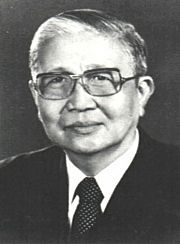
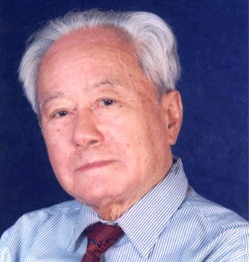
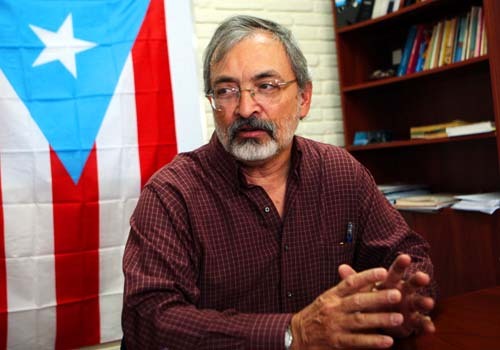
Former Japanese Communist Party Central Committee Secretariat Head. He joined the JCP in 1946 when he worked at the former Japanese National Railways (which was privatized and divided into seven railway companies in 1987). He served as the JCP’s international commission chair, and was elected central committee secretariat head in 1982. He was chosen executive committee vice chair in 1990. For 24 years after he was elected to the House of Representatives in 1972, Kaneko was devoted to leading the JCP in parliamentary struggles as well as in anti-nuclear and peace movements.

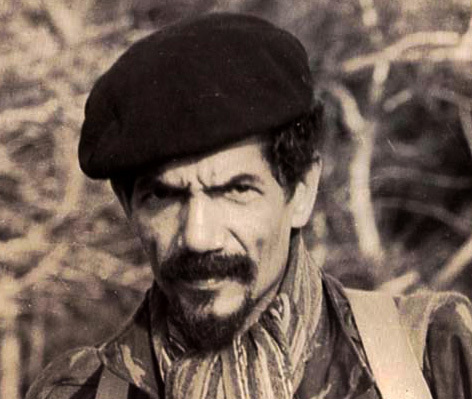
Comandante Rolando Morán is the nom de guerre of Ricardo Arnoldo Ramírez de León, a former leader of Guatemalan National Revolutionary Unity (URNG), an armed Guatemalan resistance organization. At the time of his death he held the post of Secretary General of the URNG. Ramírez studied law at National University of San Carlos. At the end of the 1940s he became active as a counselor in the road construction trade union. He joined the Communist Party of Guatemala during the democratic period of the country (1944–54). It was in this time that he became acquainted with Che Guevara, who was touring the country. This was the beginning of a friendship of many years. Ramírez began to fight Guatemala's rightist dictatorship after leftist president Jacobo Arbenz was overthrown by a U.S.-sponsored 1954 military coup. He was one of the organizers of the Guerrilla Army of the Poor in 1972, one of the four organizations which later formed the URNG. An unparalleled destruction campaign by the army under the 1982-83 presidency of General Efraín Ríos Montt, however, set an end for Ramírez's hopes for armed resistance against the government, and it became clear to him that the end of the armed conflict could be attained probably only by a negotiated solution. Ramírez was involved in the peace process between the guerrilla and the government that restored democracy to Guatemala on December 29, 1996 and ended a 36-year-long civil war. After living many years in exile, President Álvaro Arzú allowed him to return to the country, and the URNG become a legal political party. Jointly with Arzú, he received the 1996 UNESCO Félix Houphouët-Boigny Peace Prize. Ramírez died in Guatemala City in 1998 and was survived by his wife, three sons and four grandchildren.


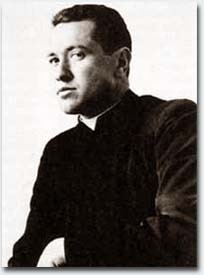
Father Camilo Torres Restrepo was a Colombian socialist, Roman Catholic priest, a predecessor of liberation theology and a member of the National Liberation Army (ELN) guerrilla organisation. During his life, he tried to reconcile revolutionary Marxism and Catholicism. Torres was ordained a Roman Catholic priest in 1954, but continued to study for some years at the Pontifical Catholic University of Leuven (Louvain) in Belgium. When he returned to Colombia, he increasingly felt obliged to actively support the cause of poor and the labouring class. Camilo Torres believed that in order to secure justice for the people, Christians had a duty to use violent action. As part of the academic staff of the National University of Colombia, he was a co-founder of the Sociology Faculty together with Orlando Fals Borda in 1960. His involvement in several student and political movements during the time won him a large following as well as many detractors, specially from the Colombian government and the church itself. Due to the growing pressure to back down from his radical politics, Camilo Torres saw himself persecuted and went into hiding (leaving his job as an academic) by joining the guerrillas in Colombia. He served as a low-ranking member of the ELN to whom he also provided spiritual assistance and inspiration from a Marxist-Christian point of view. He was killed in his first combat experience, when the ELN ambushed a Colombian Military patrol. After his death, Camilo Torres was made an official martyr of the ELN. He is perhaps best known for the quote: "If Jesus were alive today, He would be a guerrillero."

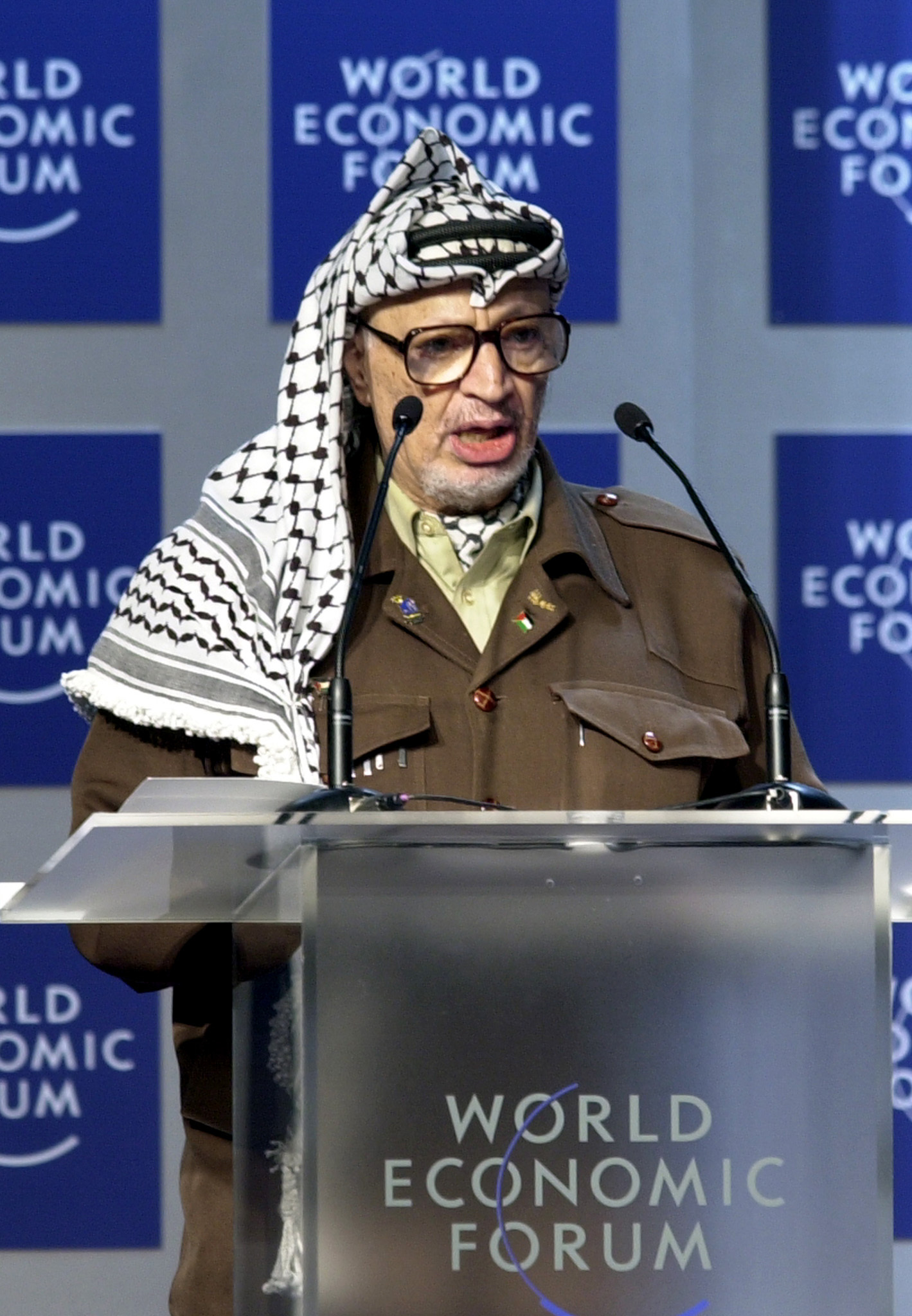
Yasir Arafat, also Yasser Arafat, originally Mohammed Abdel-Raouf Arafat as Qudwa al-Hussaeini, led the Palestine liberation organization and shared the Nobel Prize for peace of 1994 with Yitzhak Rabin and Shimon Peres; people in 1996 elected him as the first president of the authority, the newly formed self-rule government. This national chairman in 1959 founded and led Fatah, the paramilitary group and political party. https://en.wikipedia.org/wiki/Yasser_...

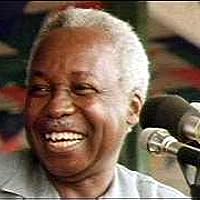
Born in Tanganyika to Nyerere Burito (1860–1942), Chief of the Zanaki,[1] Nyerere was known by the Swahili name Mwalimu or 'teacher', his profession prior to politics.[2] He was also referred to as Baba wa Taifa (Father of the Nation).[3] Nyerere received his higher education at Makerere University in Kampala and the University of Edinburgh. On returning to Tanganyika he worked as a teacher. In 1954 he helped form the Tanganyika African National Union. In 1961 Nyerere became the first Prime Minister of Tanganyika and following independence in 1962, the country's first President. In 1964, Tanganyika united with Zanzibar and was then renamed as Tanzania. In 1965, a one-party election returned Nyerere to power and two years later he issued the Arusha Declaration, outlining his socialist concept of Ujamaa, which came to dominate his policies. Nyerere retired in 1985 and was succeeded by Ali Hassan Mwinyi but remained the chairman of the Chama Cha Mapinduzi. He died of leukaemia in London in 1999. In October 2009, Nyerere was named "World Hero of Social Justice" by the United Nations General Assembly.[4]


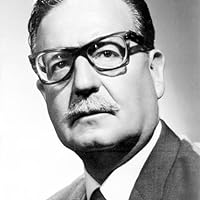
Salvador Guillermo Allende Gossens (Spanish: [salβaˈðoɾ aˈʝende ˈɣosens]; 26 June 1908 – 11 September 1973), more commonly known as Salvador Allende, was a Chilean physician and politician, known as the first Marxist to become president of a Latin American country through open elections. Allende's involvement in Chilean political life spanned a period of nearly forty years. As a member of the Socialist Party, he was a senator, deputy and cabinet minister. He unsuccessfully ran for the presidency in the 1952, 1958, and 1964 elections. In 1970, he won the presidency in a close three-way race. He was elected in a run-off by Congress as no candidate had gained a majority. As president, Allende adopted a policy of nationalization of industries and collectivization; due to these and other factors, increasingly strained relations between him and the legislative and judicial branches of the Chilean government—who did not share his enthusiasm for socialization—culminated in a declaration by Congress of a "constitutional breakdown." A center-right majority including the Christian Democrats, whose support had enabled Allende's election, denounced his rule as unconstitutional and called for his overthrow by force. On 11 September 1973, the military moved to oust Allende in a coup d'etat sponsored by the United States Central Intelligence Agency (CIA). As troops surrounded La Moneda Palace, he gave his last speech vowing not to resign. Later that day, Allende shot himself dead with an assault rifle, according to an investigation conducted by a Chilean court with the assistance of international experts in 2011. Following Allende's deposition, General Augusto Pinochet declined to return authority to the civilian government, and Chile was later ruled by a military junta that was in power up until 1990, ending almost 41 years of Chilean democratic rule. The military junta that took over dissolved the Congress of Chile and began a persecution of alleged dissidents, in which thousands of Allende's supporters were kidnapped, tortured, and murdered.

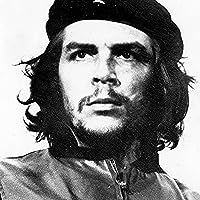
Ernesto "Che" Guevara, commonly known as El Che or simply Che, was a Marxist revolutionary, physician, author, intellectual, guerrilla leader, diplomat, and military theorist. A major figure of the Cuban Revolution, since his death Guevara's stylized visage has become an ubiquitous countercultural symbol and global icon within popular culture. His belief in the necessity of world revolution to advance the interests of the poor prompted his involvement in Guatemala's social reforms under President Jacobo Arbenz, whose eventual CIA-assisted overthrow solidified Guevara's radical ideology. Later, while living in Mexico City, he met Raúl and Fidel Castro, joined their movement, and travelled to Cuba with the intention of overthrowing the U.S.-backed Batista regime. Guevara soon rose to prominence among the insurgents, was promoted to second-in-command, and played a pivotal role in the successful two year guerrilla campaign that topled the Cuban government. After serving in a number of key roles in the new government, Guevara left Cuba in 1965 to foment revolution abroad, first unsuccessfully in Congo-Kinshasa and later in Bolivia, where he was captured by CIA-assisted Bolivian forces and executed. Guevara remains both a revered and reviled historical figure, polarized in the collective imagination in a multitude of biographies, memoirs, essays, documentaries, songs, and films. Time magazine named him one of the 100 most influential people of the 20th century, while an Alberto Korda photograph of him entitled "Guerrillero Heroico," was declared "the most famous photograph in the world" by the Maryland Institute of Art.


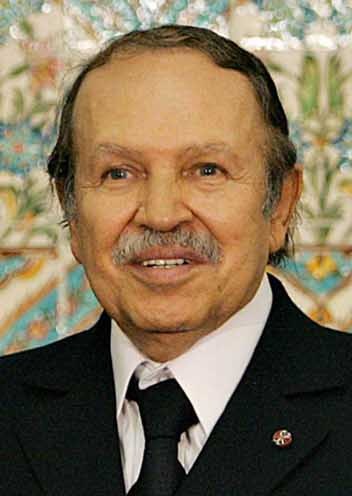
(Arabic: عبد العزيز بوتفليقة ‘Abd al-‘Azīz Būtaflīka [ʕaːbd lʕziz butfliqa]) is an Algerian politician who has been the fifth President of Algeria since 1999. He was Minister of Foreign Affairs from 1963 to 1979. As President, he presided over the end of the bloody Algerian Civil War in 2002, and he ended emergency rule in February 2011 amidst regional unrest. He has also served as president of the United Nations General Assembly. In November 2012, he surpassed Houari Boumediene as the longest-serving president of Algeria.

General Secretary of the MPLA during the Angolan War of Independence and Angolan Civil War. Lara, a founding member of the MPLA, led the first MPLA members into Luanda on November 8, 1974. He swore in Agostinho Neto as the first president of the country. Lara taught math and physics before he was elected Secretary for Organization and Cadres at the MPLA's first national conference in December 1962.

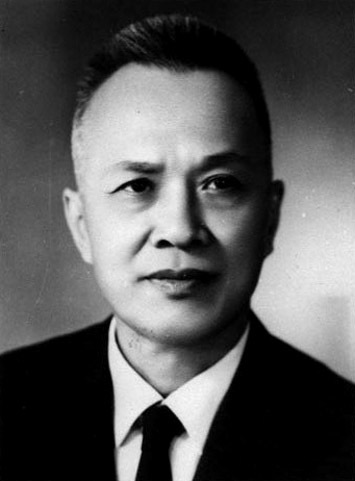
Mr. Sarin Chhak, whose real name is Khin Kaing, was born in the village of Krangsla, district of Prey Kabbas, province of Takeo. He was born on January 2, 1922 to Mr. Khin and Mrs. Chhay Lak who are farmers. During the French colonial period, because he was not able to attend school early on, when his parents decided to put him in school, due to his advanced age, he was not able to do so unless he changed his birth certificate. Thus, he was forced to adopt a new identity, under the new name of Sarin Chhak, in order to attend school. He studied law in Cambodia, and obtained his Doctoral Degree in Economic Law in France in 1966. For his doctoral degree thesis, he selected the “Cambodia’s Borders” issues as the topic of his research. To fulfill the requirement of his doctoral degree, he wrote his thesis (in French) which included the following four volumes: 1- The Khmer-Thai border, 2- The stabilization of the border. The collaboration between France and Thailand. 1902-1939, 3- The new questioning of the borders, and 4- The delineation of the Cambodian border with Laos and South Vietnam. Prior to March 18, 1970, Mr. Sarin Chhak acted as Ambassador of the Kingdom of Cambodia attached to Egypt. He was then stationed in Cairo. Following the removal from power of Prince Sihanouk, Mr. Sarin Chhak decided to follow the latter to Peking where he eventually became the Foreign Minister of the Royal Government of National Union of Cambodia (under the French acronym of GRUNC) under the leadership of Prince Sihanouk. Following the Khmer Rouge victory in 1975, Mr. Sarin Chhak, his wife, and a number of his children decided to return back to Cambodia. Since then not much information was available regarding his whereabouts. It was not until the end of 1978, when the Vietnamese forces invaded Cambodia and routed the Khmer Rouge regime out of Phnom Penh, that several people claimed to have seen him and his wife in Phnom Penh. Nevertheless, following the airlift of Prince Sihanouk from Phnom Penh prior to the arrival of the invading Vietnamese force, Mr. Sarin Chhak and his wife disappeared again. Finally, his family learned that he was captured by the occupying Vietnamese forces. Because of his involvement on border issues related to Vietnam, it appeared that after his capture, Mr. Sarin Chhak was imprisoned in Vietnam where he and his wife found their death.

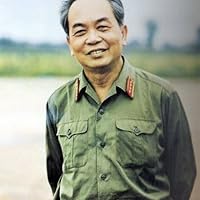
General in the Vietnam People's Army and a politician. Giap is considered one of the greatest military strategists of all time. He first grew to prominence during World War II, where he served as the military leader of the Viet Minh resistance against the Japanese occupation of Vietnam. Giap was a principal commander in two wars: the First Indochina War (1946–54) and the Vietnam War (1960–75). He participated in the following historically significant battles: Lạng Sơn (1950), Hòa Bình (1951–52), Điện Biên Phủ (1954), the Tết Offensive (1968), the Easter Offensive (1972), and the final Ho Chi Minh Campaign (1975). Giap was also a journalist, an interior minister in President Hồ Chí Minh's Việt Minh government, the military commander of the Viet Minh, the commander of the People's Army of Vietnam (PAVN), and defense minister. He also served as a member of the Politburo of the Vietnam Workers' Party, which in 1976 became the Communist Party of Vietnam. He was the most prominent military commander, beside Ho Chi Minh, during the Vietnam War, and was responsible for major operations and leadership until the war ended.