2002
First Published
3.81
Average Rating
186
Number of Pages
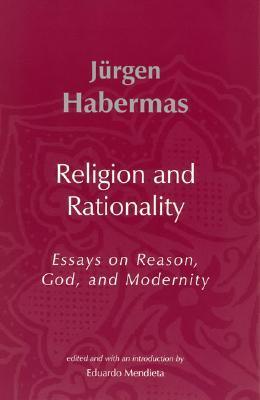
This important new volume brings together Jürgen Habermas' key writings on religion and religious belief. In these essays, Habermas explores the relations between Christian and Jewish thought, on one hand, and the Western philosophical tradition on the other. He often approaches these issues through critical encounters with the work of others, including Walter Benjamin, Martin Heidegger, Johann Baptist Metz, and Gershom Scholem.In an introduction written especially for this volume, Eduardo Mendieta places Habermas' engagement with religion in the context of his work as a whole. Mendieta also discusses Habermas' writings in relation to Jewish Messianism and the Frankfurt School, showing how these essays reflect an important yet often neglected dimension of critical theory. The volume concludes with an original extended interview that examines Habermas' current views on religion and modern society.

Avg Rating
3.81
Number of Ratings
26
5 STARS
35%
4 STARS
27%
3 STARS
23%
2 STARS
15%
1 STARS
0%
goodreads
Author

Jurgen Habermas
Author · 40 books
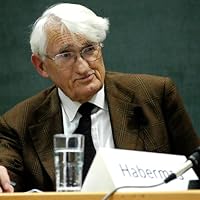
Jürgen Habermas is a German sociologist and philosopher in the tradition of critical theory and American pragmatism. He is perhaps best known for his work on the concept of the public sphere, the topic of his first book entitled The Structural Transformation of the Public Sphere. His work focuses on the foundations of social theory and epistemology, the analysis of advanced capitalistic societies and democracy, the rule of law in a critical social-evolutionary context, and contemporary politics—particularly German politics. Habermas' theoretical system is devoted to revealing the possibility of reason, emancipation, and rational-critical communication latent in modern institutions and in the human capacity to deliberate and pursue rational interests.