Margins
Report on the Barnhouse Effect book cover
Report on the Barnhouse Effect
1950
First Published
3.72
Average Rating
300
Number of Pages
The story takes the form of a report written by an ex-student of the story's protagonist, Professor Arthur Barnhouse. A year and a half before the writing of the report the professor develops the ability to affect physical objects and events through the force of his mind; he comes to call this power "dynamopsychism", while the press adopts the term "the Barnhouse effect". When Barnhouse makes the mistake of informing the US government of his newfound abilities, they try to turn him into a weapon. The program is successful, but Barnhouse, declaring himself the world's 'first weapon with a conscience', flees and goes into hiding. While in this reclusive state Barnhouse uses his dynamopsychic powers to destroy all nuclear and conventional weapon stockpiles, along with other military technologies. However, he realizes that because he is mortal, the world will revert to its warlike tendencies after he dies. Barnhouse passes on the secret of his abilities to his ex-student, who goes into hiding after he begins to manifest them as well.

Avg Rating
3.72
Number of Ratings
29
5 STARS
17%
4 STARS
48%
3 STARS
28%
2 STARS
3%
1 STARS
3%
goodreads

Author

Kurt Vonnegut
Kurt Vonnegut
Author · 112 books

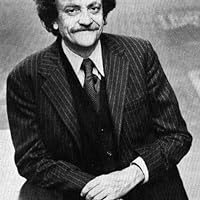
Kurt Vonnegut, Junior was an American novelist, satirist, and most recently, graphic artist. He was recognized as New York State Author for 2001-2003. He was born in Indianapolis, later the setting for many of his novels. He attended Cornell University from 1941 to 1943, where he wrote a column for the student newspaper, the Cornell Daily Sun. Vonnegut trained as a chemist and worked as a journalist before joining the U.S. Army and serving in World War II. After the war, he attended University of Chicago as a graduate student in anthropology and also worked as a police reporter at the City News Bureau of Chicago. He left Chicago to work in Schenectady, New York in public relations for General Electric. He attributed his unadorned writing style to his reporting work. His experiences as an advance scout in the Battle of the Bulge, and in particular his witnessing of the bombing of Dresden, Germany whilst a prisoner of war, would inform much of his work. This event would also form the core of his most famous work, Slaughterhouse-Five, the book which would make him a millionaire. This acerbic 200-page book is what most people mean when they describe a work as "Vonnegutian" in scope. Vonnegut was a self-proclaimed humanist and socialist (influenced by the style of Indiana's own Eugene V. Debs) and a lifelong supporter of the American Civil Liberties Union. The novelist is known for works blending satire, black comedy and science fiction, such as Slaughterhouse-Five (1969), Cat's Cradle (1963), and Breakfast of Champions (1973)

548 Market St PMB 65688, San Francisco California 94104-5401 USA
© 2026 Paratext Inc. All rights reserved