Margins




548 Market St PMB 65688, San Francisco California 94104-5401 USA
© 2026 Paratext Inc. All rights reserved
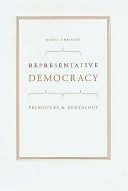
It is usually held that representative government is not strictly democratic, since it does not allow the people themselves to directly make decisions. But here, taking as her guide Thomas Paine’s subversive view that “Athens, by representation, would have surpassed her own democracy,” Nadia Urbinati challenges this accepted wisdom, arguing that political representation deserves to be regarded as a fully legitimate mode of democratic decision making—and not just a pragmatic second choice when direct democracy is not possible. As Urbinati shows, the idea that representation is incompatible with democracy stems from our modern concept of sovereignty, which identifies politics with a decision maker’s direct physical presence and the immediate act of the will. She goes on to contend that a democratic theory of representation can and should go beyond these identifications. Political representation, she demonstrates, is ultimately grounded in a continuum of influence and power created by political judgment, as well as the way presence through ideas and speech links society with representative institutions. Deftly integrating the ideas of such thinkers as Rousseau, Kant, Emmanuel Joseph Sieyès, Paine, and the Marquis de Condorcet with her own, Urbinati constructs a thought-provoking alternative vision of democracy.