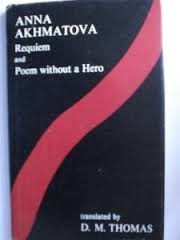



Anna Akhmatova publie son premier recueil en 1912 et s’impose très tôt comme une virtuose de la petite forme lyrique. Classée comme « acméiste » ou « intimiste », elle est plus authentiquement quelqu’un qui cultive un style simple, rigoureux, d’un classicisme qui l’apparente à Pouchkine, même si chez elle toute idée d’imitation est exclue. Après la révolution d’Octobre, elle refuse d’émigrer, quoique suspecte aux autorités nouvelles qui vont, peu à peu, l’interdire de publication. En 1940, cette interdiction est momentanément levée et Anna Akhmatova publie plusieurs poèmes sur la guerre, mais non les textes qui lui tiennent le plus à cœur, comme Requiem ou les suites de poèmes brefs qui évoquent les arrestations massives et le goulag. À nouveau condamnée au silence dès la fin de la guerre, elle continue de composer pour elle-même des textes plus amples comme les « Élégies du Nord », et toujours des suites de textes brefs. Elle n’obtiendra jamais l’autorisation de donner au public un « septième livre » qui réunirait ses écrits récents et prendrait la suite des six recueils publiés dans sa jeunesse. Cette anthologie aborde l’œuvre dans son entier. Elle puise dans les premiers livres, donne in extenso Requiem et le Poème sans héros, puis reprend à son compte un plan ébauché par la poétesse pour son fantomatique « Septième livre ». C’est tout le parcours d’Anna Akhmatova qui est ici restitué, c’est un demi-siècle de combat solitaire, acharné, douloureux, mais au final sans faiblesse, qui se révèle page à page. Une poésie fragile et souveraine qui, confrontée aux risques les plus grands, ne renonce jamais, et célèbre avec une rare intensité les pouvoirs d’une parole irréductible.
Author

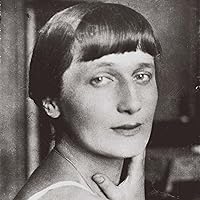
also known as: Анна Ахматова Personal themes characterize lyrical beauty of noted work of Russian poet Anna Akhmatova, pseudonym of Anna Andreevna Gorenko; the Soviet government banned her books between 1946 and 1958. People credit this modernist of the most acclaimed writers in the canon. Her writing ranges from short lyrics to universalized, ingeniously structured cycles, such as Requiem (1935-40), her tragic masterpiece about the Stalinist terror. Her work addresses a variety of themes including time and memory, the fate of creative women, and the difficulties of living and writing in the shadow of Stalinism. She has been widely translated into many languages, and is one of the best-known Russian poets of 20th century. In 1910, she married the poet, Nikolay Gumilyov, who very soon left her for lion hunting in Africa, the battlefields of World War I, and the society of Parisian grisettes. Her husband did not take her poems seriously, and was shocked when Alexander Blok declared to him that he preferred her poems to his. Their son, Lev, born in 1912, was to become a famous Neo-Eurasianist historian. Nikolay Gumilyov was executed in 1921 for activities considered anti-Soviet; Akhmatova then married a prominent Assyriologist Vladimir Shilejko, and then an art scholar, Nikolay Punin, who died in the Stalinist Gulag camps. After that, she spurned several proposals from the married poet, Boris Pasternak. After 1922, Akhmatova was condemned as a bourgeois element, and from 1925 to 1940, her poetry was banned from publication. She earned her living by translating Leopardi and publishing essays, including some brilliant essays on Pushkin, in scholarly periodicals. All of her friends either emigrated or were repressed. Her son spent his youth in Stalinist gulags, and she even resorted to publishing several poems in praise of Stalin to secure his release. Their relations remained strained, however. Akhmatova died at the age of 76 in St. Peterburg. She was interred at Komarovo Cemetery. There is a museum devoted to Akhmatova at the apartment where she lived with Nikolai Punin at the garden wing of the Fountain House (more properly known as the Sheremetev Palace) on the Fontanka Embankment, where Akhmatova lived from the mid 1920s until 1952.