Margins
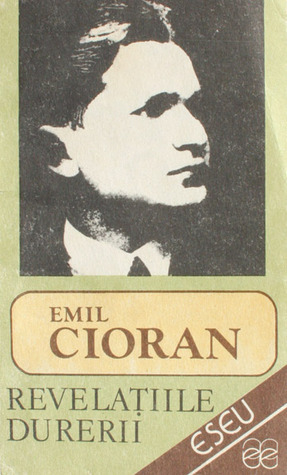
Revelaţiile durerii book cover
Revelaţiile durerii
1990
First Published
4.37
Average Rating
184
Number of Pages
Când vorbim de Cioran, imaginea unui munte de scepticism, îndoială şi disperare ne apare în faţa ochilor; un munte a cărui greutate strivitoare o suportăm doar cu mari sforţări. Adulat ca un mântuitor de cei înşelaţi în speranţele lor sau, dimpotrivă, declarat Antichrist în tabăra celor care s-au adunat sub lumina credinţei, Cioran este în bună măsură un produs al subiectivismelor de tot felul. Pentru a-l înţelege cu adevărat, ar trebui să-l privim cu ochi capabili să sfredelească măruntaiele jeraticului cel mai încins. Pentru că, privit cu ochi inocenţi, spiritul lui Cioran arde retina şi pârjoleşte creierul. Cuvântul său are darul de a te prinde într-o menghină de foc, din care nu poţi scăpa nevătămat dacă nu ai sufletul suficient de oţelit, capabil să reziste la cele mai intense arderi. Admiraţia noastră faţă de Cioran, de neclintit chiar şi atunci când devenim conştienţi de răul pe care ni-l provoacă, necesită ajustări grabnice, înainte ca ea să transforme această magmă clocotitoare într-un colos împietrit, fără suflet. Există asasinat – ne-o spune Cioran însuşi – şi din entuziasm. Denigratorii lui Cioran greşesc de aceea poate mai puţin decât cei care-i ridică statuie din propria lor ignoranţă sau superficialitate. A adera fără condiţii la ideile sale sau a le contesta nu înseamnă însă decât unul şi acelaşi lucru: a nega orice posibilitate de a-l înţelege. Din acest punct de vedere, puţinătatea exegezelor critice asupra operei lui Cioran nu poate decât să ne înspăimânte. Ea ne arată cât de puţin am încercat să-l înţelegem, preferând efortului critic un exerciţiu de admiraţie facil şi, din această pricină, dăunător.

Avg Rating
4.37
Number of Ratings
65
5 STARS
55%
4 STARS
31%
3 STARS
11%
2 STARS
2%
1 STARS
2%
goodreads

Author

Emil M. Cioran
Emil M. Cioran
Author · 37 books

Born in 1911 in Rășinari, a small village in the Carpathian Mountains of Romania, raised under the rule of a father who was a Romanian Orthodox priest and a mother who was prone to depression, Emil Cioran wrote his first five books in Romanian. Some of these are collections of brief essays (one or two pages, on average); others are collections of aphorisms. Suffering from insomnia since his adolescent years in Sibiu, the young Cioran studied philosophy in the “little Paris” of Bucarest. A prolific publicist, he became a well-known figure, along with Mircea Eliade, Constantin Noïca, and his future close friend Eugene Ionesco (with whom he shared the Royal Foundation’s Young Writers Prize in 1934 for his first book, On the Heights of Despair). Influenced by the German romantics, by Schopenhauer, Nietzsche, and the Lebensphilosophie of Schelling and Bergson, by certain Russian writers, including Chestov, Rozanov, and Dostoyevsky, and by the Romanian poet Eminescu, Cioran wrote lyrical and expansive meditations that were often metaphysical in nature and whose recurrent themes were death, despair, solitude, history, music, saintliness and the mystics (cf. Tears and Saints, 1937) – all of which are themes that one finds again in his French writings. In his highly controversial book, The Transfiguration of Romania (1937), Cioran, who was at that time close to the Romanian fascists, violently criticized his country and his compatriots on the basis of a contrast between such “little nations” as Romania, which were contemptible from the perspective of universal history and great nations, such as France or Germany, which took their destiny into their own hands. After spending two years in Germany, Cioran arrived in Paris in 1936. He continued to write in Romanian until the early 1940s (he wrote his last article in Romanian in 1943, which is also the year in which he began writing in French). The break with Romanian became definitive in 1946, when, in the course of translating Mallarmé, he suddenly decided to give up his native tongue since no one spoke it in Paris. He then began writing in French a book that, thanks to numerous intensive revisions, would eventually become the impressive 'A Short History of Decay' (1949) — the first of a series of ten books in which Cioran would continue to explore his perennial obsessions, with a growing detachment that allies him equally with the Greek sophists, the French moralists, and the oriental sages. He wrote existential vituperations and other destructive reflections in a classical French style that he felt was diametrically opposed to the looseness of his native Romanian; he described it as being like a “straight-jacket” that required him to control his temperamental excesses and his lyrical flights. The books in which he expressed his radical disillusionment appeared, with decreasing frequency, over a period of more than three decades, during which time he shared his solitude with his companion Simone Boué in a miniscule garret in the center of Paris, where he lived as a spectator more and more turned in on himself and maintaining an ever greater distance from a world that he rejected as much on the historical level (History and Utopia, 1960) as on the ontological (The Fall into Time, 1964), raising his misanthropy to heights of subtlety (The Trouble with being Born, 1973), while also allowing to appear from time to time a humanism composed of irony, bitterness, and preciosity (Exercices d’admiration, 1986, and the posthumously published Notebooks). Denied the right to return to Romania during the years of the communist regime, and attracting international attention only late in his career, Cioran died in Paris in 1995. Nicolas Cavaillès Translated by Thomas Cousineau

548 Market St PMB 65688, San Francisco California 94104-5401 USA
© 2026 Paratext Inc. All rights reserved