Margins
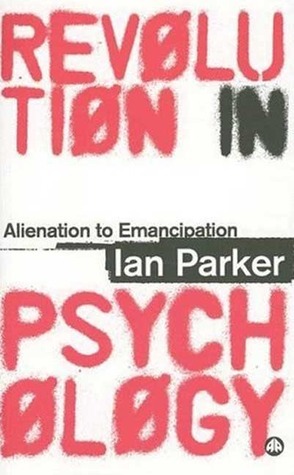
Revolution in Psychology book cover
Revolution in Psychology
Alienation to Emancipation
2007
First Published
3.63
Average Rating
272
Number of Pages
"A radical methodological approach to psychology that is open to social change - in an anti-capitalist, anti-racist and feminist politics." Antonio Negri Psychology is meant to help people cope with the afflictions of modern society. But how useful is it? Ian Parker argues that current psychological practice has become part of the problem, rather than the solution. Ideal for undergraduates, this book deconstructs the discipline to reveal the neoliberal sensitivities that underlie its theory and practice. Psychology focuses on the happiness of 'the individual'. Yet it neglects the fact that the happiness of the individual depends on their social and political surroundings. Ian Parker argues that a new approach to psychology is needed. He offers an alternative vision, outlining how the discipline can be linked to political practice and how it can help people as part of a wider progressive agenda. This groundbreaking book is at the cutting edge of current thinking on the discipline and should be required reading on all psychology courses.

Avg Rating
3.63
Number of Ratings
30
5 STARS
27%
4 STARS
27%
3 STARS
33%
2 STARS
10%
1 STARS
3%
goodreads

Author

Ian Parker
Ian Parker
Author · 8 books

Ian Parker is a British psychologist who has been a principal exponent of three quite diverse critical traditions inside the discipline. His writing has provided compass points for researchers searching for alternatives to ‘mainstream’ psychology in the English-speaking world (that is, mainstream psychology that is based on laboratory-experimental studies that reduce behavior to individual mental processes). The three critical traditions Parker has promoted are ‘discursive analysis’, ‘Marxist psychology’ and ‘psychoanalysis’. Each of these traditions is adapted by him to encourage an attention to ideology and power, and this modification has given rise to fierce debates, not only from mainstream psychologists but also from other ‘critical psychologists’. Parker moves in his writing from one focus to another, and it seems as if he is not content with any particular tradition of research, using each of the different critical traditions to throw the others into question.

548 Market St PMB 65688, San Francisco California 94104-5401 USA
© 2026 Paratext Inc. All rights reserved