Margins




548 Market St PMB 65688, San Francisco California 94104-5401 USA
© 2026 Paratext Inc. All rights reserved
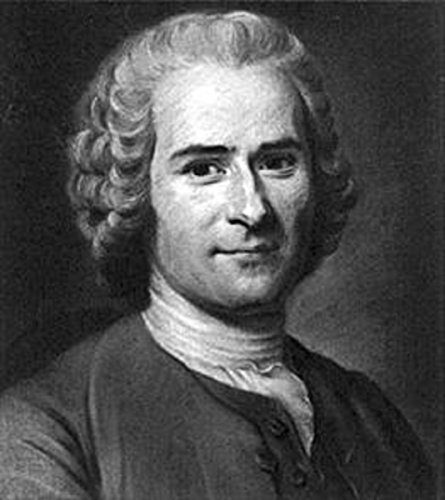
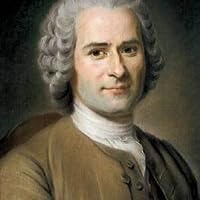
The book has an active table of contents for easy access to each chapter of the following 1.DISCOURSE ON THE ARTS AND SCIENCES - JEAN JACQUES ROUSSEAU 2.DISCOURSE ON THE ORIGIN AND BASIS OF INEQUALITY AMONG MEN - JEAN JACQUES ROUSSEAU 3.DISCOURSE ON POLITICAL ECONOMY - JEAN JACQUES ROUSSEAU Jean Jacques Rousseau was a great philosopher and one of the founders of the modern system of philosophy. He is in the row with the greatest thinkers as Aristotle, Isaac Newton, John Locke, Immanuel Kant, David Hume, Gottfried Wilhelm Leibniz, and John Stuart Mill. Their thoughts has had strong influence on building the foundation of the United States and its endeavor of open society. In 1750, Rousseau published Discourse on the Arts and Sciences. It is commonly regarded as his First Discourse and it is considered one of his most important works. He argued in the essay that the arts and sciences corrupted human morality. It was Rousseau's first successful philosophical work. He declared the views about nature vs. society that ran through Social Contract and the other later works. In 1754, Rousseau published Discourse on the Origin and Basis of Inequality among Men his earliest and one of the most important of all his writings. The essay is usually regarded as his Second Discourse. He was to explore in this essay his conception of a human state of nature. He also explained the way that people should have established civil society and concluded that private property was the original source and basis of all inequality. In 1755, Rousseau published Discourse on Political Economy. It is a revolutionary work and is regarded as his Third Discourse. The essay is also viewed as the classic of political theory and a key source of democratic ideals of Western Civilization. Rousseau proposed concepts of the general will and individual's submission to government by contract as the foundation of democracy. The collection also has had the most impact on Enlightenment. It is regarded as the most important work in Western culture. Rousseau’s work has produced great influence on modern philosophy and logic. His view became widely recognised as the foremost philosophical voice and his influence has been felt in nearly every field of the humanities and social sciences. This book is one of the most important ones about Philosophy, Enlightenment, the Foundations of Liberty, and Politics by Rousseau, one of the greatest thinkers of modern philosophy on the planet.