Margins
Routledge Advances in Sociology book cover 1
Routledge Advances in Sociology book cover 2
Routledge Advances in Sociology book cover 3
Routledge Advances in Sociology
Series · 29
books · 2001-2020

Books in series

Immigrants and National Identity in Europe book cover
#1

Immigrants and National Identity in Europe

2001

The author reviews main theories of nationalism and criticises their lack of elaboration on the role of 'Others' in nation formation. Drawing upon anthropological, sociological and social psychological perspectives, she develops a dynamic, relational perspective for the study of national theory.
Routledge Companion to Contemporary Japanese Social Theory book cover
#78

Routledge Companion to Contemporary Japanese Social Theory

From Individualization to Globalization in Japan Today

2012

The Routledge Companion to Contemporary Japanese Social Theory breaks new ground in providing a detailed, systematic appraisal of the major traditions of social theory prominent in Japan today – from theories of identity and individualization to globalization studies. The volume introduces readers to the rich diversity of social-theoretical critique in contemporary Japanese social theory. The editors have brought together some of the most influential Japanese social scientists to assess current trends in Japanese social theory, including Kazuhisa Nishihara, Aiko Kashimura, Masahiro Ogino, Yumiko Ehara and Kiyomitsu Yui. The volume also contains dialogues with these Japanese contributors from authoritative Western social theorists – including, among others, Axel Honneth, Roland Robertson, Bryan S. Turner, Charles Lemert and Anthony Elliott – to reflect on such developments. The result is an exciting, powerful set of intellectual exchanges. The book introduces, contextualizes and critiques social theories in the broader context of Japanese society, culture and politics – with particular emphasis upon Japanese engagements and revisions of major traditions of social thought. Divided into two sections, the book surveys traditions of social thought in Japanese social science and presents the major social issues facing contemporary Japan. The book will appeal to students and scholars of sociology, social theory, critical theory, psychoanalysis, risk, gender studies, feminist studies, self and identity studies, media studies and cultural studies.
Cool Nations book cover
#147

Cool Nations

Media and the Social Imaginary of the Branded Country

2016

Nation branding is the most recent feature of imagined nation-making in the history of nations. Facing global competition, national decision-makers aim to distinguish their countries from others by means of branding. Quite a few nations have considered the term ‘cool’ suitable for describing some essence of their country’s brand. Cool Nations. Media and the Social Imaginary of the Branded Country traces the mediated ways in which the transnational idea of "cool" has circulated from popular culture, fashion, and marketing into describing nations. The book explores the commodification of the nation, the shift to a promotional political culture, and the role of media in contributing to the circulation of the idea of the Cool Nation. The social imaginary of nation branding takes its theory and practices from marketing, unlike earlier imaginations based on ideas of democracy or citizenship. Cool Nations argues that "cool" is one of the vehicles through which the commodification of nations takes place.
Popular Music and Retro Culture in the Digital Era book cover
#153

Popular Music and Retro Culture in the Digital Era

2016

This book explores the trend of retro and nostalgia within contemporary popular music culture. Using empirical evidence obtained from a case study of fans’ engagement with older music, the book argues that retro culture is the result of an inseparable mix of cultural and technological changes, namely, the rise of a new generation and cultural mood along with the encouragement of new technologies. Retro culture has become a hot topic in recent years but this is the first time the subject has been explored from an academic perspective and from the fans’ perspective. As such, this book promises to provide concrete answers about why retro culture dominates in contemporary society. For the first time ever, this book provides an empirically grounded theory of popular music, retro culture and its intergenerational audience in the twenty-first century. It will appeal to advanced students of popular music studies, cultural studies, media studies, sociology and music.
The Sociology of Postmarxism book cover
#189

The Sociology of Postmarxism

2013

Postmarxism is often depicted as a point of intersection for a set of inter-disciplinary theories that are in themselves complex and dense. Bringing the postmarxist theory of Ernesto Laclau into the field of political sociology through a close reading and analysis of postmarxism and its relationship to ‘the social’, A Sociology of Postmarxism develops key postmarxist arguments in an engaging and sociologically applicable way. Indeed, through a threefold method of analysis, Howson first unpacks the relationship between ‘the social’ and ‘the political’ by analysing key allied theories to show where the points of connection occur. This is then followed by an insightful analysis of the key features of postmarxist theory such as antagonism and the inevitability of social dislocation, the political importance of hegemony; and the empty signifier thesis and equivalence to show how such theory can be applied at a sociological level. Finally, through the use of sociological categories such as masculinities, migration and social capital, the foregoing theoretical analyses are synthesised to show the social nature of postmarxism and particularly in the context of aspiration and co-operation. This enlightening volume will appeal to undergraduate and postgraduate students, as well as postdoctoral researchers who are interested in fields such as Political Sociology, Post Marxist Political Theory and Social Theory.
Mediating Sexual Citizenship book cover
#195

Mediating Sexual Citizenship

Neoliberal Subjectivities in Television Culture

2016

Mediating Sexual Citizenship considers how the neoliberal imperatives of adaptation, improvement and transformation that inform the shifting artistic and industrial landscape of television are increasingly indexed to performed disruptions in the norms of sexuality and gender. Drawing on examples from a range of television genres (quality drama, reality television, talk shows, sitcoms) and outlets (network, cable, subscription video on demand), the analysis in this book demonstrates how, as one of the most dominant cultural technologies, television plays a critical role in the production, maintenance and potential reconfiguring of the social organisation of embodiment, be it within gender identities, kinship structures or the categorisation of sexual desire. It suggests that, in order to understand television’s role in producing gendered and sexual citizenship, we must pay critical attention to the significant shifts in how television is produced, broadcast and consumed.
Shared Experiences of Mass Shootings book cover
#201

Shared Experiences of Mass Shootings

A Comparative Perspective on the Aftermath

2017

Mass violence and terrorism are a salient phenomenon in the late modern society, showing no sign of decline. Proactive results from the long, ongoing debate of how to address these issues are therefore increasingly necessary – not just in the context of prevention, but also in the context of the aftermath. Shared Experiences of Mass Shootings develops an understanding of the collective experience, consequences and recovery processes after mass shootings. Drawing from in-depth case studies of two mass shootings in Finland and comparing them with other international cases, it explores how communities work through violent tragedies employing social memory and memorialization practices that can be seen as either tools for recovery, or as something that needs to be restricted. Contributing a novel understanding of how experiencing mass violence is deeply gendered through the social patterns and narratives of men’s and women’s emotions, this timely monograph will appeal to undergraduate and postgraduate students, as well as postdoctoral researchers, interested in fields such Sociology of Violence, Criminology, Social Work, Memory Studies, Media Studies and Cultural Trauma.
Theorizing Digital Divides book cover
#202

Theorizing Digital Divides

2017

Although discussion of the digital divide is a relatively new phenomenon, social inequality is a deeply entrenched part of our current social world and is now reproduced in the digital sphere. Such inequalities have been described in multiple traditions of social thought and theoretical approaches. To move forward to a greater understanding of the nuanced dynamics of digital inequality, we need the theoretical lenses to interpret the meaning of what has been observed as digital inequality. This volume examines and explains the phenomenon of digital divides and digital inequalities from a theoretical perspective. Indeed, with there being a limited amount of theoretical research on the digital divide so far, Theorizing Digital Divides seeks to collect and analyse different perspectives and theoretical approaches in analysing digital inequalities, and thus propose a nuanced approach to study the digital divide. Exploring theories from diverse perspectives within the social sciences whilst presenting clear examples of how each theory is applied in digital divide research, this book will appeal to scholars and undergraduate and postgraduate students interested in sociology of inequality, digital culture, Internet studies, mass communication, social theory, sociology, and media studies.
Senses in Cities book cover
#203

Senses in Cities

Experiences of Urban Settings

2017

Urban landscapes are usually thought of first and foremost as engineered formations designed for functionality. It is quite clear, however, that cities and towns are sites of social structure, scenes of diversity, and hotbeds of transgressions. They are also sources of satisfying social relationships, settings for actions negotiated on an everyday basis, and opportunities for kinesthetic and aesthetic experiences. Within these processes, the senses mediate engagement with the optimism of urban growth, the comfort of urban traditions, and a consciousness of the diverse relationships that embellish urban living, but also with the repellent sights and sounds that invade zones of comfort. This book examines how qualities of place and their sensuous reorganisation elucidate particular sociocultural expressions and practices in urban life. The collection illuminates how urban environments are distinguished, valued, or reconfigured with the senses as media for evaluating authentic spaces and places that endure and change over time.
Video Games as Culture book cover
#214

Video Games as Culture

2018

Video games are becoming culturally dominant. But what does their popularity say about our contemporary society? This book explores video game culture, but in doing so, utilizes video games as a lens through which to understand contemporary social life. Video games are becoming an increasingly central part of our cultural lives, impacting on various aspects of everyday life such as our consumption, communities, and identity formation. Drawing on new and original empirical data - including interviews with gamers, as well as key representatives from the video game industry, media, education, and cultural sector - Video Games as Culture not only considers contemporary video game culture, but also explores how video games provide important insights into the modern nature of digital and participatory culture, patterns of consumption and identity formation, late modernity, and contemporary political rationalities. This book will appeal to undergraduate and postgraduate students, as well as postdoctoral researchers, interested in fields such Video Games, Sociology, and Media and Cultural Studies. It will also be useful for those interested in the wider role of culture, technology, and consumption in the transformation of society, identities, and communities.

Sharing Lives book cover
#216

Sharing Lives

Adult Children and Parents

2016

Sharing Lives explores the most important human relationships which last for the longest period of our those between adult children and their parents. Offering a new reference point for studies on the sociology of family, the book focuses on the reasons and results of lifelong intergenerational solidarity by looking at individuals, families and societies. This monograph combines theoretical reasoning with empirical research, based on the Survey of Health, Ageing and Retirement in Europe (SHARE). The book focuses on the following ● Adult family generations, from young adulthood to the end of life, and beyond ● Contact, conflict, coresidence, money, time, inheritance ● Consequences of lifelong solidarity ● Family generations and the relationship of family and the welfare state ● Connections between family cohesion and social inequality. Sharing Lives offers reliable findings on the basis of state-of-the-art methods and the best available data, and presents these findings in an accessible manner. This book will appeal to researchers, policymakers and graduate students in the areas of sociology, political science, psychology and economics. The Open Access version of this book, available at has been made available under a Creative Commons Attribution-Non Commercial-No Derivatives 4.0 license.
Urban Music and Entrepreneurship book cover
#220

Urban Music and Entrepreneurship

Beats, Rhymes and Young People's Enterprise

2016

Youth unemployment in the UK remains around the one million mark, with many young people from impoverished backgrounds becoming and remaining NEET (Not in Education, Employment, or Training). However, the NEET categorisation covertly disguises and obscures the significance of the diverse range of activities, achievements and accomplishments of those who operate in the informal creative economy. With grime music and its related enterprise a key component of the urban music economy, this book employs the inherent contradictions and questions that emerge from an exploration of the grime music scene to build a complex reading of the socio-economic significance of urban music. Incorporating insightful dialogue with the participants in this economy, White challenges the prevailing wisdom on marginalised young people, whilst also confronting the assumption that the inertia and localisation of the grime culture results from its close links to NEET "members" and the informal sector. Offering an ethnographic and timely critique of the NEET classification, this compelling book would be suitable for undergraduate and post-graduate students interested in urban studies, business, work and labour, education and employment, ethnography, music, and cultural studies.
Science, Technology and the Ageing Society book cover
#224

Science, Technology and the Ageing Society

2016

Ageing is widely recognised as one of the social and economic challenges in the contemporary, globalised world, for which scientific, technological and medical solutions are continuously sought. This book proposes that science and technology also played a crucial role in the creation and transformation of the ageing society itself. Drawing on existing work on science, technology and ageing in sociology, anthropology, history of science, geography and social gerontology, Science, Technology and the Ageing Society explores the complex, interweaving relationship between expertise, scientific and technological standards and social, normatively embedded age identities. Through a series of case studies focusing on older people, science and technology, medical research about ageing and ageing-related illnesses, and the role of expertise in the management of ageing populations, Moreira challenges the idea that aging is a problem for the individual and society. Tracing the epistemic and technological infrastructures that underpin multiple of ways of aging, this timely volume is a crucial tool for undergraduate and graduate students interested in social gerontology, health and social care, sociology of aging, science and technology studies and medical sociology.
The Philosophy of Homelessness book cover
#231

The Philosophy of Homelessness

Barely Being

2018

The Philosophy of Homelessness is borne out of a five-year ethnographic research project involving being with a group of chronically homeless people in Chester. A small city located in the northwest of the UK, Chester is economically supported by its heritage and the tourism that this attracts. In an obvious sense, the awkwardness of the phrase ‘being with a group of chronically homeless people’ is regrettable. Nevertheless, this unfortunately self-conscious phrase is significant, with its importance residing in the word and concept of ‘being’. Whilst philosophical understandings of being are often thought about in rather abstract terms, The Philosophy of Homelessness explores the daily experience of chronic homelessness from a perspective that renders its ontological impress in ways that are explicitly felt, often in forms that are overtly political and exclusionary in character, especially in terms of identity and belonging within the city. Themes that emerge from the work, which coalesce around living in the margins of the city and experiencing only the shadow of the right to be, the economy of chronic addiction and its impact upon the body; the relationship between chronic homelessness and the law; and chronic homelessness and identity and desire. These themes are explored through a number of thinkers, though Nietzsche, Lacan, Bourdieu and Kristeva. This work is likely to be of interest to anyone working in the fields criminology; sociology, especially those areas concerned with marginalised groups; and philosophy in its socially and politically engaged forms; as well as to those with an interest in homelessness.
New Generation Political Activism in Ukraine book cover
#232

New Generation Political Activism in Ukraine

2000–2014

2017

Individuals in the post-Communist Ukraine dealt with a political climate of stalled reforms and corruption, leading to a mass distrust of many political institutions. This had a demobilizing effect on a citizen’s sense of capacity to effect social change. Therefore, the emergence of any individual to become an activist and involved in protest movements was a remarkable feat. So how does an individual become an activist in such a climate? This book explains how socio-cultural experiences shape an individual’s choices to become an activist in the authoritarian space of post-Soviet Ukraine by applying a cultural, actor-centred approach using qualitative methods of interviews and ethnography. The goal is to better understand the dynamics of individual decision-making between participants in collective protest actions under repressive conditions from the State using biographical narratives. The book covers multiple discussions with five young activists involved in the three largest protest events since Ukrainian independence in 1991: the Ukraine without Kuchma Movement of 2000–2001, the Orange Revolution of 2004, and the Euromaidan protests of 2014. This is valuable reading for students and researchers interested in political sociology, social movements and Ukrainian politics, and how these Ukrainian protests can be related to wider European political movements.
DIY Cultures and Underground Music Scenes book cover
#243

DIY Cultures and Underground Music Scenes

2018

This volume examines the global influence and impact of DIY cultural practice as this informs the production, performance and consumption of underground music in different parts of the world. The book brings together a series of original studies of DIY musical activities in Europe, North and South America, Asia and Oceania. The chapters combine insights from established academic writers with the work of younger scholars, some of whom are directly engaged in contemporary underground music scenes. The book begins by revisiting and re-evaluating key themes and issues that have been used in studying the cultural meaning of alternative and underground music scenes, notably aspects of space, place and identity and the political economy of DIY cultural practice. The book then explores how the DIY cultural practices that characterize alternative and underground music scenes have been impacted and influenced by technological change, notably the emergence of digital media. Finally, in acknowledging the over 40-year history of DIY cultural practice in punk and post-punk contexts, the book considers how DIY cultures have become embedded in cultural memory and the emotional geographies of place. Through combining high-quality data and fresh conceptual insights in the context of an international body of work spanning the disciplines of popular-music studies, cultural and media studies, and sociology the book offers a series of innovative new directions in the study of DIY cultures and underground/alternative music scenes. This volume will be of particular interest to undergraduate students in the above-mentioned fields of study, as well as an invaluable resource for established academics and researchers working in these and related fields.
Equine Cultures in Transition book cover
#246

Equine Cultures in Transition

Ethical Questions

2019

Societal views on animals are rapidly changing and have become more can we use them for our own pleasure, and how should we understand animal agency? These questions, asked both in theoretical discourses and different practices, are also relevant for our understanding of horses and the human–horse relation. Equine Cultures in Transition stands as the first volume to bring together ethical questions of the new field of human–horse studies. For what sort of ethics should be developed in relation to the horse an egalitarian ethics or an ethics that builds upon asymmetrical relations? How can we understand the horse as a social actor and as someone who, just like the human being, becomes through interspecies relations? Through which methods can we give the horse a stronger voice and better understand its becoming? These questions are not addressed from a medical or ethological perspective focused on natural behaviour, but rather from human acknowledgement of the horse as a sensing, feeling, acting, and relational being; and as a part of interspecies societies and relations. Providing an introductory yet theoretically advanced and broad view of the field of post humanism and human animal studies, Equine Cultures in Transition will appeal to students and researchers interested in fields such as human–animal studies, political sociology, animals and ethics, animal behaviour, anthropology, and sociology of culture. It may also appeal to riders and other practitioners within different horse traditions.
Meta-Regulation in Practice book cover
#247

Meta-Regulation in Practice

Beyond Normative Views of Morality and Rationality

2017

Meta-regulation presents itself as a progressive policy approach that can manage complexity and conflicting objectives better than traditional command and control regulation. It does this by ‘harnessing’ markets and enlisting a broad range of stakeholders to reach a more inclusive view of the public interest that a self-regulating business can then respond to. Based on a seventeen year study of the Australian energy industry, and via the lens of Niklas Luhmann’s systems theory, Meta-Regulation in Practice argues that normative meta-regulatory theory relies on questionable assumptions of stakeholder morality and rationality. Meta-regulation in practice appears to be most challenged in a complex and contested environment; the very environment it is supposed to serve best. Contending that scholarship must prioritise an understanding of communicative possibilities in practice, this book will be of interest to undergraduate and postgraduate students, as well as postdoctoral researchers interested in subjects such as business regulation, systems theory and corporate social responsibility. Please visit meta-regulation.com for more insightful information on meta-regulation and Meta-Regulation in Practice.
The Human Rights City book cover
#253

The Human Rights City

New York, San Francisco, Barcelona

2019

We are used to thinking of human rights as a matter for state governments to deal with. Much less investigated is the question of what cities do with them, even though urban communities and municipalities have been discussing human rights for quite some time. In this volume, Grigolo borrows the concept of ‘the human rights city’ to invite us to think about a new urban a place where human rights strive to guide urban life. By turning the question of the meaning and use of human rights in cities into the object of critical investigation, this book tracks the genesis, institutionalisation and implementation of human rights in cities, focussing on New York, San Francisco and Barcelona. Touching also upon matters such as women’s rights, LGBT rights and migrant rights, The Human Rights City emphasises how human rights can serve urban justice but also a neoliberal practice of the city. This book is a useful resource for scholars and students interested in fields such as Sociology of Human Rights, Sociology of Law, International Law, Urban Sociology, Political Sociology and Social Policies.
The Social Structures of Global Academia book cover
#255

The Social Structures of Global Academia

2019

Higher education and research are now at the centre of economic and social policy in advanced information societies. Global networks of researchers, finance, students and policymakers invoke collaborative sociological perspectives. What it means to be an academic and to work in a technologically advanced knowledge industry has undergone transformations that cross national borders. The future of knowledge production, social development, prosperity and the freedom of ideas are caught in the swelling of global tides. The Social Structures of Global Academia exposes readers to a variety of issues that are impacting academics across the globe. The volume includes contributions by leading social scientists and innovative research from emerging scholars. Its anchoring themes include academic ethics, the affective cultures of scholarship, changing funding structures and social control of the currents of scholarly life. Giving readers an overview of the growing field of critical studies of academia, The Social Structures of Global Academia will appeal to students and scholars seeking to understand more of the burgeoning field of critical sociologies of higher education, and general readers interested in contemporary knowledge about universities, science and the people who make it their passion. It will also appeal to policymakers who are invested in trying to make universities more viable places to work.
Citizenship in the Latin American Upper and Middle Classes book cover
#258

Citizenship in the Latin American Upper and Middle Classes

Ethnographic Perspectives on Culture and Politics

2019

The problem of citizenship has long affected Latin America, simultaneously producing inclusion and exclusion, division and unity. Its narrative and practice both reflect and contribute to the region’s profound inequalities. However, citizenship is usually studied on the margins of society. Despite substantial public interest in recent mass mobilizations, the middle and upper classes are rarely approached as political agents or citizens. As the region’s middle classes continue to grow and new elites develop, their importance can only increase. This interdisciplinary volume addresses this gap, showcasing recent ethnographic research on middle- and upper-class citizenship in contemporary Latin America. It explores how the region’s middle and upper classes constitute themselves as citizens through politics and culture, and questions how these processes interact with the construction of difference and commonality, division and unity. Subsequently, this collection highlights how elite citizenships are constructed in dialogue with other identities, how these co-constructions reproduce or challenge inequality, and whether they have the potential to bring about change. Citizenship in the Latin American Upper and Middle Classes will appeal to scholars, advanced undergraduate and postgraduate students interested in fields such as Latin American Studies, Citizenship Studies, Political Science and Cultural Studies; and to a general readership interested in Latin American politics and society.
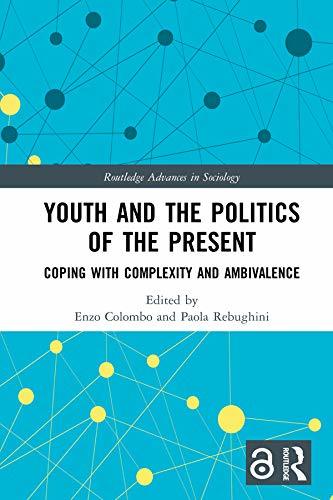
Youth and the Politics of the Present book cover
#260

Youth and the Politics of the Present

Coping with Complexity and Ambivalence

2019

Youth and the Politics of the Present presents a range of topical sociological investigations into various aspects of the everyday practices of young adults in different European contexts. Indeed, this volume provides an original and provocative investigation of various current central issues surrounding the effects of globalization and the directions in which Western societies are steering their future. Containing a wide range of empirical and comparative examples from across Europe, this title highlights how young adults are trying to implement new forms of understanding, interpretation and action to cope with unprecedented situations; developing new forms of relationships, identifications and belonging while they experience new and unprecedented forms of inclusion and exclusion. Grounding this exploration is the suggestion that careful observations of the everyday practices of young adults can be an excellent vantage point to grasp how and in what direction the future of contemporary Western societies is heading. Offering an original and provocative investigation, Youth and the Politics of the Present will appeal to students and researchers interested in fields such as Youth Studies, Globalization Studies, Migration Studies, Gender Studies and Social Policy.
European Solidarity in Times of Crisis book cover
#268

European Solidarity in Times of Crisis

Insights from a Thirteen-Country Survey

2019

The euro crisis, several sovereign debt crises, the Great Recession, the refugee crisis, and Brexit have all challenged Europeans’ willingness to show solidarity with other European citizens and member states of the European Union. European Solidarity in Times of Crisis provides a clear theoretical framework to understand European solidarity for the first time. It offers a systematic empirical approach to determine the strength and causes of European solidarity. The authors distinguish between four domains of solidarity and test a set of theoretically derived criteria with a unique dataset to investigate European solidarity. Based on a survey conducted in thirteen EU member states in 2016, the empirical analysis leads to some unanticipated results. Europeans display a notably higher degree of solidarity than many politicians and social scientists have presumed so far. This especially applies to the support of people in need (welfare solidarity) and the reduction of territorial disparities between rich and poor EU countries (territorial solidarity), but also to the domain of fiscal solidarity (financial support of indebted EU countries). This optimistic view is less true for the domain of refugee solidarity. While citizens of western and southern EU countries accept the accommodation of refugees and their allocation between European countries, the majority of people in eastern European countries do not share this point of view. The book will appeal to students and scholars in fields such as comparative sociology, political science, social policy and migration research, and European studies. It is also relevant to a non-academic audience interested in the development of the European project.
Cultures, Citizenship and Human Rights book cover
#273

Cultures, Citizenship and Human Rights

2019

In Cultures, Citizenship and Human Rights the combined analytical efforts of the fields of human rights law, conflict studies, anthropology, history, media studies, gender studies, and critical race and postcolonial studies raise a comprehensive understanding of the discursive and visual mediation of migration and manifestations of belonging and citizenship. More insight into the convergence - but also the tensions - between the cultural and the legal foundations of citizenship, has proven to be vital to the understanding of societies past and present, especially to assess processes of inclusion and exclusion. Citizenship is more than a collection of rights and privileges held by the individual members of a state but involves cultural and historical interpretations, legal contestation and regulation, as well as an active engagement with national, regional, and local state and other institutions about the boundaries of those (implicitly gendered and raced) rights and privileges. Highlighting and assessing the transformations of what citizenship entails today is crucially important to the future of Europe, which both as an idea and as a practical project faces challenges that range from the crisis of legitimacy to the problems posed by mass migration. Many of the issues addressed in this book, however, also play out in other parts of the world, as several of the chapters reflect. This book is available for free in PDF format as Open Access from the individual product page at www.routledge.com. They have been made available under a Creative Commons Attribution-Non Commercial-No Derivatives 4.0 license.
Care, Power, Information book cover
#274

Care, Power, Information

For the Love of BluesCollarship in the Age of Digital Culture, Bioeconomy, and (Post-)Trumpism

2019

This book is a critique and provincialization of Western social science and Global Northern academia, by the author of The Digital Coloniality of Power. It exposes shared colonial and extractive rationalities and histories of research, higher education, digitalization, and bioeconomy while proposing in the idea of BluesCollarship, a sketch for an alternative culture of worlding and commoning knowledge work and for making care matter in research and higher education. In a discourse analysis and provincialization of research and higher education, a tradition of elitist White-Collaredness in academia and in the social sciences, in particular, is criticized, and an alternative attitude towards the production, transfer, and use of knowledge – BluesCollarship – is proposed. The latter is rooted in a different idea of what "infrastructure" is, and in practices of decoloniality. Noting the current political climate of propaganda and populism, the persistence of social inequalities as well as of racism and misogyny, it is proposed that how people give warrant for knowledge claims should be reviewed under different terms. A coherent theme is that there is a genealogical root for current neo-extractive and neo-colonial rationalities in the Athenian idea of oikos, which conflates family, household, and property. In taking a distinctly writerly approach – rather than giving ready-made answers – the book aims at permanently provoking readers at every turn to think further, as well as before-and-beyond what is written, but to do so in thinking together with Others. Thus the book addresses scholars and students from across the social sciences who seek challenges to established ways of thinking in academia without simply replacing one canon for another. This book is for those who think of themselves as knowledge and culture laborers in this age of precarization, who seek to replace the university and cognitive capitalism with a pluriversity and an infrastructure built on knowledge and culture as fundamental values.
Later Life book cover
#283

Later Life

Exploring Ageing through Literature

2020

Later Life views older age as a valuable stage of life and argues for the centrality of self-making to the quality of later life. Aiming to enrich an understanding of ageing as the unfolding process in which people try to negotiate vulnerabilities of their bodies and manage mortality, it explores the conditions for pursuing the search for knowledge of oneself in later life. This new book, with the help of literary examples, presents factors both supporting and hindering the quality of the experience of later life. It demonstrates how wondering, courage and habit sustain the self-making in older age. After illustrating that the process of ageing also imposes ordeals, the book depicts remedies needed to overcome boredom, bitterness and sadness, three torments caused by the age-specific sense of time. It is essential reading not only for academics and professionals in age studies, sociology of ageing, gerontology and health care, but also for a general audience. The book’s focus on the experiences of later life will appeal to the reader interested in understanding the complexities of ageing and in enhancing the quality of later life, while its reliance on literary illustrations will be appreciated by lovers of literature.
The Global Citizenship Nexus book cover
#288

The Global Citizenship Nexus

Critical Studies

2020

In the spirit of Ivan Illich’s 1968 speech ‘To hell with good intentions’, the book takes aim at a ubiquitous form of contemporary ideology, namely the concept of global citizenship. Its characteristic discourse can be found inhabiting a nexus of four complexes of ‘ruling’ institutions, namely universities with their international service learning, the United Nations and allied international institutions bent on global citizenship education, international non-governmental organizations and foundations promoting social entrepreneurship, and global corporations and their mouthpieces pitching corporate social responsibility and sustainable development. The question in the context of Northern or Western imperialism and US-led, neoliberal, global, corporate capitalism, and the planetary Armageddon they are wringing, what is the concept of global citizenship doing for these institutions? The studies in the book put this question to each of these four institutional complexes from broadly political-economic and post-colonial premises, focusing on the concept’s discursive use, against the background of the mounting production of the global non-citizen as the global citizen’s ‘other’. Addressed to all users of the concept of global citizen(ship) from university students and faculty in global studies to social entrepreneurs and United Nations bureaucrats, the book’s studies ultimately ask whether the idea helps or hinders the global quest for social and economic justice.
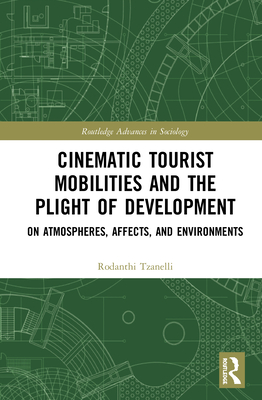
Cinematic Tourist Mobilities and the Plight of Development book cover
#291

Cinematic Tourist Mobilities and the Plight of Development

On Atmospheres, Affects, and Environments

2018

It is said that movies have encroached upon social realities creating tourism enclaves based on distortions of history and heritage, or simulations that disregard both. What localities and nation-states value are discarded, suppressed, or modified beyond recognition in neoliberal markets; thus flattening out human experience, destroying natural habitats in the name of development, and putting the future of whole ecosystems at risk. Without disregarding such developmental risks Cinematic Tourist Mobilities and the Plight of Development explores how, en route to any beneficial or eco-destructive development, film tourist industries co-produce atmospheres of place and culture with tourists/film fans, local activists, and nation-states. Drawing on international examples of cinematically-induced tourism and tourismophobic activism, Tzanelli demonstrates how the allegedly unilateral industry-driven ‘design’ of location stands at a crossroads between political structures, systems of capitalist development, and resurgent localised agency. With an interdisciplinary methodological and epistemological portfolio connected to the new mobilities paradigm, this volume will appeal to scholars, students, and practitioners interested in tourism, migration, and urban studies in sociology, anthropology, geography, and international relations.
Thinking Through Dilemmas book cover
#297

Thinking Through Dilemmas

Schemas, Frames, and Difficult Decisions

2020

Departing from the sociological dual process model that divides thoughts into automatic and unconscious, or deliberate and conscious occurrences, this book draws on empirical cases to demonstrate the existence of “automatic deliberation.” Through research into the ways in which people address difficult subjects, such as death and dying, pedophilia, and career decision-making, the author sheds light on a mode of thinking which is both habitual and effortful, displaying a combination of habituated understandings and conscious deliberation. Advancing a blended view of cognition by which individuals draw on schemas and frames to think through complex topics, this volume will appeal to sociologists and psychologists with interests in cognition and the ways in which we make decisions.

Authors

Anna Triandafyllidou
Author · 1 book
Anna Triandafyllidou is a sociologist. She holds the Canada Excellence Research Chair on Migration and Integration at Ryerson University. She is the Editor-in-Chief of the Journal of Immigrant and Refugee Studies.
Daniel Muriel
Daniel Muriel
Author · 2 books
PhD in Sociology, Lecturer at the University of the Basque Country. Daniel is an experienced researcher and author on identity, cultural heritage, science and technology studies, experts and video game culture. He has published numerous papers and chapters in internationally renowned journals and publishing houses such as Games and Culture, Ethnic and Racial Studies, Convergence, and Routledge, and has participated in several international conferences. Daniel is co-author of the book 'Video Games as Culture' (2018, Routledge), author of 'Identidad Gamer' (2018, AnaitGames), and 'Identidad y patrimonio' (2017, KDP Amazon).


548 Market St PMB 65688, San Francisco California 94104-5401 USA
© 2026 Paratext Inc. All rights reserved